Blog Archives
Talking About Games: Critique Criteria

Words are weird. I still remember in the second grade when my father insisted I refer to a particular bodily function as “urination,” while my friends called it “going pee.” When I inverted those terms, both groups became upset at me for being gross. The meaning was unaltered. Neither word was particularly crass. But there I stood, excoriated for my choice of vocabulary. My lifelong terror with linguistic solipsism had begun.
Following up on our previous conversations about the meanings and importance of negativity and criticism, today we’re looking at three more concepts. This time, however, these are the broadest possible traits that should be found in any critique — the bare minimums, you could say. Although as you’d expect, we’re peddling in ambiguities.
Mezo Hungry

Somewhere underneath the dudes-on-a-map genre lurks an even more specific subgenre, the dudes-on-a-map-beseech-the-gods-for-aid genre. For short, the “god-botherer.” You know the type. Cyclades, Kemet, Blood Rage, Rising Sun. They’re an excuse for ordinary plastic molds to genuflect and summon something far greater. Those little dudes are going about their business when — blammo — here comes a table-trembling hulk of sculpted muscle and claw. The elder plastic.
At first glance, John Clowdus’s Mezo is another god-botherer. It has dudes. It has gods. It has the appropriate gap of scale between said dudes and said gods. But because Mezo was designed by John Clowdus, his first-ever title that isn’t a Small Box Game, it’s anything but a ripoff or an homage or just another god-botherer. If anything, it’s probably best described as “three or four bidding games at the same time.”
Space-Cast! #2. Chugging Meltwater

As the world is ravaged by toilet paper shortages, Dan Thurot is joined by Erin Lee Escobedo to discuss the ins and outs of tactical starvation in her game Meltwater, how its spiritual grandparents would make for history’s oddest couple, the artificiality of some of gaming’s biggest narrative choices, and the difficulty (but value) of conceding defeat. Cheery stuff for the second episode of the Space-Biff! Space-Cast!
Listen over here or download here. Timestamps and information about our next episode can be found after the jump.
Monumentally Elongated

There’s something infinitely enticing about the prospect of a short civilization game. Centuries, even millennia of technologies, policies, wars and wonders, played out in a couple of hours rather than an entire afternoon. You might even call it one of the holy grails of game design.
For a moment, Matthew Dunstan’s Monumental looks like it might reach out and choose wisely. The turns clip along nicely. It has decisions with room enough to stumble, but not so badly that you’ll slip onto your face. And of course there’s all that plastic. What could possibly go wrong?
After the jump, let’s talk about what went wrong.
When Two Bears Love Each Other Very Much…
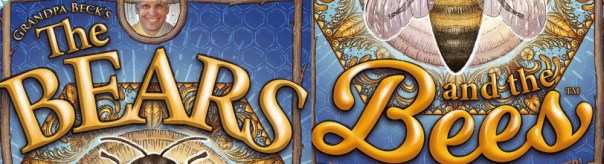
Even though I’ll joke about it, I don’t hate UNO. In fact, I’ll prove it by saying something positive about UNO right now. UNO is good because hhhhhnnnnnnngggggggrrrrrrr uuuuuuuuggggggghhhhhhh eeeeeehhhhhhhhhhggggggg winning by getting rid of all your cards is pretty smooth. Jeffrey Beck’s The Bears and the Bees takes that model and shapes it into something much better — UNO with hexes.
Yes, I’m being fantastically reductive with that description.
Space-Cast! #1. Go Play a Summoner War

After three unbearable years, the Space-Biff! Space-Cast! is back! And to celebrate this momentous occasion, Dan Thurot and Brock Poulsen are joined by Colby Dauch to talk about a much more important revival: the independence of Plaid Hat Games. We also chat about Summoner Wars old and new, Dungeon Run (that’s Brock’s fault), and Forgotten Waters.
Listen over here or download here. Timestamps and a clue can be found after the jump.
Clue Too: Paradise Lost

Paradise Lost tricked me into playing Clue. Not that that’s a bad thing. If anything, I admire Tom Butler’s deftness in pulling out the rug. One moment I was expecting a bland fantasy excursion, so generic as to be staffed with public domain heroes like Hercules and Alice — not the first time I’ve been surprised to see her show up — and a few minutes later, we were asking questions about the Water Witch’s henchmen. “Was it the Big Bad Wolf with the Vorpal Blade?” There’s no third part: “…in the Eternal Cedar Forest?” There’s a reason for that.
But I’m getting ahead of myself. Let’s start at the beginning.
Dale of Deck-Builders
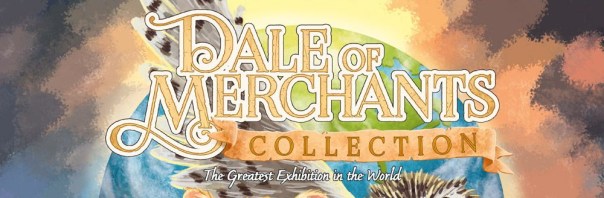
Perspective is a funny thing. When Sami Laakso reached out to inquire whether I’d like to take a look at Dale of Merchants — more specifically, Dale of Merchants 1, 2, and Collection — I hesitated. Not because of Laakso’s talents as a designer, but because the game in question was a deck-builder. And not a hybrid deck-builder; a straight-up, pure, honest-to-goodness cards-and-tokens deck-builder.
Why such hesitation? Because for a moment that felt like a decade, you couldn’t enter a game shop without tripping over that month’s shipment of DBGs, barely-themed stacks of wallpaper with a license slapped over the top. How many decks have I built? How many settings have gone underutilized? The answer is not flattering, either for me or the industry.
But it had been a while since I last built a deck. Doubly so a “pure” deck, sans larger strategic considerations like a map or a lootable dungeon. So I said, sure, why not. And, after a half-dozen plays, I couldn’t be happier.
Alone Outta Hades
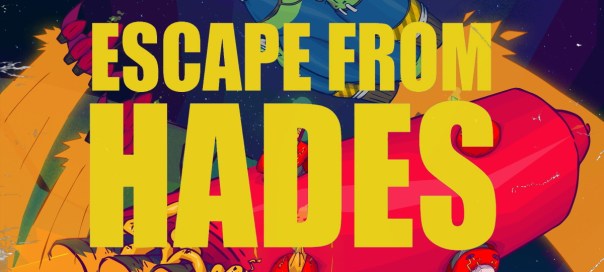
Fred Manzo’s Escape from Hades isn’t what I expected. So much not what I expected, in fact, that I can’t quite remember what I expected in the first place. Certainly something fluffier, something reflective of its radioactive candy-corn cover. Maybe something that didn’t require quite so many gut-checks and mid-play rulings. A handful, sure. After all, this was brought to life by independent publisher Hollandspiele. But this many? This often?
What I expected least, however, was that in between the neon surface of the Hades and too many clarifications resided a story generator as daring and dashing as a WW2 commando film.
When You’re Not Stalin, You’re Russian

Don’t make the mistake of calling Dual Powers: Revolution 1917 a wargame. I learned that lesson the hard way. Like 13 Days: The Cuban Missile Crisis and Fort Sumter, Dual Powers is about what happens before the war — in effect, a pre-wargame. This is the jockeying, the shakeout, the period when everybody decides who they’ll sidle up to when the shooting starts. Even better that Brett Myers has selected a topic I’ve yet to see explored. With the February Revolution out of the way and Tsar Nicholas II off the throne, Petrograd has settled into an uneasy truce between the Provisional Government and the Bolshevik Party. Surely such an arrangement will last more than a few months.


