Blog Archives
Deep Space 51

Portal Games has a thing for tableau building games that occupy three rows. See 51st State, Imperial Settlers, and the other 51st State, all of which were largely defined by how much your economic engine snowballed. If the last round wasn’t ten times longer and slower than the first one, you probably hadn’t adequately snowballed.
At this point, Portal delivering another three-row tableau-builder might feel a smidgen like those games that reappear after a Cthulhu retheme. Slap tentacles on the cards, change some keywords — the draw pile is now Miskatonic University or whatever — and there you have it. No need to come up with new ideas when people will gratefully snap up the latest mind-numbing coat of paint, fumes and all. 51st State in space.
But in spite of appearances, Alien Artifacts isn’t just another three-row tableau-builder. Sure, cards are aligned across three rows, and sure, it’s about assembling a tableau. While it wasn’t designed by Ignacy Trzewiczek, co-designers Marcin Ropka and Viola Kijowska could have fooled me, right down to the factions with ever-so-slightly different advantages. But that’s where the similarities stop and Alien Artifacts steps out from under the shadow of its predecessors. And the most radical aspect of its reinvention? It melts snowballs.
Swabber Sonar
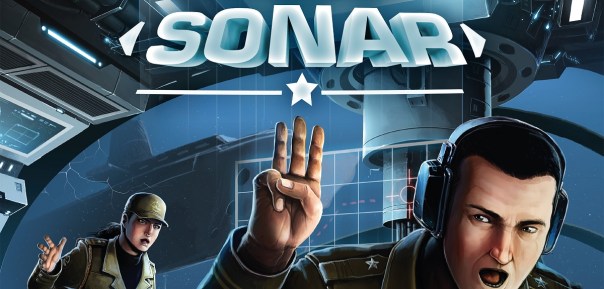
There were precisely two problems with last year’s firecracker-in-a-tin-can Captain Sonar. One, it benefited from a crew of at least six people to staff its dueling submarines, and was further improved by a full complement of eight. And two, it was the direct opposite of a good meditation session. It could get so hairy it was almost a cure for balding.
Sonar — sans the Captain — is Matagot’s gesture of reconciliation toward those who suffered post-traumatic stress as a result of their time at the scope, helm, engine room, and torpedo tube. In theory, it’s the same grand sub-hunting action, but for two or four players and at a much more relaxed pace. The question, then, is whether Sonar represents a dry-erase The Hunt for Red October — or is it more akin to Down Periscope?
Flipping Flips

Kane Klenko showed that he knew what he was doing with last year’s FUSE, a game that saw its players disarming bombs in real-time by matching dice and occasionally balancing them in precarious towers. It wasn’t necessarily deep, but it produced a thick cloud of tension and banged some pot lids in your ears. By the end of its countdown, even failure was a relief. More so if you had that annoying app braying in your ears.
Even though they couldn’t be more different, Flip Ships reveals Klenko doing what he does best. Like FUSE before it, Flip Ships takes a single idea and blitzes merrily past the point where any other designer might have been content to wrap the thing into a minigame box and be done with it. Here, the idea is that just maybe the best way to defend against a Space Invaders scenario would be to launch your starfighters so that they spin like one of those barfy amusement park rides, right before rolling off the table and beneath the couch. As in, it’s the plan you resort to after everything else has failed.
Swallowing Hemloch

Here we are at last, taking a look at the final installment of John Clowdus’s second-latest trilogy of Small Box Games games. This time it’s Hemloch: Dark Promenade, and it’s by far the most interesting of the three.
Daimyo Seii, Daimyo Do

Another day, another Small Box Game by John Clowdus. This time it’s Seii Daimyo, where much like every other game about Feudal Japan, your goal is to unite the country’s warring clans under a single Shogun.
Fortunately, the execution is more interesting than the setup.
Not Sure What a Cartouche Has to Do With It

Another year, another trio of small box games from small box games king John Clowdus, proprietor of Small Box Games. Except this time I’m so far behind that he has some other games out, which pretty much makes me a filthy truant, and—
Deep breath. One thing at a time. First up, Cartouche Dynasties. This is a single-deck ditty about building a kingdom in Ancient Egypt. It has nothing to do with either cartouches or dynasties.
Now let’s uncover what else it’s been lying about.
COIN Volume VII: Colonial Twilight

Whether it’s tackling the Vietnam War, the Cuban Revolution, narco-terrorism in Colombia, or the shenanigans Julius Caesar pulled before attracting Shakespeare’s fancy, the COIN Series has never shied away from a hard topic. If anything, the French-Algerian War of 1954 to 1962 is a perfect fit for the series’ asymmetric take on insurgency warfare, casting players as either the French colonial government or the Front de Libération Nationale. Even better that it should be Brian Train’s second contribution after the quagmire simulator that was A Distant Plain.
But the stickiness of its setting isn’t why COIN’s seventh volume comes as such a surprise. Rather, it’s because Colonial Twilight is the first entry to feature fewer than four sides — and for all its familiarity, the result is a game that breaks exciting new ground for the series.
BattleCONtinuum: A Look at Temporal Odyssey

At first glance, you might assume that Level 99’s forthcoming dueling game — coming to Kickstarter later this week — was the brainchild of D. Brad Talton, Jr. After all, Talton is one of modern gaming’s undisputed champions of two-player punch-’em-ups, with both the BattleCON and Exceed systems in his corner.
Instead, Temporal Odyssey appears courtesy of up-and-coming designer Chris Solis. But don’t let Solis’s newcomer status dissuade you, because this is one of the slickest two-player duels I’ve witnessed in a long time.
The Other Other Crossfire

Ah, yes, those social deduction dollars. Even a company like Plaid Hat cannot resist their allure.
Crossfire — and we aren’t talking about that silly 1970s ultimate challenge commercial, nor the Shadowrun game — is the sort of title that’s going to have to justify its seat at the high table, especially now that higher-profile offerings like Secrets have wet their pants in public. Social deduction is tough, and for a genre about pulling the wool over your friends’ eyes, it seems there’s not much chance of fooling players into embracing a lesser option.
But here’s the weird thing. For a game that doesn’t even seem like it even wants to succeed, I’m actually a tiny bit enamored with this one.
Pax Pine: A Look at Cole Wehrle’s Root
One of the things I appreciated most about Geoff Engelstein’s board game rendering of The Expanse was the way it took the venerable Twilight Struggle’s very serious, very wargamey card system and bolted it over the top of something that had nothing to do with real-world history or politics. It was, if you want to be dramatic about it, a democratizing move. Where any quantity of board gamers might shy away from engaging with “serious” topics in their leisure time, The Expanse boasted a deeply smart card system layered over a fictional world, right down to its dumber-than-a-bucket Captain James Holden. If the hero doesn’t bust his noggin over political statements and colonial implications, why should you?
Now, in a surprise alliance between political-game veteran Cole Wehrle (Pax Pamir, An Infamous Traffic, the forthcoming John Company) and one of the industry’s freshest publishers of asymmetric buffoonery Leder Games (Vast: The Crystal Caverns), we’re witnessing what just might shape up to be the next step in the process of bending the branch of wargame-style gameplay into reaching distance of a more general audience.
The game in question is Root. It’s still in playtesting, likely won’t be out for a good long while, and details are still subject to change. But my impressions of an early build have been almost entirely positive.


