A Place for All My Fussy Guests
It’s almost too obvious to state aloud, but there’s a lot to be said for the games we actually play. Case in point, Enchanted Ivy, the solitaire game by Sarah Joshua. When I sat down this morning to begin writing this review, I went through the usual steps. Picking and editing the images. Uploading the template and arranging everything into logical order. Glancing through a few notes.
But then I thought to myself, maybe I don’t understand this game yet. Even though I’ve played it well over thirty times. One more session. In endless mode with randomized guests. Just one extra play to make sure I know what I’m talking about.
And then, with such inevitability that I’m not sure why I ever thought differently, I played it twice. That’s Enchanted Ivy for you.
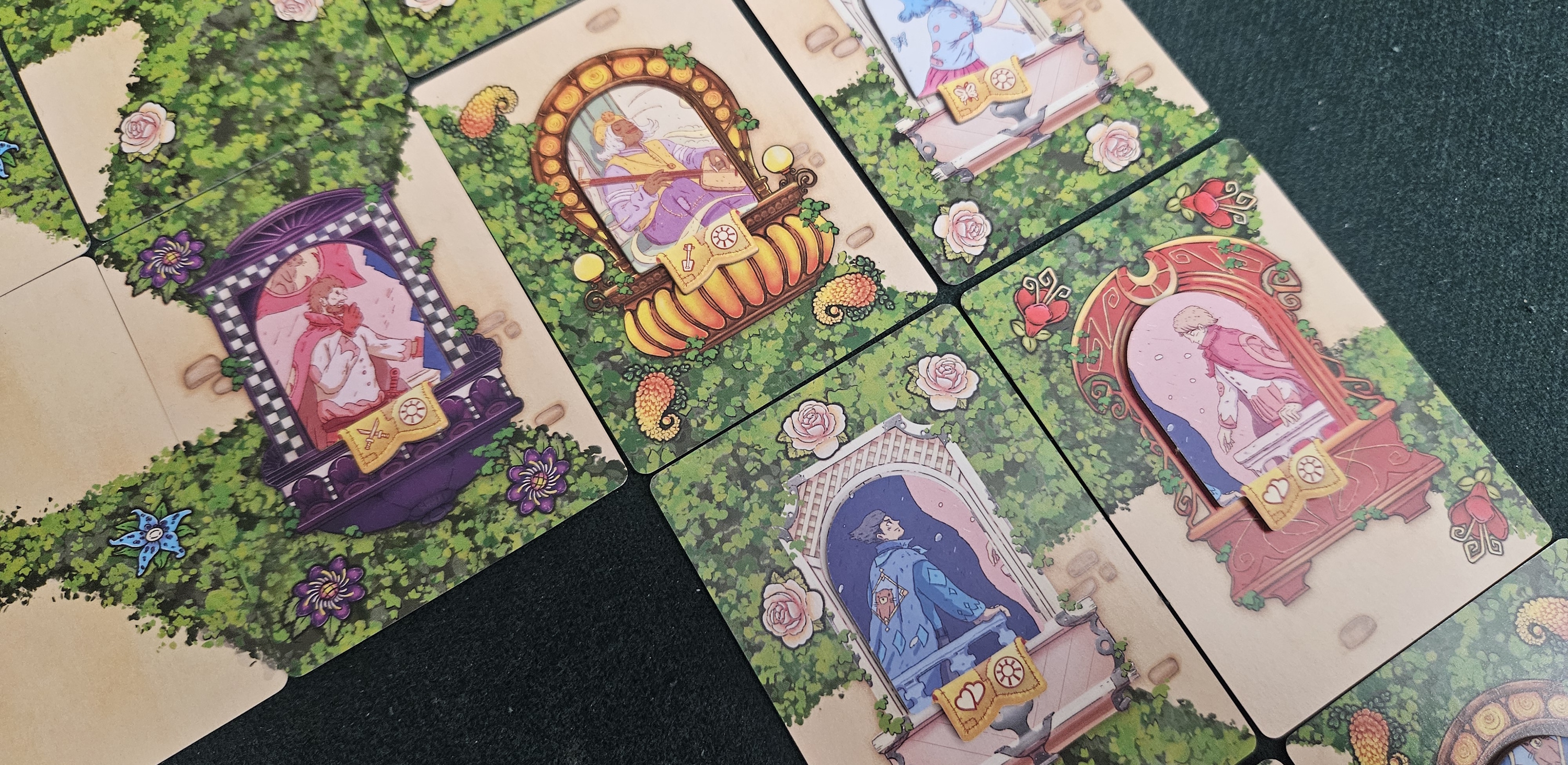
Some of these guests are fighting. Perfect for playing my mandolin!
Enchanted Ivy is about building an inn. It’s a magical inn, always shifting, and covered with ivy and blossoms. The arrangement of that ivy is the first layer of the game’s challenge. The more interconnected the ivy — the fewer gaps in its protective foliage — the more points you score.
But Enchanted Ivy isn’t only about the structure. It’s also about the guests who will inhabit it. Every card can be flipped over. One side shows the ivy growing along the plaster and brickwork. The other shows the same, but with the addition of a balcony. These are the spaces for your guests to inhabit.
Turns are simple. You draw two cards and two guests. Both cards will be placed: one on its bare side, the other for its balcony. Onto the balcony you’ll place a single guest. Then you draw back to two cards and two guests. Simple.
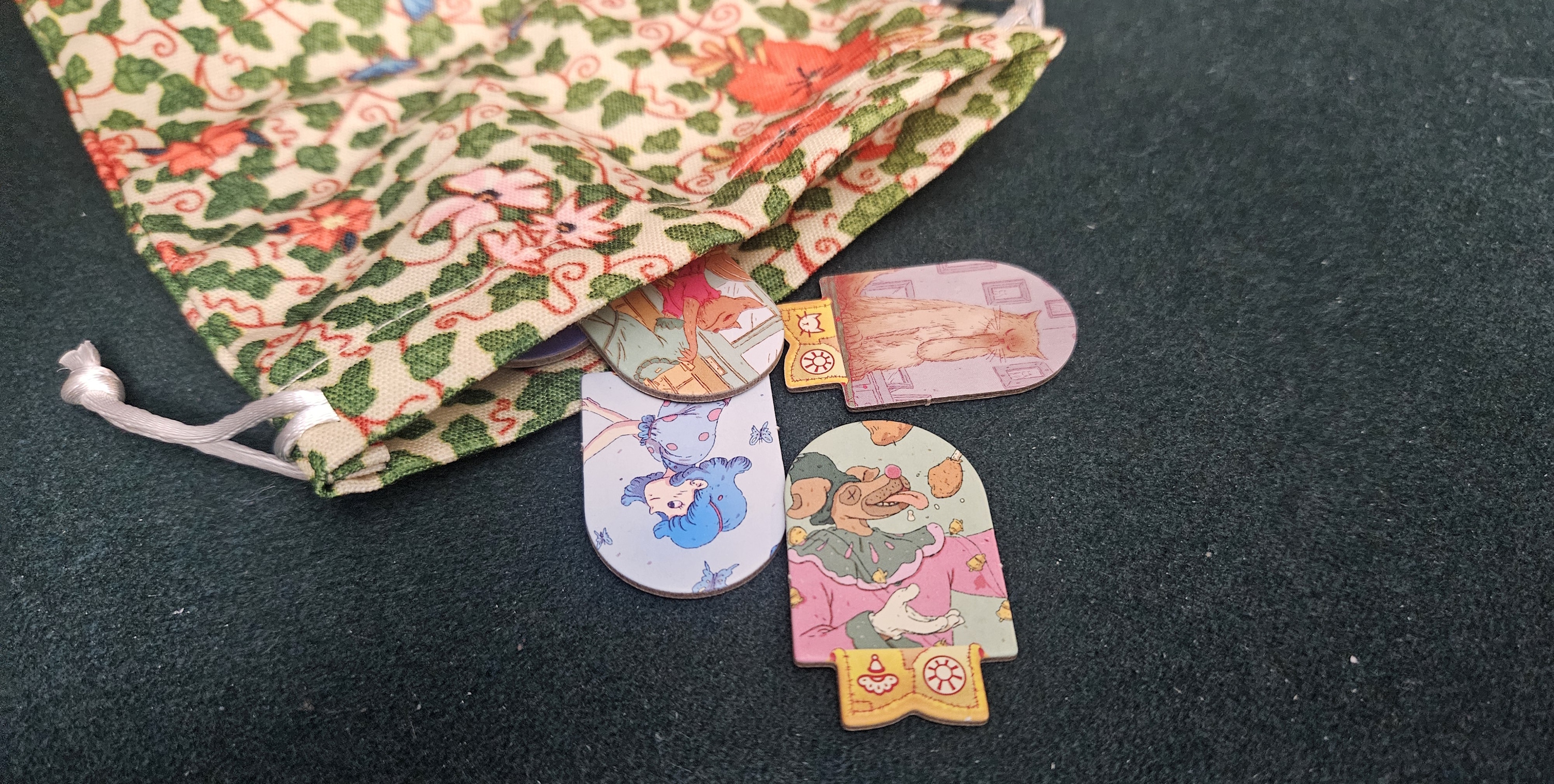
Picking which fussy goofball to welcome into the inn.
Except the only simple thing about Enchanted Ivy is its turn structure. Your guests are the real challenge. To a one, they’re fussy. Fussy and wonderful. And since most sessions require you to balance the needs of ten or so guests, whether you’re tackling one of the game’s ten scenarios or tinkering with the randomized endless mode, their needs clash almost immediately.
For example, today I was faced with some tough conflicting imperatives. Some of my guests were all about proximity. Such as the Dog, who wants to keep his three heads affixed to as many guests as possible, and the Gift Giver, a Santa knockoff who can only be bothered to walk in two straight lines through the inn, but scores quite a few points for every room he leaves a present at. Others, though, wanted room to spread out. Like the Adventurer with his grappling hook, ready to swing across gaps to say hello, or the Washer, needing another window somewhere across the way to suspend her clothesline from — the farther all the better for hanging additional wet underthings — or the Firebreather, determined to regurgitate flames against empty diagonals.
At times, the sheer bulk of these needs — having to house an Astrologer who wants an unobstructed view of the night sky next to a Cat that intends to wander from sill to sill — can seem overwhelming. Especially when you first reveal all those guests. Ten! Ten! How am I going to keep ten people straight?
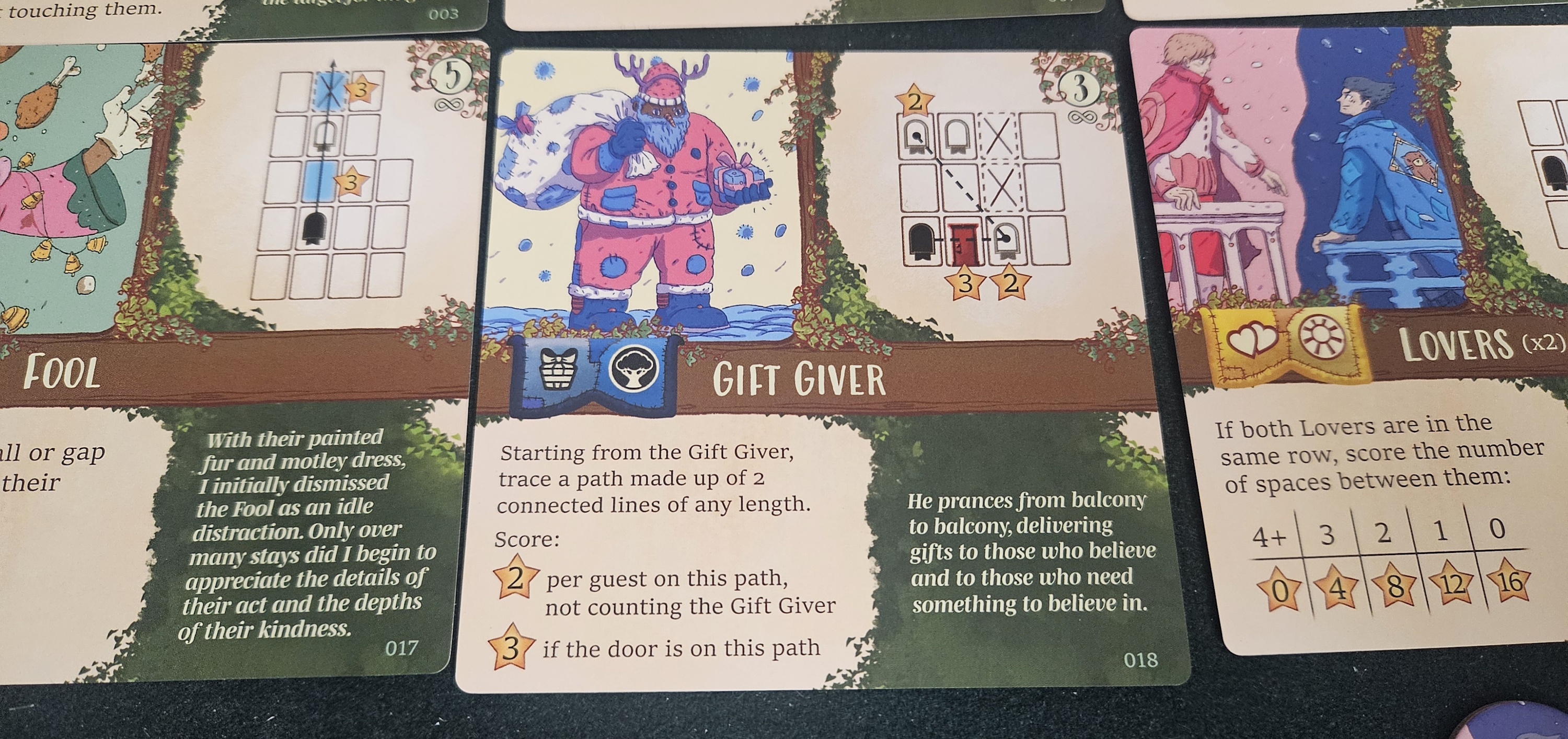
Each guest has their own scoring objective.
To its credit, this is where Enchanted Ivy really shines. The scenarios, which present a lovely little tale about coming to accept one’s changing identity (I smell a metaphor!) introduces guests steadily but not so quickly that they become overwhelming. And really, the whole thing is brief enough that it usually demands a second session to see how many extra points can be wrung from a set now that you know your guests’ peccadilloes.
Very quickly, I developed favorites. The Fighters, paired guests who must be kept apart at all costs. The Raven Keeper, observing the comings and goings from above. The Architect and his invisible lines across the way. Of course, there were also those guests for whom my welcoming smile was more of a rictus. The Fool and his juggling. The Mystery Knight insisting that his bath demands privacy. The Justice’s demand for absolute symmetry of guest placements. That hag.
No matter the combination, though, there’s a fairness to the process. Sure, it’s possible for a bad draw to smash your plans. I’m speaking in a more holistic sense. Before Enchanted Ivy jumbles the pieces together, it shows you the parameters. The guests who must be housed. The shape your inn will take today. Who’s going to be a problem. If you’re playing a scenario, which optional challenges you can tackle. And then you take those pieces and make something beautiful.
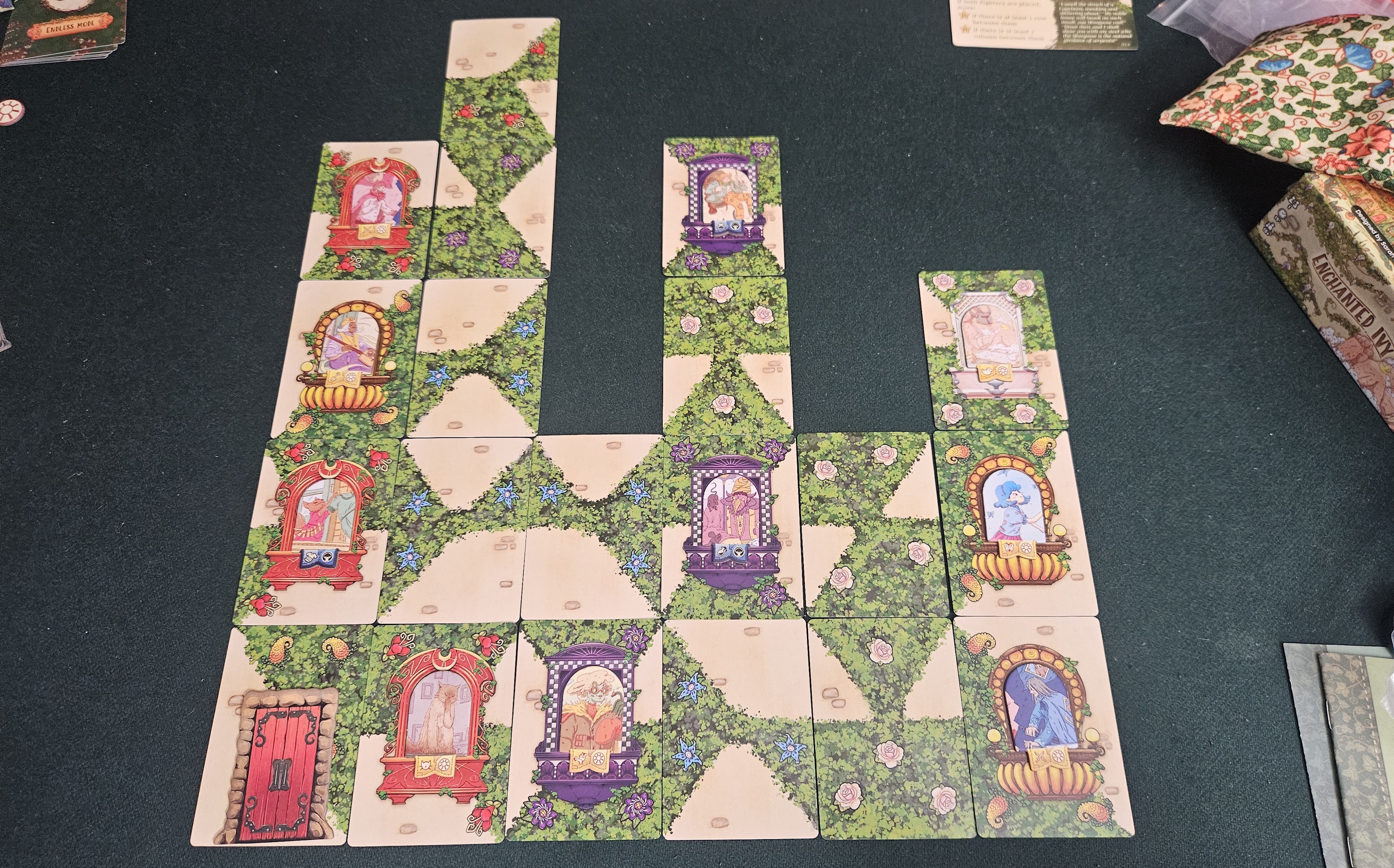
I always take a moment to look over my completed inn.
Lots of board games are about making something beautiful, whether visually or mathematically. Enchanted Ivy lets you do both. But more than that, it asks you to linger. To spend an extra minute. To observe the flaws in your creation and appreciate them.
Which is to say that even after all those sessions, even after learning how to manage the game’s thirty-odd guests, after checking off every scoring goal and special objective in the campaign, I keep coming back for one more visit. This is one of the finest solitaire games I’ve played in… well, in ever.
A complimentary copy of Enchanted Ivy was provided by the publisher.
(If what I’m doing at Space-Biff! is valuable to you in some way, please consider dropping by my Patreon campaign or Ko-fi. Right now, my third-quarter newsletter is open to all.)
Posted on October 9, 2026, in Board Game and tagged Allplay, Alone Time, Board Games, Enchanted Ivy. Bookmark the permalink. Leave a comment.


Leave a comment
Comments 0