The Surprising Tension of Res Arcana
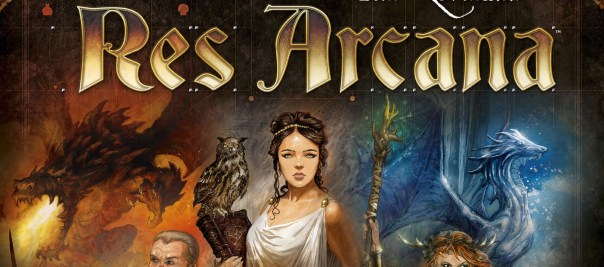
Res Arcana is a deceptive little thing. Its first chime gives the impression of a ditty: thirty minutes long, very much about converting resources into other resources into points, and leafed with a thin veneer of, “oh, y’know, magic.”
Don’t let that fool you. Tom Lehmann may have solidified his reputation with Race for the Galaxy, but Res Arcana proves he can pull off a symphony with only a few chords.
Book-Space! #10: The Collapsing Empire

Go with the Flow and join Brock, Summer, and Dan as we discuss how to browbeat supporting characters into divulging information, why all space ships should be named after Elton John songs, and whether The Collapsing Empire by John Scalzi espouses a proper pronunciation for “emperox.” Listen here or download here.
Next month, we’re reading Trail of Lightning by Rebecca Roanhorse.
Brave Little Borby
Brave Little Belgium, about the violation of Belgian neutrality by Germany at the outset of World War I, positions itself as an entry-level wargame, perfect for teaching newcomers the ropes of this rich — and often intimidating — sublevel of the board games basement. Beginners can expect to learn:
- The basics of point-to-point army movement and the value of scouting.
- How chit-pull activation works.
- That more seasoned wargamers will laugh when you complain about paper maps.
- Precisely what qualifies as “solitaire suitability” among grognards.
Not bad! Let’s evaluate how well it succeeds.
The Emergence of Shy Space Base

For a dice game, Space Base doesn’t arrive with very many dice. You’ll find no chunky handfuls here. Two dinky dice is all you get. And those two are cursed, I’m certain of it, prompting my group to pull out the dice bowl so that we can roll something other than 4s and 5s for once. Guess we’re rolling chunky handfuls after all.
But curses aside, Space Base knows how to put its dice to good use. How to get crazy with them. How to make rolling 2d6 more exciting than they have any right to be.
False Messiah
In one sense, True Messiah is the poster boy for why Kickstarter exists. It was funded independently of any major publisher, it’s a little oddball, it stands well beyond the usual circles, and happens to be designed by a newcomer with some digital game design experience but no name in tabletop. A passion project, in other words, and one that likely wouldn’t have been birthed without crowdfunding. This is the very reason Kickstarter was lauded as a platform in the first place.
In another sense, however, it’s also a poster boy for why crowdfunded passion projects that stand well beyond the usual circles aren’t always everything they’re cracked up to be.
Teensy Towns
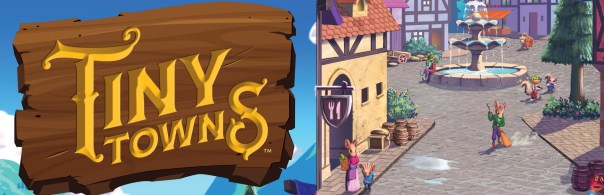
I’m not sure there’s a title that makes my eyelids droop more than Tiny Towns. The back of the box only deepens my fatigue. Colorful cubes, check. Little woodcut buildings, cute. A blank 4×4 grid for each player, groan. Pastoral scenes of golden farms and thatched granaries and unkempt almshouses — credit where it’s due, there’s a cure for insomnia here.
But as Socrates said, “Don’t judge a scroll by the gross animal veins in its parchment.” So too it is with Tiny Towns. Although this isn’t the sort of game that gets my heart pounding, it’s no soporific.
I Drive

Getaway Driver would benefit from a soundtrack of frenetic jazz. Asymmetry is all the rage this year, but few games embrace it quite as wholeheartedly as Jeff Beck’s game of cat and mouse and cat and cat and cat — which seems dire until you realize that this particular mouse is riding five hundred horsepower and knows this city by heart. In other words, it’s free-form, kinetic, and apart from a few minor stutters, a real treat of asymmetric design.
Shards of Holy Crap Infinite Damage
One of the things I love most about this hobby is how it constantly surprises me, and not always grand, paradigm-shattering ways. Shards of Infinity is a perfect example. Deck-building as a mechanism has been done, and done, and done again so comprehensively that unless you slap a “hybrid” in front of there, I’m probably going to zone out. It’s about superpowered beings pummeling the snot out of each other? Oh. Snore.
It was the names Gary Arant and Justin Gary, creators of Ascension, that made me perk up enough to hear the elevator pitch. I’m glad I did. Because Shards of Infinity gets one thing totally right. Scratch that, it gets a lot of things totally right, but it gets one thing totally right that no other pure deck-builder has yet to get totally right. And the result is a quiet revolution, one of the baddest-ass pure DBGs I’ve played.
The Expanse-ion

I liked The Expanse. Quite a bit, actually. Now it has an expanse-ion called Doors and Corners. And although expanse-ions aren’t always as interesting to review — especially when they’re a pile of modules that you can add or ignore as you please — this is my comprehensive take on every single tidbit. Think of it like six micro-reviews, beginning with:
New Board: It’s more colorful, but the extra pop unfortunately makes the resource nodes a little harder to see. Then again, it’s more colorful. Final Score: That random spy from near the end of the first season of the TV series. You know, the guy played by the actor who was also Adam Jensen from the new Deus Ex games. As in, I could take it or leave it.
Variable Setup: Here’s my question: Why? I guess if you’re bored of the initial game’s setup, this lets you tinker with that. But the board state can change its mind so quickly and so radically that I don’t really see the appeal. Final Score: Dumb Jim Holden.
Ghosts of the Moop

Ghosts of the Moor — or Moorgeister in the original German, which sounds like a bodily function run awry — is a dice game collaboratively designed by Michael Kiesling and Wolfgang Kramer. It isn’t an amazing dice game, nor is it a game I’d easily recommend.
That said, it is significantly better than I expected. As in, a whole lot. And there’s one key reasons why.


