Box of Little Ninjas
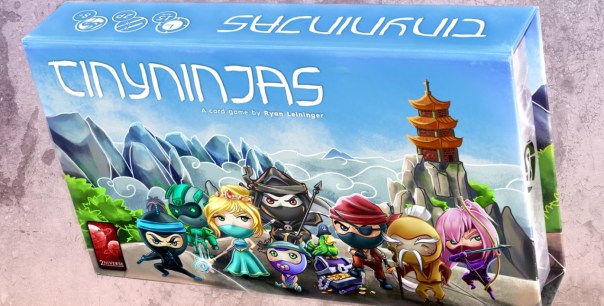
Look, I know how it sounds when I say “the box is the best thing” about a game. I know. It sounds dismissive. Like I’m saying the game should be jettisoned into space, where it would finally be put to good use as a hostel for tardigrades. Like I’m saying you should buy the game, toss the components and burn the rules, and then display the hollowed-out box on the mantelpiece as a warning to all who enter that they should not buy this game unless they’re connoisseurs of fantastic boxes.
That’s how it sounds. Too bad. The best thing about Tiny Ninjas is its box.
More Like Rental Magician

Sorcerer has a great hook. Never mind that it’s also Smash Up’s hook. You take three decks — your identity, magical lineage, and domain — and shuffle them together to form one big wad of acolytes, demons, and spells. One moment you’ll be playing as a necromantic count from deep in a haunted forest. Half an hour later you’ll be mister flameface the shapeshifter of the lunatic asylum. In theory, no two decks will feel quite the same.
Too bad they nearly always blend together like a bowl of soggy oatmeal.
Talking About Games: Mechanics vs. Theme

In today’s Patreon-funded essay, we’re dissecting what we talk about when we talk about games — and why we should consider shaking it up.
There’s a reliable conflict in board games, aged about a quarter century, that calls to mind an old feud between noble families, or perhaps a tribal division or a sports rivalry, its root cause lost to the mists of time. Except that isn’t quite true, is it? In this case, we know exactly where the battle-line has been drawn and exactly why.
The Ancienter World

It’s been a long time since I played the first edition of Ryan Laukat’s The Ancient World. Long enough that the second edition was totally new, like something I’d played in a dream, a game against the gods dissipated into fog upon awakening.
Or maybe it’s just that this second edition is such a vast improvement over the original that it feels entirely new, despite importing wholesale the bones and framework of its former self.
Book-Space! #11: Trail of Lightning

Build walls, flood the land, and ride the lighting; or, the episode in which Brock, Summer, and Dan talk about living gods, life on the reservation, and how Rebecca Roanhorse portrays a post-apocalyptic (but current-renaissance) Navajo nation in Trail of Lightning. Listen here or download here.
Next month, we’re reading Master of Sorrows by Justin Travis Call.
Two Minds about Here I Stand

Today on Two Minds About…, Brock Poulsen and Dan Thurot are here to discuss Here I Stand, the only game about the Wars of the Reformation and the Reformers (and Pope-friends) who fought them.
Brock: It was an event five hundred years (give or take another two) in the making.
Dan: Five hundred years of song.
Brock: I love that one about the bulwark, especially. To commemorate the most iconic bulletin board post in all recorded history, Dan assembled a team of nerds to devote a whole day playing Ed Beach’s Here I Stand. While we’re not doing a proper review today, we did want to discuss some of our impressions, share a few experiences, and maybe finally unravel the state of souls in purgatory.
Failing that, Dan, why don’t you tell us a bit more about Here I Stand?
The Greatest Graveyard of Empires
Pax Pamir is one of those historical games that doesn’t demand you perfectly understand its context before you play. The broad strokes will do. Here’s Afghanistan, its dynasty peeling at the edges. There’s Britain, looking to unite local warlords into a buffer state against its rivals. Speaking of which, here comes Russia: expanding rapidly, voraciously hungry, hoping to consolidate their frontier. Three sides, three agendas, one tract of land standing at their intersection.
The twist is that none of those competing agendas are your own. Instead, you’re a tribal chieftain, the local hotshot these empires must rely upon to achieve their aims. Scouting, navigation of local customs and courtly procedure, information and advice — the lay of the land, both literally and figuratively. But you have aspirations of your own. Perhaps even aspirations that might be realized by aiding the right empire at the right moment.
The Great Game, in other words, except played by its middlemen rather than its kings and queens. And although I’ve written about Pax Pamir three times before, Cole Wehrle’s official second edition is different enough that it warrants an entirely new treatment.
Welcome to the Cleanup

Somebody made a booboo.
That’s the sad tale that opens John Clair’s Downfall. When the nukes dropped, everything was lost. History, medical knowledge, fourth-wave feminism, a reliable source of pineapple — all gone. Where once stood civilization, now scavengers roam the wastes, dredging up resources with their exosuits, airships, and fallout-mitigating environmental reconstruction technology. With perks like that, it’s almost tempting to go full prepper.
But don’t pour the concrete for that bunker quite yet, because Downfall has some… let’s call them radiation lesions.
I Whip My Hara Back and Forth
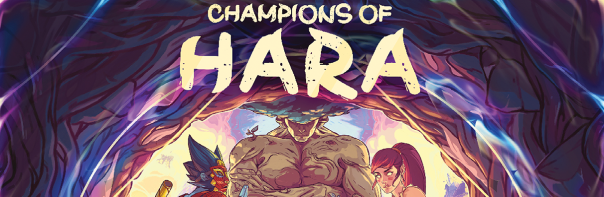
Ask me what my favorite thing is about Champions of Hara, and you aren’t going to like the answer. It’s far too twee. Too sickly sweet. Too basic.
Why don’t I tell you my second and third favorite things instead?
The Lonely Rhodes Scholar
The word “wargame,” like most board game genre definitions, is a nebulous thing. Do political sims count? What about games about the weeks and months leading up to war? What about wars by other means? It’s this conundrum that makes me propose an alternative: a wargame is that which contains a rulebook that’s alternately impenetrable, opinionated, and insightful.
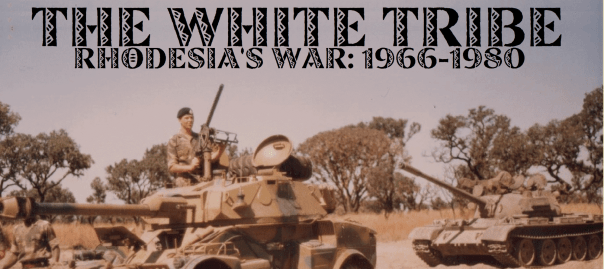
Ben Madison’s solo wargame The White Tribe fits at least the last two descriptors. In one sense, it operates in the same headspace as Tom Russell’s This Guilty Land — politically charged, critical of racism and the systems that support it, and deeply conscious of how legislation is passed, employed, and sometimes abused. But if it’s a mirror, it’s an inverted one. Where Russell’s approach was pessimistic, casting the U.S. Civil War as inevitable and compromise as poisonous — a view Russell supports quite well, as I wrote last year — Madison charts a careful course between terrible extremes and concludes that, sometimes, collaboration is the only way to keep from plummeting into the abyss.


