Author Archives: Dan Thurot
The Ungovernable Stonewall Uprising

This past August, an apostle of the Church of Jesus Christ of Latter-day Saints spoke to the assembled faculty of Brigham Young University to call for both the building and the defense of that institution. His twin metaphors were a trowel and a musket; the topic, same-sex marriage. There’s been much hubbub over what he “really meant.” Such a discussion will always be academic, inherently disconnected from how his words were actually received by their countless recipients. Within hours of that talk, I sat by the bedside of a fourteen-year-old girl. She hid her freshly scarred forearms from view. She asked me why God hated her. Why God had made her this way if only to hate her. Why that kindly apostle hated her. Why she hated herself.
Hate is not an easy topic for a board game. Nor, really, is love. With Stonewall Uprising, designer Taylor Shuss takes a chance by asking his players to embody both of them. One player becomes Pride, determined to carve out equal rights in a land that has always promised big and fallen short. The second player becomes The Man. The Man is there to hate. To hate and to take and to demoralize. It’s exhausting to play as The Man. Exhausting but essential.
New Year, Old Year: 2020 Revisited

Nothing to see here — I’m only four months late to our February tradition. But you know what’s almost as good as February? March.
For those who might not know what’s going on, this is our chance to reexamine my top picks with the benefit of hindsight. How did my Best Week 2020 selections hold up? Let’s take a look.
Ole Snaggletooth Nevsky

Board games are fantastic at modeling complex situations. I suspect that just as music is the art of sound, film is the art of directing, and literature is the art of fantasy authors using italics to tell me when their characters are delivering moody internal monologues, board games are the art of reducing models to their most digestible format.
Volko Ruhnke is no stranger to setting cardboard and counters to this purpose. Best known for the COIN Series, which depicts asymmetrical insurgencies, revolutions, and ideological contests throughout history, Ruhnke has now delivered a second system. This one is called Levy & Campaign, its first volume is Nevsky, and it’s an exemplar of how to deploy incentives and constraints to teach us something about history.
Spacium: The Enspacening

Gary Dworetsky’s Imperium: The Contention just might be one of the most unfortunate titles ever to appear on my table. By which I mean its title is atrocious. First of all, there is now a moratorium on using “imperium” in any more game titles. Sorry. I declared it. No more imperia. Second, there has never in the history of contentions been a contention that deserved the definite article. And don’t tell me I need to read the fluff at the beginning of the rulebook to understand the meaning behind The Contention. It’s a space game. Space empires, space bugs, space mafia, space humans. Can we fast-forward through the exposition already?
Color me surprised, because Imperium: The Contention is entirely happy to fast-forward through not only the exposition, but also through the extra hours that distend most games about space empires. Pare away the fat, leave nothing but muscle and spiked appendages and laser cannons. If that were the only thing going for it, it might be enough. Instead, Imperium has become one of my favorite rapid-fire space games in a very short amount of time.
Triggered Effects

I suffer from panic attacks and poor health.
How’s that for an opener? I’m normally reserved about sharing personal details like that. But there it is: I’ve suffered from health complications my entire life, a handful of which have necessitated serious corrective surgeries and lengthy periods of recovery. Heading Forward, the solitaire game designed by John du Bois, makes sharing those details easier, or at least less frightening. Maybe those are the same thing. Empathy isn’t the first emotion I would expect to feel when playing a board game, but this demonstrates exactly how to express something deeply personal via a handful of cards and some punchboard spoons.
The Guild of Guilt-Free Explorers

Despite containing no pencils, dry-erase pens, pads of paper or laminated cards, Matthew Dunstan and Brett Gilbert’s The Guild of Merchant Explorers is as much a flip-and-write game as any other. It’s the feel that counts. A single card is flipped. Everybody uses that card to fill in spaces on their personal map. Everybody suffers or profits together. At least initially. After a few cards, whether any given flip helps or hinders your expansion is a function of planning and foresight rather than mere chance.
What sets this title apart from its peers, though, is the way it resets between eras.
Move Along Home: The Board Game

I think it’s fair to say that Star Trek never really understood games or why people play them. Watching Starfleet officers spit nonsense rhymes while playing hopscotch wasn’t exactly the high point of Deep Space Nine. Another time, The Next Generation introduced a free-to-play app game to the crew of the Enterprise. After the adults displayed all the willpower of a kid with a Fortnite addiction and unfettered access to his mom’s credit card, Wesley Crusher saved the day. Probably because he was the only youngster. Desensitized little goblin.
Fortunately, Geoff Engelstein didn’t adapt either of those episodes for his third outing of Super-Skill Pinball.
Arcs Avec Arc

Where last week’s examination of Arcs, the upcoming title from Cole Wehrle and Leder Games, focused on Arcs as an experience meant to be completed within a single session, today we’re delving into the “arcs” of Arcs. That’s right: I’ve completed two full campaigns. That’s six plays, a few branching narratives, and two galaxies brought under the reign of a single power.
I have some thoughts.
They See Me Rollin’
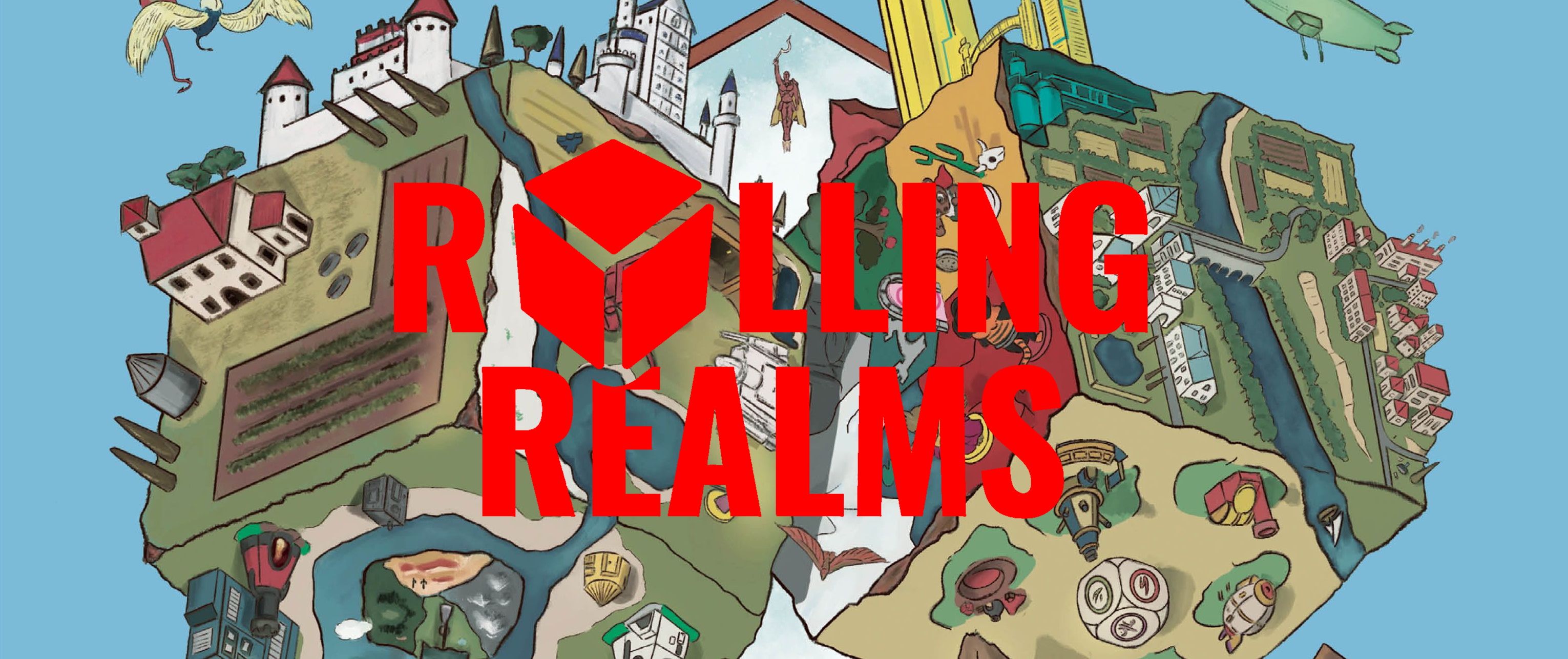
When I’m bored, I add more hours to Spelunky. When Jamey Stegmaier is bored, he designs roll-and-write games. That’s the origin story for Rolling Realms, born of COVID downtime and one of the genre’s greatest strengths: the ability to be played by large groups, even when they don’t occupy the same room.
To my surprise, it’s rather charming.
Arcs Sans Arc

Whenever I mention Arcs, the upcoming four-letter title from Cole Wehrle and Leder Games, everybody wants to know about the campaign, the three-session “arc” that will chart the ascent of four players amid the decline of a stellar empire. It’s a fascinating premise, and not only because it formalizes the playful and open-ended concept of a non-legacy board game that rolls over from one session to the next that Wehrle introduced in Oath.
This preview is not about that. At some point in development, Arcs was split in two. To mitigate costs and the danger of tossing a gaming group out the airlock before they’ve had a chance to suit up, the campaign is now a day-one expansion. Arcs, the core game anyway, is now a single-session board game. Which up until very recently was just called “a board game.”
How is Arcs sans arc? Let’s take a look.

 SPACE-BIFF!