Author Archives: Dan Thurot
Our Quiet Year: Spring

Today marks the beginning of a short series about storytelling card game The Quiet Year from Joe Mcdaldno’s Buried Without Ceremony. This designer is so indie, you can pay for his games by doing good deeds. Awesome.
This is going to be a little different than most of the stuff I write here at Space-Biff! As The Quiet Year is a storytelling game, I’m only going to talk about the rules a little each week. The rest is about the story four people crafted about our community; its hopes, fears, and struggles; and, eventually, its end.
There’s Always a Board: Bioshock Infinite

I would have loved to begin this review with some snark about how there’s never been a good boardgame based off a videogame, but that’s not even remotely close to true. In fact, videogame licenses generally seem to fare better than their television and movie counterparts. There are all sorts of examples: Civilization, Doom, Starcraft, Warcraft, Age of Empires III: Age of Discovery, Gears of War, the Resident Evil deckbuilder — crud, there’s even an okay version of Risk with a pasted-on Halo theme. And that’s only counting direct licenses, not the hundreds of titles that draw inspiration from the digital; take Christian Marcussen, for example, whose Clash of Cultures and Merchants & Marauders elevate Sid Meier imitation to an art form.
But it’s time for all of those games to step aside, because videogame-licensed boardgames have found their One True King. His name is Bioshock Infinite: The Siege of Columbia, and if we really follow this metaphor to its uncomfortable conclusion, then Plaid Hat Games is his mom.
Tactile/Dexterity/Component Quest
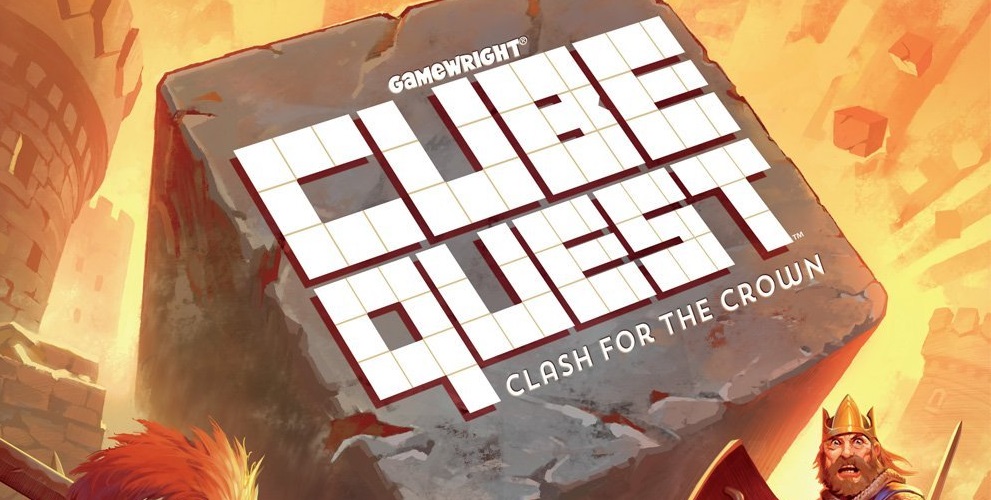
One of my favorite things about boardgaming is the innate tactility of the hobby. It’s much the same reason I prefer bound books to digital copies — I love the weight of pushing a threatening piece across a board, the rattle of dice at a critical moment, the delightful textures of cardboard and plastic. I even love those crappy cards every successful Kickstarter project seems to be using these days, the cheap ones that feel like they’re flaking at a molecular level and make your hands feel weird until you wash them. And I love the way designers come up with clever ways of making this hobby even more touchable, from hiding bonus cards beneath your battle cards in Kemet to the information-concealing shields of BSG Express and Archipelago to real-space games like Master Plan.
And if I’m nerding out about those mechanics, you know I’m having a straight-up aneurism over the sheer sensory overload of dexterity games. Because, hey, if there’s one genre that gets the importance of “feel” in boardgames, it’s games like Catacombs, Ascending Empires, and Cube Quest.
Vanguards vs. Fallen Kingdom, Round II

Summoner Wars is so full of bitter rivalries that it could be about pro wrestling, but all of them pale in comparison to the conflict between the sickeningly rotten Fallen Kingdom and the sickeningly noble Vanguards. Now, with the appearance of an additional summoner on each side, these two factions are once again squaring off on the battlefield — which means Somerset and I are squaring off again too.
Roll under 40 to Spot: Tanks of War
Rich Nelson, founder of Giant Goblin Games, is in the process of shipping his baby to nearly a thousand Kickstarter backers at the very same moment I sit here writing this. Storm the Castle! is his first foray into the intimidating world of boardgame publishing, and he’s determined it won’t be his last.
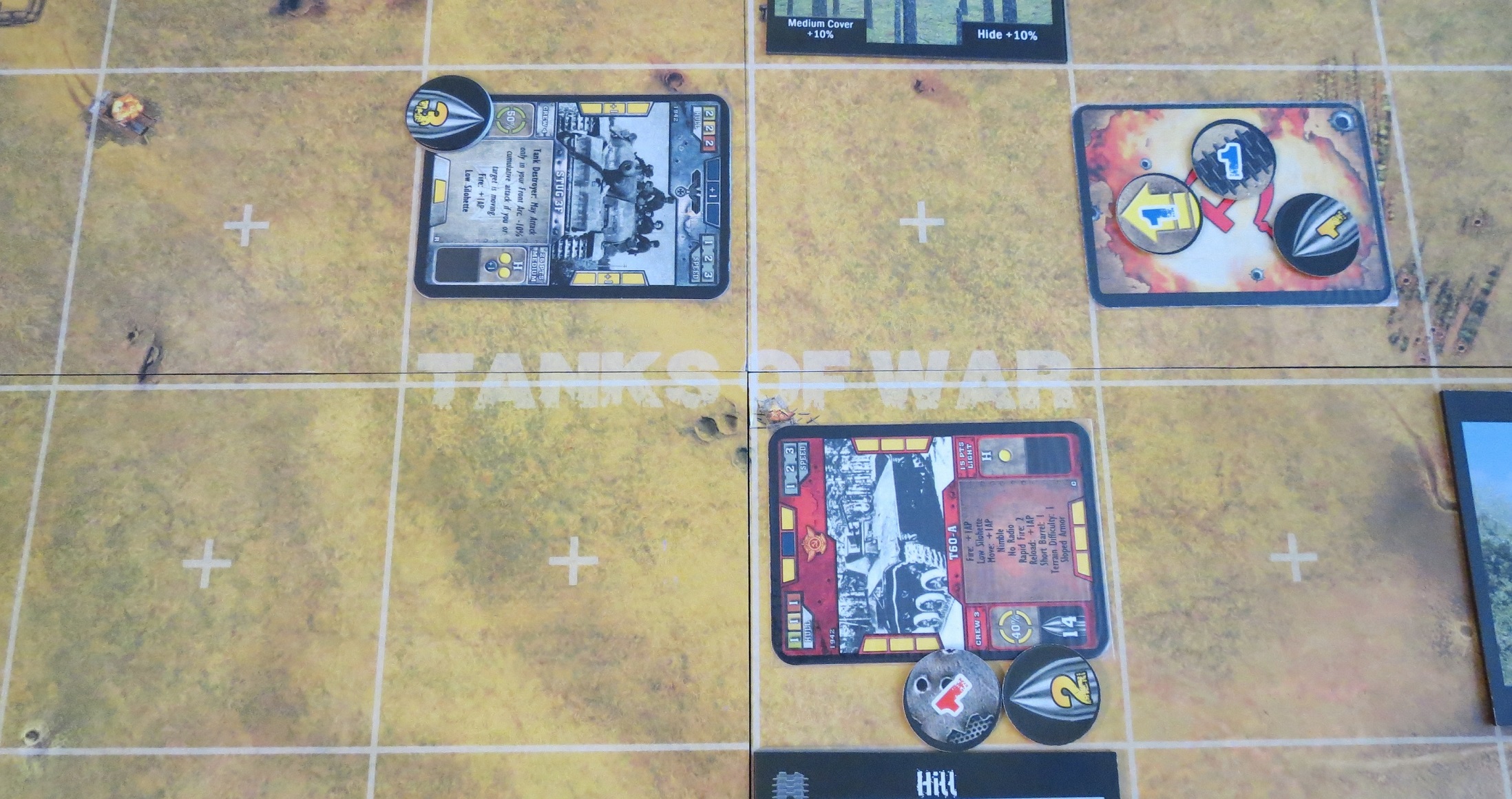
Since we live in the same city, I got to sit down with him for a look at his second project, the aptly-named Tanks of War: Third Reich Rising (because it’s about tanks, and war), and after talking for a while about what he’s doing to differentiate this from all the other WW2 games out there, I got a chance to play it. Quite a few times, in fact. What follows are my impressions of this WW2 tank-battle deck-building game, which should show up on Kickstarter sometime in the next week or so.
Shadowrun Mostly Returns

If you don’t know anything about the world of Shadowrun, it’s a prime example of the cyberpunk genre we all know and love, full of heartless megacorporations, hackers with glowing avatars, the word “runner” indicating someone working a spurious career path, and thousands upon thousands of square kilometers of crotch-scented slums. However, it’s got one major twist that transmogrifies it into something distinct from all its would-be twins: thanks to a mysterious “awakening” about fifty years before the setting’s present day, this particular universe houses elves and dwarves, orcs and ogres, demons and magic. These exist alongside the humdrum day-to-day of glaring neon and hand-to-mouth desperation. And here, recent Kickstarter success Shadowrun Returns is all about your deeply flawed character’s noir-flavored quest to solve the murder of an old friend — though in a world where everyone lives in the shadow of unreachable highrises, even your motives are shady.
It’s About Building an Island Fortress

Island Fortress strikes me as a deeply silly title for a boardgame. So matter-of-fact. No mystery to it. It’s kind of like naming Archipelago, I dunno, “Unethical Caribbean Colony” or something. Or calling Netrunner “Corporate Hacking.” I’m not sure why it strikes me as so unusually stolid when there are plenty of poorly-named games games out there, but whenever I look at the box, I hear an accountant telling me, in the flattest voice possible, “We are now going to begin constructing an island fortress.” Then he starts eating all the crackers and talking about his favorite equity funds.
Thank goodness I don’t judge books by their covers unless they’re romance novels, because otherwise I would have never learned that Island Fortress is the best time you’ll ever have sending dozens of people to their deaths so that you can play Tetris.
Rats and Rogues

Plaid Hat Games seems determined to win some sort of Best-Game-Quality-to-Company-Size-Ratio Award or something. Frankly, they were doing a great job of it with just Summoner Wars and City of Remnants, which has more mechanics crammed into one spot than an auto repair convention. Even Dungeon Run, far and away their weakest game, is still pretty solid, with enough of a twist to set it apart from all the other dungeon crawls on the market.
Enter Mice and Mystics, a story-based dungeon crawl-style game about a pack of too-cute mice on a quest to reverse the curse of an evil queen. It’s already won everybody’s hearts, penned a heap of glowing reviews, and garnered a whole bunch of awards — including the Dice Tower “Best Small Publisher” Award, which I suppose means Plaid Hat has accomplished its goal and must now blast off into the far reaches of space until the day it’s needed once more. But I digress. The popularity of Mice and Mystics is reason enough for me to not cover it, since I like writing about niche titles my readers may not have heard about, but my recent reentry into its brilliant campaign has forced my hand, and I feel compelled to point out some of the things I like best about it.
Netrunner: The Jinteki Deception

I could write a review of Android: Netrunner, but there would be little point. Its quality is well-documented, and its more enthusiastic advocates speak of it with language that could fool the pope into believing it the second coming. Perhaps that isn’t too far off, crucified as it was by the all-consuming popularity of Magic: The Gathering and resurrected by Fantasy Flight Games for a new era. It is risen, etc.
What I’m saying is that this isn’t a review. It’s also not quite like anything I’ve done here on Space-Biff! before. Instead, this is merely a description of one of the purest, most memorable experiences of my board- and card-gaming career.
Neuroshima Rectangle

Ignacy Trzewiczek is best known for two things: one, he’s the only boardgame designer alive today whose name is harder to pronounce than Vlaada Chvátil’s (I think. It’s not like I can pronounce either of them); and two, his clockwork brain is responsible for a few recent hits like Prêt-à-Porter, 51st State, and the upcoming Robinson Crusoe: Adventure on the Cursed Island. When I heard that The Convoy was set in the same hard-bitten world as Neuroshima Hex, and that it used one of my favorite cardgame mechanics (horizontal area control!), I could neither eat nor drink until I had a copy in my hands. Was my excitement justified? Find out below.

 SPACE-BIFF!