Author Archives: Dan Thurot
Alliances Mega #2: Stinking Swamps
As the next phase in the Summoner Wars continues, with alliances being struck between the sixteen previously-disparate factions, what do you get when the undead Fallen Phoenix invade the lands of the Swamp Mercenaries?
Whatever else it may be, it’s going to be stinky.
App-Chemists

Alchemists, also known as The Other Board Game With A Smartphone App, is all about chemistry. Y’know, sort of. Strictly speaking, it’s about alchemy, and I’m sure any self-respecting chemist could speak some stern words about how they’re different, even if those words amounted to so much whiffle and puff to the rest of us.
However, Alchemists is about chemistry in the sense that you take some ingredients, set up an experiment to combine them, get your results, and then still not have much of an idea what’s going on. At least not yet. It’s a game where you’ll complete a long-awaited mixture — say, mandrake root and red scorpions combine to make paralysis potions — then quietly jot down a note and chew on the back of your pencil for a bit, wondering how the hell you’re going to publish a paper about that underwhelming factoid, let alone make a fortune or get famous from it.
Welcome to academia.
Argent: Big & Tall
Argent: The Consortium was my favorite game of 2014 — which, sure, was a bit of a cheat, considering it didn’t release until early 2015. But such is the perk of being a gentleman thief who only targets overseas board game warehouses.
The base game was packed with variety. There were tons of treasures, spells, and supporters, certainly more than you could see in a single game. Every single room and even the workers who carried out your bidding came with an alternate B-side. Between the myriad possible university combinations, powers, spells, and victory conditions, it was possible that every game would be different in some way.
To that end, if you had asked me if Argent needed an expansion, I would have laughed in your face, spittle soiling your eyebrows. Now, I can’t imagine playing without Argent’s first full expansion, Mancers of the University. So what’s the deal?
Alliances Mega #1: Hogar’s Run
Deals have been struck. Some benevolent, some… well. It was always inevitable that once the Summoner Wars began in earnest, the sixteen factions who found themselves in possession of summoning stones would seek alliances, no matter how desperate or ill-motivated. And when it’s between the Tundra Guild and the Cave Filth, that’s one fight you sit back and let run its course.

Groanland
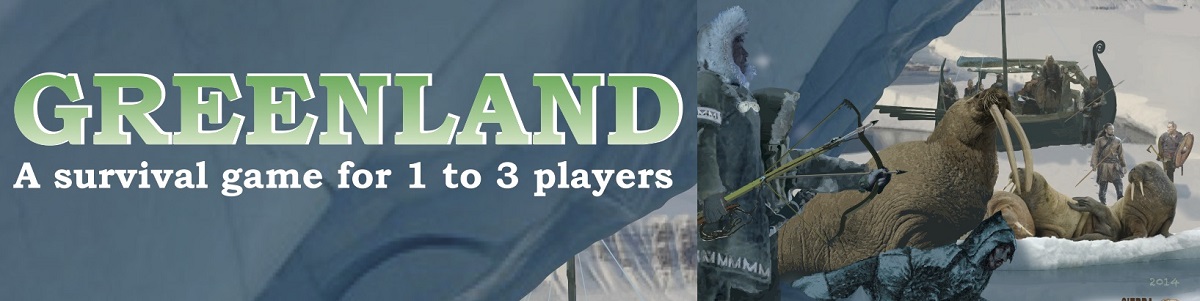
Like so many of Phil Eklund’s games, including the hit Pax Porfiriana, the cards transform after a couple games. At first, they’re cluttered with text and competing symbols, so many that they’re nearly impossible to parse. After sending your tribe to hunt polar bears, you’ll reach out to pick up your failed rolls for another try, only for another player to bark at you, “What are you doing? You can’t reroll those.”
“Yes I can!” you’ll insist. “It says so right here.”
“That’s a Sage,” they’ll point out. They might even reach across the table and tap your tribe elder card. “Your Sage lets you reroll fours, yeah, but only for metallurgy rolls. See? See the difference? You’d need a Tracker to reroll fours while hunting on land.”
After a while you’ll spot them, the tiny symbols that represent metallurgy and land hunting. You’ll nod slowly, staring at the cards spread across the table. Then your opponent will clear his throat. “Oh, and hey, threes mean the polar bears ate your guys. So you just lost two hunters.”
Do Deus
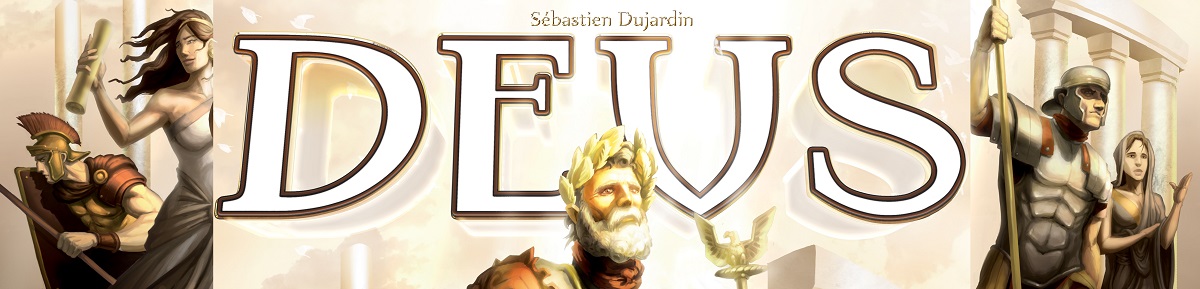
When it comes to board games, one of the few things I enjoy more than arranging tableaus is arranging tableaus that matter.
What on Earth do I mean by that, you ask? Basically, that you should play Deus.
The Scramble for Ganymede
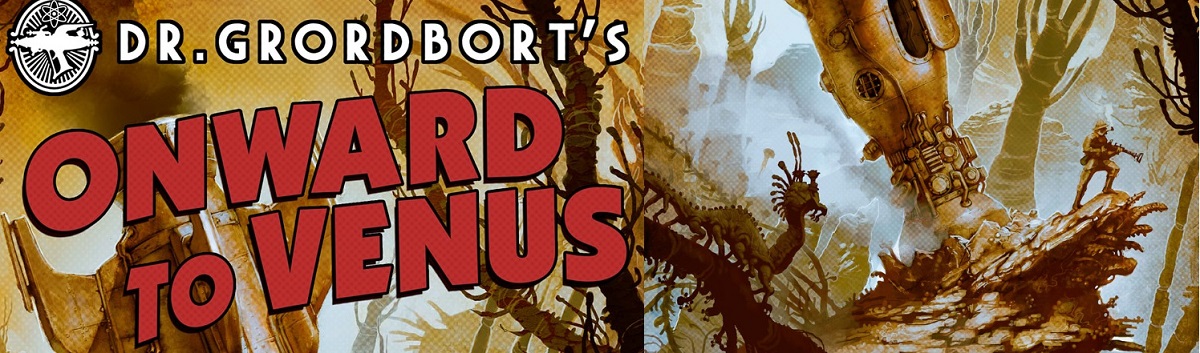
While the European powers of our universe were bloody to the elbows with the “Scramble for Africa,” invading, occupying, and colonizing the continent down south, their near-exact counterparts of Greg Broadmore’s Dr. Grordbort’s setting had already taken to the stars — to invade, occupy, and colonize everything other than Earth. It’s the difference between Heart of Darkness and Heart of Darkness on Titan, with helpings of big game hunting, resource exploitation, and suppression of unruly and many-appendaged natives.
Considering the delightful eccentricity of its setting, it’s hardly surprising that Onward to Venus should be designed by Martin Wallace, whose unconventional design philosophy resulted in that other alternate-history mashup, A Study in Emerald. But where A Study in Emerald was about the paranoia that surrounded European anarchist movements in the 19th century (plus aliens), Onward to Venus is concerned with the aforementioned explosion of colonialism at roughly the same time. Plus aliens.
Not too much in common, then.
Fief: Chocolate and Raspberries Edition
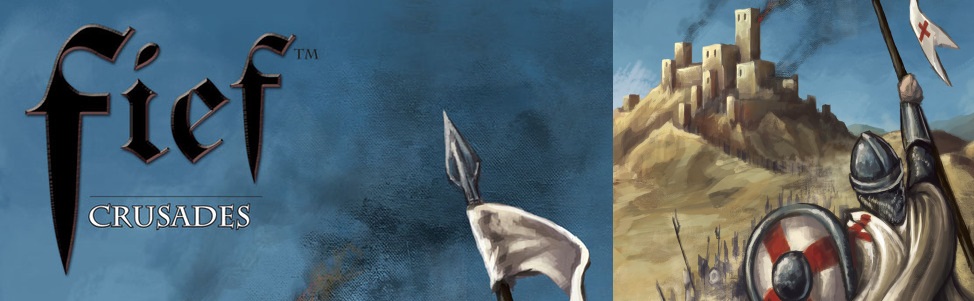
The vanilla edition of Fief: France 1429 already contained about 76 things to keep track of at once, so it’s only natural that it should already have five expansions to round that number out to an even hundred. All including the biggest of these expansions arrive in a small package, but even the smallest wants to add a whole mess of extra things to one of the busiest games I’ve played in recent memory.
Since adding the expansions presents almost as much difficulty as learning the base game itself, let’s talk about all five, what they do, and whether they exacerbate or alleviate Fief’s madness.
Love and Hate in the 15th Century

I’m a historical kind of guy. I like my women in hennins, the sleeves of my cote-hardie decorated most ostentatiously, and my games to reflect the harsh realities presented by merely getting dressed on any given morning in the 15th century.
With that in mind, Fief: France 1429 ought to be the greatest game I’ve ever played. Instead, I’m prepared to make two completely true statements:
1) I absolutely hate Fief.
2) I absolutely love Fief.

 SPACE-BIFF!