Blog Archives
Expanditions

I didn’t love Expeditions, Jamey Stegmaier’s follow-up to Scythe. For a game with such an enticing setting, it was sterile and undifferentiated, more zoned out than Zone. But when Gears of Corruption showed up at my doorstep, I was eager to return to this meteor-blasted Siberia with my trusty animal companion and rusty mech. That’s a good sign. Right?
Right-ish. Gears of Corruption does indeed improve on the game it’s expanding. But like a few splashes of paint over the rusted flanks of my crawling longship, there’s only so much it can do.
Space-Cast! #34. Bees & Dragons

Which is more unexpected, science-fiction bees or realistic dragons? For today’s episode, we’re joined by Connie Vogelmann to discuss that very issue. In addition to discussing Apiary and Wyrmspan, we also dig into how these games came to be, the benefits of grounding a setting, and the behavioral biology of leaving negative ratings on a game one hasn’t played.
Listen here or download here. Timestamps can be found after the jump.
Dragons Greater and Lesser

It’s an odd thing to say, given that Connie Vogelmann’s spinoff of Elizabeth Hargrave’s Wingspan is about fictional creatures rather than real-world birds, but Wyrmspan benefits from its sense of grounding.
Yeah, yeah, I know. But it’s true. Wingspan, which I’ve always had a fondness for, requires some degree of acceptance. You’re arranging its avian wildlife into three rows that represent… sanctuaries? Bird-watches? Meals? I couldn’t tell you. By contrast, Wyrmspan settles into a fiction of carving dragon nests into a primeval mountain. You feed the beasts, fill their hoards, raise their hatchlings. It’s every bit as pleasant and appealing as Wingspan, but heftier and more established.
Also, it sends my ten-year-old into paroxysms of joy. So there’s that.
Beads?

There’s an obvious appeal to Connie Vogelmann’s Apiary, if only because “space bees” is such an evocative pair of words as to bend light waves. Also, bee puns are really, really easy. “Bee” sounds exactly like the letter B. Come on.
But I want to set that aside, because Apiary excels at making difficult things look easy. This is a fine-tuned example of optimization gameplay and speculative fiction. I suspect there was nothing easy about designing it.
Roadside Picnicking

There’s always been a bit of an identity crisis rattling around the copper-bottomed hull of Scythe. Jamey Stegmaier and Jakub Rozalski’s alt-history speak to one thing, those continental hamlets shaking at the approach of smoke-belching combat mechs. Then you play it and it’s about moving logs. And I say this as somebody with an above-average appreciation for the thing.
After multiple expansions and a spin-off for kids, Stegmaier and Rozalski are back at it with a proper sequel. It’s called Expeditions, and it swaps the battle-torn countryside for the barren tundras of Siberia, where a recent meteor fall has kicked off a series of otherworldly events. It’s a tantalizing excuse to groom your animal companion, check the bolt of your rifle, and hop into the old mech for one last adventure. It’s too bad the winter air doesn’t work any miracles on the series’ neuroses.
They See Me Rollin’
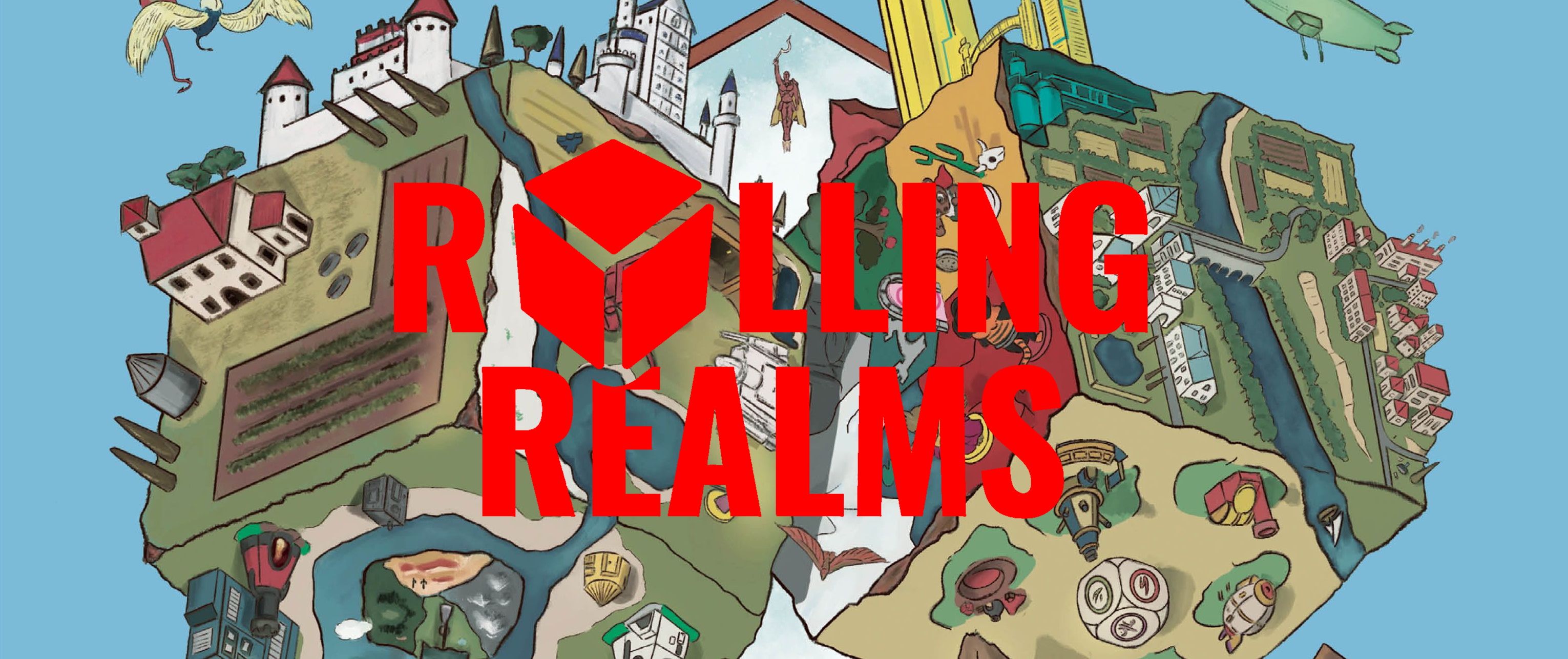
When I’m bored, I add more hours to Spelunky. When Jamey Stegmaier is bored, he designs roll-and-write games. That’s the origin story for Rolling Realms, born of COVID downtime and one of the genre’s greatest strengths: the ability to be played by large groups, even when they don’t occupy the same room.
To my surprise, it’s rather charming.
Sailing the Seven Skies

If there’s any one thing I’ve learned about pirates, it’s that they’re no good at getting along. Paolo Mori channeled that not-getting-alongness into Libertalia. To celebrate its decade anniversary, it’s now getting a spruced-up version from Stonemaier Games, complete with nicer tokens, new cards, and a move to the skies that’s riled up a few fans of the original.
But while the change in setting might be a lateral one, Libertalia: Winds of Galecrest is otherwise a perfect remake. The original game was worthy of appreciation; this one has the waxed timbers of a modern classic.
Red Diminishing

It’s the dystopian future and a group of attractive youngsters are the only ones who can stick it to the system. How very Young Adult! If you haven’t heard of Pierce Brown’s Red Rising series, don’t worry, neither had I. Nor is any knowledge of the series necessary to play Jamey Stegmaier’s cardboard adaptation. Although that’s largely because this adaptation is more about professional networking than overthrowing the ruling class.
Massless Rod, Massive Bob

Real-time games are tricky, both to design and play. It’s an inherent conundrum. Most of our hobby lets us take things slow, examine the playing field from a sky-high vantage, and make decisions based on data rather than reflex. For a real-time game to work, it’s necessary to shift the player’s headspace into overdrive without cooking it altogether. Along the way, there are hurdles aplenty to consider.
Pendulum almost clears them. But the thing about hurdles is that almost clearing them still leaves you chewing rubber. Let’s talk about how it misses that final crucial inch.
Advancement Tracks

Genre is a funny thing. What counts as a western, for example? Or noir? Is there a tipping point between horror and action-horror? Do genres inform our artistic decisions, or are they labels we slap onto things to arrange them into tidy boxes?
Even though it hasn’t officially hit retail yet, Jamey Stegmaier’s Tapestry has already proven divisive. Right there beneath its title, it announces its intentions. A Civilization Game, it says, front-loading expectations with a whole lot of history. But if it’s a civilization game, it’s certainly an unorthodox one. Some have called it an evolution. Others seem to consider it a misfire. As someone who’s deeply interested in “alternate” civgames, those that seek to portray the sweep of human experience in ways that haven’t been endlessly rehashed, I’ve picked my side. I’ll put it this way: if civgames were westerns, Tapestry would be Cowboys & Aliens.


