Blog Archives
Almost Famous

After yesterday’s alleyway mugging by Loot of Lima, almost anything would be an improvement. Good news! Our next BoardGameTables entry, On Tour by Chad DeShon, is exactly the broad-appeal title I was looking for. It’s both a roll-and-write and a flip-and-write. That’s a twofer.
Lima Beans, Maybe

I’ve been on a BoardGameTables kick. Not because I need a board game table. I’ve got one of those. It’s two card tables with a slab of felted plywood laid over the top. Upscale, I know. Instead of a table, BoardGameTables sent over four games in one big package. The current plan is to write about them in ascending order of quality.
Which probably clues you into what I think about Loot of Lima.
Space-Cast! #21. Turncoats on Turncoats

Today on the Space-Cast!, we’re joined by Matilda Simonsson of Milda Matilda Games, designer (and crafter) of Turncoats. Listen in as we discuss the inspirations, production, and implications of a game that seems ten times its size.
Listen over here or download here. Timestamps can be found after the jump.
Happy Trails to You

Ryan Courtney tends to design games that I want to like more than I actually do. Pipeline was good for a few sessions before it began to feel solved. Curious Cargo was curiously burdened by confounding scoring. In both cases, these were games about arranging curlicue routes from a pile of mismatched tiles, except the routes themselves played second fiddle to underwhelming bookends.
But then there’s Trailblazers, Courtney’s upcoming title that should hit Kickstarter next month. I have a bit of a thing for Trailblazers. Probably because the routes are finally front and center where they belong.
Terraforming Earth

Ark Nova, designed by Matthias Wigge and so widely acclaimed that it’s been distributed by literally one dozen publishers, is easiest to describe via amalgamation. There’s the sprawling market of Vlaada Chvátil’s Through the Ages, the escalator of five action cards from James Kniffen’s Civilization: A New Dawn, and the vaguely aggravating card draws of Jacob Fryxelius’s Terraforming Mars.
It’s wildly popular. I think I know why.
You Turncoat Me Right Round Baby

There aren’t nearly enough shared control games. Matilda Simonsson, sole proprietor of Milda Matilda Games, apparently agrees, because she’s gone ahead and designed what could be described as the Platonic ideal of shared control. Inspired by the work of Cole Wehrle — glad I’m not the only one — every copy is crafted by hand. More importantly, it cuts to the heart of what makes shared control so dynamic and exciting.
Spoiler: Turncoats is absolute fire.
Welcome to Helladise

I’ll confess to having a morbid fascination with survival tales that turn to cannibalism. Flight 571. The Donner Party. Yellowjackets.
Now Hellapagos.
When a group of attractive twentysomethings are shipwrecked on a desert island only days before a tropical storm strips the place bare, what will they do to survive? Fish around in a burlap bag for wooden balls, mostly. See also: cannibalism.
Low Tide
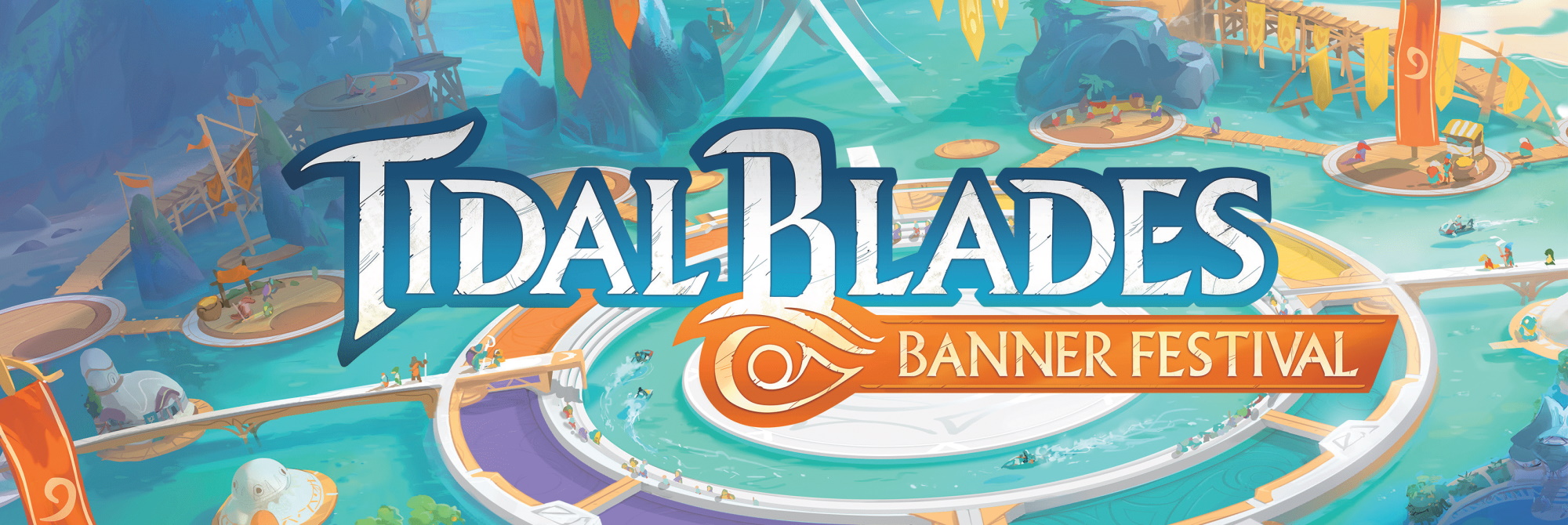
Every year, the clans come together to celebrate. They ride the waves, share great feasts, and show off their towering banners. I don’t know the first thing about the Tidal Blades universe, but there’s something lovely about being invited to partake in a fictional culture’s holiday.
Except I’m not entirely sure where this one fits. Rather than being designed by Tim and Ben Eisner, co-creators of the original game (along with recent favorite Wonderland’s War), Banner Festival is helmed by J.B. Howell and Michael Mihealsick. When last we saw them, they were offering another waterlogged effort in the form of Flotilla. Good to know they already have their sea legs, because there’s a storm on the horizon.
Whither the Worms

Peter McPherson’s Wormholes seems like the sort of game I ought to enjoy. Beginning from a central station, players venture into the great beyond to make contact with far-flung planets, deploy wormholes to transit from one end of the galaxy to the other in the blink of an eye, and deliver passengers to their intended destination. You’re a space taxi! I can get behind all of that.
So why does it leave me as chilly as a punctured spacesuit?
From the Scrap Metal

Given how many of the things are about growing up, it’s a marvel nobody’s bothered to design a board game bildungsroman.
Space Station Phoenix, Gabriel J. Cohn’s latest foray into Rio Grande’s catalog of games about outer space and dice with custom faces, pitches itself in the opposite direction. What if rather than getting big, you’re asked to first tear yourself down? It isn’t exactly a coming-of-age story. But as someone intimately acquainted with the art of self-flagellation, it sounds like the sort of thing I’d be an instant ringer at.


