Still Not a River in Egypt
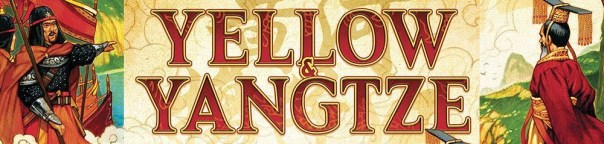
It’s hard to imagine anybody improving on good old Tigris & Euphrates. At over twenty years old it still remains a monument of our hobby, a surprisingly fluid combination of setting and systems, simple enough to learn, incredibly difficult to master.
Yellow & Yangtze is Reiner Knizia’s attempt at besting his own classic. What’s there to change? A whole lot, it turns out. And much of it has to do with that staple of Tigris & Euphrates strategy, the monument.
Fast Math: A Look at Lovelace & Babbage
Despite being terrible at theoretical math, one of my favorite classtime activities was to take a large number — probably something like 55378008, since I was a hormone-addled thirteen-year-old — and divide it mentally into the smallest possible quantity. Dividing by two or five was easy; three was tougher, but there were tricks. Sevens or other primes usually left me stumped.
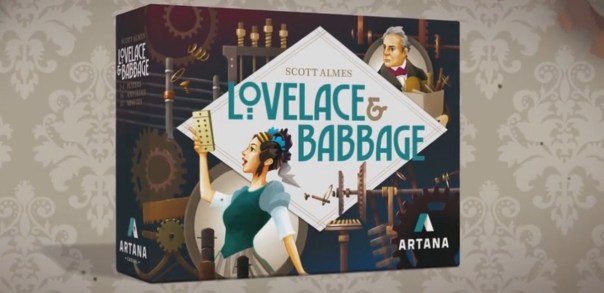
Lovelace & Babbage, on Kickstarter right this very minute, is all about the joys of simple arithmetic — with the caveat that it must be done fast.
The Happiest of All Possible Planets

To this day, Happy Salmon remains the only game to occupy the hallowed annals of Best Week without first getting reviewed here on Space-Biff! Doubly embarrassing, considering that it earned its spot two Best Weeks ago. That’s right, way back in the dark ages of 2016.
But today I’m setting things right. Especially because North Star Games has since rounded out their Happy Planet line with two more creatures.
“Modern Crime”

I sat down to write this review. Then I realized that last night’s dinner was unsettling my stomach. During my trip to the gentleman’s closet, I began playing a game on my phone to pass the time. Then, digestions completed silently and rightly, I went to the couch to finish up, because those gems aren’t about to match themselves. Now with an empty belly, I consumed an entire spoonful of peanut butter, scraping the jar clean. Time for a walk through the neighborhood to clear my head. On the way back, I concluded to finally sit down and finish this review.
And therein lies the main problem with Detective: A Modern Crime Board Game. Come on down and I’ll explain.
Welcome to Your Suburban Hellscape

Last month I called out a particular roll-and-write game as handsome but dull. It isn’t necessary to mention the game’s name (it was Ancient Artifacts) but some part of me was left wondering if the entire genre was a flash flood of hype — a dull roar, a rush of water, and the sudden crashing realization that this slot canyon was the wrong place to pitch camp.
Benoit Turpin’s Welcome To is the roll-and-write that changed my mind. And it doesn’t even feature any actual rolling.
Okay, I lied. Sometimes the little golf pencils included in the box fall off the table. That’s a type of rolling.
Static Realms

Disclaimer: No realms are shifted in the process of playing Shifting Realms.
And that’s honestly a shame, because relocatable fantasy dimensions could have added something wonderful to this competent but by-the-numbers take on the gather’n’build genre.
104: 1arta 0mpera 4ictoria

Rémi Amy’s CIV: Carta Impera Victoria is so cute that I could vomit. No, it isn’t the way the bobble-headed artwork by Christopher Matt recasts human history as one limitless highway of nodding along to the radio. Nor is it the pun hidden right there in the title. Carta Impera Victoria. CIV. Civilization. We get it.
Nope. It’s the fact that the game entitled CIV should contain 104 cards, just as the Romans would do. Ugh. I don’t even believe in assigning scores, and already this thing is pulling zero stars out of a hundred.
Which is a pity, because CIV is one heck of a slick card game.
Book-Space! #3: Six Wakes

At last! A book we don’t love! Join Brock, Summer, and Dan as they engage in the third-ever episode of the Space-Biff! Book-Space! to talk about the legality of cloning, what our AI-selves would be in charge of, and how little is too little for a Catholic priest to know about the Bible. It’s Six Wakes by Mur Lafferty. And although we’re spoiling everything, there isn’t much need to read this one before listening here or downloading here.
Join us next month for a discussion about The Stars are Legion by Kameron Hurley, and share your thoughts at spacebiffbookspace@gmail.com!
Alone on the Computer

Now that Netrunner is dead, I’ve been thinking more about those first few months of its existence, before the pro scene and a steady march of upgrades left me standing on the highway watching the dust kicked up by its tires as it left me behind. It was one of those games that briefly captured me, gave me a rough shaking, and then departed forever. Years later I would happen across its obituary and stare, unsure whether I was feeling regret at not playing more or relief that I didn’t stick around until the end.
It’s Renegade that brings back those memories. Not because both games feature body-modded individualists peeling away an oppressive system’s layers of defense, though there is that. But rather because they’re both far cleverer than they first appear.
Oh, and because they both positively drown you in terminology. As in, hands around the throat, bathtub of ice water, drowning you.
Negaland

Ryan and Malorie Laukat’s Megaland — the Megaland inside the game Megaland, I mean — is your typical video game kingdom. But unlike the typical visitor to a typical video game kingdom, your adventurers aren’t interested in beating levels or maximizing their abilities or completing sick raids. All they want is to amass those sweet, sweet coins.
Kind of like a digital gold farmer. As far as settings go, that’s a first.


