Author Archives: Dan Thurot
Winds of Change, Part Four: Cyprus

This is how The British Way ends: not with a bang but a whimper. Of the four scenarios in Stephen Rangazas’s vivisection of 20th-century British colonialism, Cyprus is the briefest and least rules-heavy inclusion, a suitable outcome for a conflict that was comparatively minor when contrasted with the counterinsurgencies of Palestine, Malaya, and Kenya. Exhausted by colonial occupations across the globe, the British Empire was spread too thinly to enact a full response. Instead, it elected to utilize the lessons of occupations past to sway international opinion and brutalize the insurgents into surrender.
As we will see, the outcome proved unsatisfactory to everybody.
Choose Your Own Cardventure

I spend a weird amount of time thinking about narrative in board games. So maybe it isn’t a surprise that I was drawn to Hildegard, the second entry in Greg Favro’s Spire’s End series, in which the obvious touchstone is choose-your-own-adventure books. You know, those things everybody cheated through as a kid.
The Plum Island Park Stroll

One of the finest solitaire games of all time is Dawn of the Zeds, Hermann Luttmann’s masterful riff on the States of Siege model. Not that it should be taken lightly. It presents a vicious struggle for survival that might end in calamity faster than the game can actually be set up. It doesn’t help that further editions and expansions cluttered the table with so many optional modules that even veterans of the zed wars might pause before breaking it out. At least this veteran has.
So it was with no small measure of excitement that I approached The Plum Island Horror, a spiritual successor to Dawn of the Zeds, and a perfectly schlocky reimagining of the small town under siege by reanimated horrors.
Talking About Games: Against Repeatability

There’s a recurring series I write on Space-Biff! called New Year, Old Year, which looks back on the games highlighted in Best Weeks past and evaluates them from a more updated vantage. When I began writing it back in 2017, there were two purposes behind the series. The immediate function was prophylactic. I’m often asked whether this or that game has held up since its release. New Year, Old Year could function as a repository for keeping my readers updated. Also, sure, so I had something to link to instead of answering those questions over and over again.
On a more personal level, New Year, Old Year also functioned as a form of accountability. A gut-check on my own tastes and attitudes. It was valuable to look back on the lists I’d written years before. With the benefit of hindsight, it was easier to see where I’d steered wrong, the gaps in my recommendations, or where my initial enthusiasm had been misplaced. The series was a corrective. It helped me not only reevaluate previous titles, but approach the games I was playing and reviewing right now with some additional perspective.
But something happened last year. When the appointed time came around to write about Best Week 2021, I couldn’t bring myself to do it. Something I’d left sitting on the windowsill for far too long had finally curdled.
I Sacrificed My Blood to NAWALLI

The first time I opened NAWALLI, the Aztec-themed card game from Gonzalo Alvarez and Will Rogers, I cut my finger. An occupational hazard, one might suppose, but this was no paper cut. No, the ruby scratch that marked my index finger had come from reaching too eagerly into the game’s baggie of tracker gems and obsidian stones. I soon found the offending piece, a miniature knife with jagged teeth and an unexpected bite.
I can’t think of a better stand-in for NAWALLI as a whole. Like that shard of volcanic glass, this game is jagged around the edges. It’s small and might nip at your fingertips. But it’s also so dang cool that I wouldn’t have it any other way.
More Like Hadrian’s Pathetic Ditch

It isn’t that I dislike the entire roll-and-write/flip-and-write genre. It’s that the genre never grew past its infancy. There are exceptions. To give one example, I recently enjoyed Steven Aramini’s Fliptown enough to name it one of my favorite titles of 2023. For the most part, though, these games feel more like proofs of concept than something I’d elect to drag off the shelf.
That is, until I played Bobby Hill’s Hadrian’s Wall, a tangle of possessives if ever there was one. I’ll do one better: This is Dan Thurot’s Bobby Hill’s Hadrian’s Wall review.
Annie Christmas vs. Motthew

I have such a soft spot for Rob Daviau and Justin Jacobson’s Unmatched series. That goes double when they’re producing sets like Cobble & Fog, adaptations that faithfully translate works of literature to the gaming table and let the Invisible Man slug Sherlock Holmes in his upturned snoot.
Unmatched Adventures: Tales to Amaze takes the series in a new direction. Designed by Jason Hager and Darren Reckner, this set is transformative in the literal sense, reworking those staple clashes into cooperative boss battles. In comic book terms, it’s the crossover event that sees all those ruffians and louts teaming up to topple an even nastier baddie. It’s such a shift of perspective that it would be a minor wonder if it worked at all. Instead, it comes off so perfectly that I’m tempted to drag my older sets out of storage.
Name Your Zombies
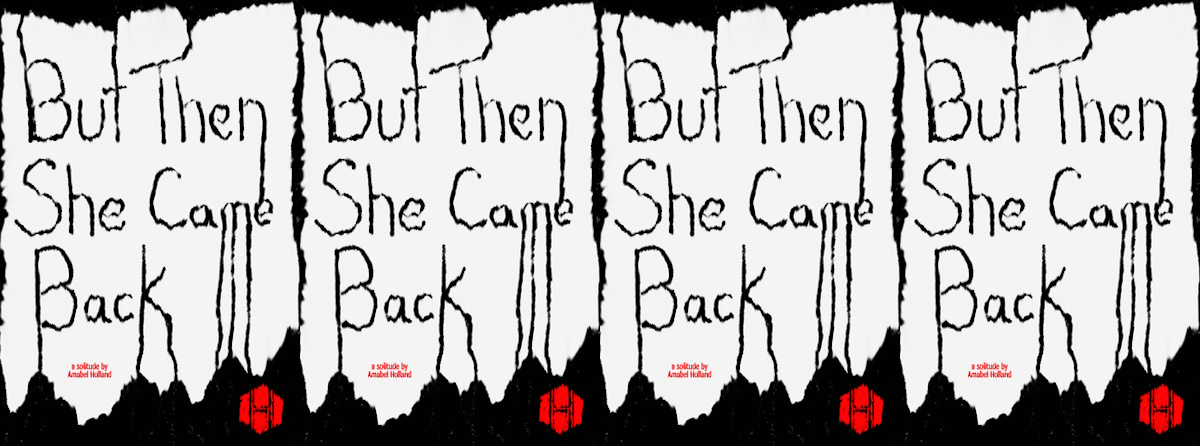
I’ve never been satisfied with the concept of the tone poem. If anything, it feels like a descriptor we resort to when there isn’t anything better at hand. When it comes to But Then She Came Back, the horror board game by Amabel Holland, well, there isn’t anything better at hand. Unlike most of Holland’s oeuvre, it’s an impressionistic lament to the toxic relationships we left behind, probably well after we should have. Very much like some of her work, it’s also a game that gives back what you bring to it.
Gnobody Gknows

All I play anymore is trick-taking games. Except I’m not so sure Gnaughty Gnomes really qualifies as one. Like Matthias Cramer’s Pies, the card-play is closer to an auction than anything resembling a trick.
But never mind that. I’m having such a good time getting these gnomes high as a kite that I couldn’t care less about where it hangs within some ill-defined genre’s orbit.
Wouldst Thou Like the Taste of Margarine?

What happens when multiple covens of witches come together to determine which among them is most powerful? Why, chase victory points, of course! Stefano Di Silvio’s Evenfall won’t be winning any points for originality. Its best bits are mined wholesale from other tableau- and combo-builders. But it’s a slick package all the same, even if it seems to cast an enchantment of forgetfulness after each appearance on the table.

 SPACE-BIFF!