Blog Archives
O Holi Night

The Hindu festival of Holi isn’t something I know much about. The largest celebration in the United States takes place only fifty miles from where I live, although its proximity to both BYU and UVU fill it with so many Mormon revelers that it was years before I realized it wasn’t a local custom. Having handfuls of color flung at my person was never in my wheelhouse anyhow.
But don’t go into Julio Nazario’s Holi: Festival of Colors looking for background. “Throwing color” and “collecting candy” are pretty much the extent of its interest in Holi. At least we’re on even footing.
Space-Cast! #11. Beyond the Cardboard
As promised, today we’re talking about nothing but tech trees — specifically, Dennis Chan’s Beyond the Sun, a game about exploring the far reaches of the galaxy by climbing the branches of the humble technology tree. Along the way, we discuss some of Dennis’s inspirations, favorite tech systems, and whether Dan is bad at traversing outer space.
Listen over here or download here. Timestamps can be found after the jump.
Burgle’s Four

I had a love/hate thing with Burgle Bros. It was so frustrating that I eventually gave it to my pal Brock. Later, I missed it enough to ask if he was done with it, whereupon “Brock brought back Burgle Bros” became our game night tongue-twister of choice. Naturally, I never played it again.
So it’s a thrill that Burgle Bros 2: The Casino Capers is more than a sequel. It’s everything the original game wasn’t.
Stop the Stop the Train!

Everything about Stop the Train! screams “velocity.” The speed of the train, of course. But other details also pitch in: the countdown to the train’s arrival in Paris, the bomb that will go off if it doesn’t halt before reaching its destination, the rapid turnover between turns. It helps that trains are the perfect setting for mystery stories. By extension, a train should be the perfect setting for a social deduction game.
So why does this particular engine trundle along at the pace of a kiddie trolley? Let’s break it down.
Looney Pyramids, Part Three: Martian Chess

The score isn’t looking so good for Andrew Looney’s Pyramids System. Nomids barely rated. Only half of Ice Duo met the mark. We’re already on the third of four boxes, and I’ve yet to see what the fuss is all about.
Until Martian Chess. This one still doesn’t bother to use the pyramids as more than pretty counters. But the game itself — wow.
Rhüt: The Marauder Expansion

I get nervous every time Root gets bigger. It’s the knock-on effect of so many boxes, so many factions, so many little details to keep straight. In contrast with some folks, my experiences with Root have grown more interesting as everybody at the table masters the intricacies of its many sides. Every addition jeopardizes that smoothness. Even if the effect is only temporary, that’s one more chance that I’ll step away and never muster the will to return.
So it’s good news that the Marauder Expansion is less about expansion than about streamlining.
Lots Wrings a Lot From Very Little

Thomas Wells sent me a handful of junk. Weighted meeples, coins both cardboard and lightweight metal, a wooden pawn, a yellow die, a few leftover cubes, two blobs of glass, a mouse that looks like it was lifted from a knock-off copy of Root, and a plastic skull that doesn’t belong to any genus of hominid I’ve ever seen. Thanks a million, Thomas, but I’ve got my own leftover board game pieces to lose under the couch.
Except this particular handful of junk is Lots. Not a lot. Lots. The game Wells designed. It’s unmistakably homemade — or perhaps hand-scooped from beneath the couch — but I’ve become slightly captivated by the thing.
Battle for MOBAness
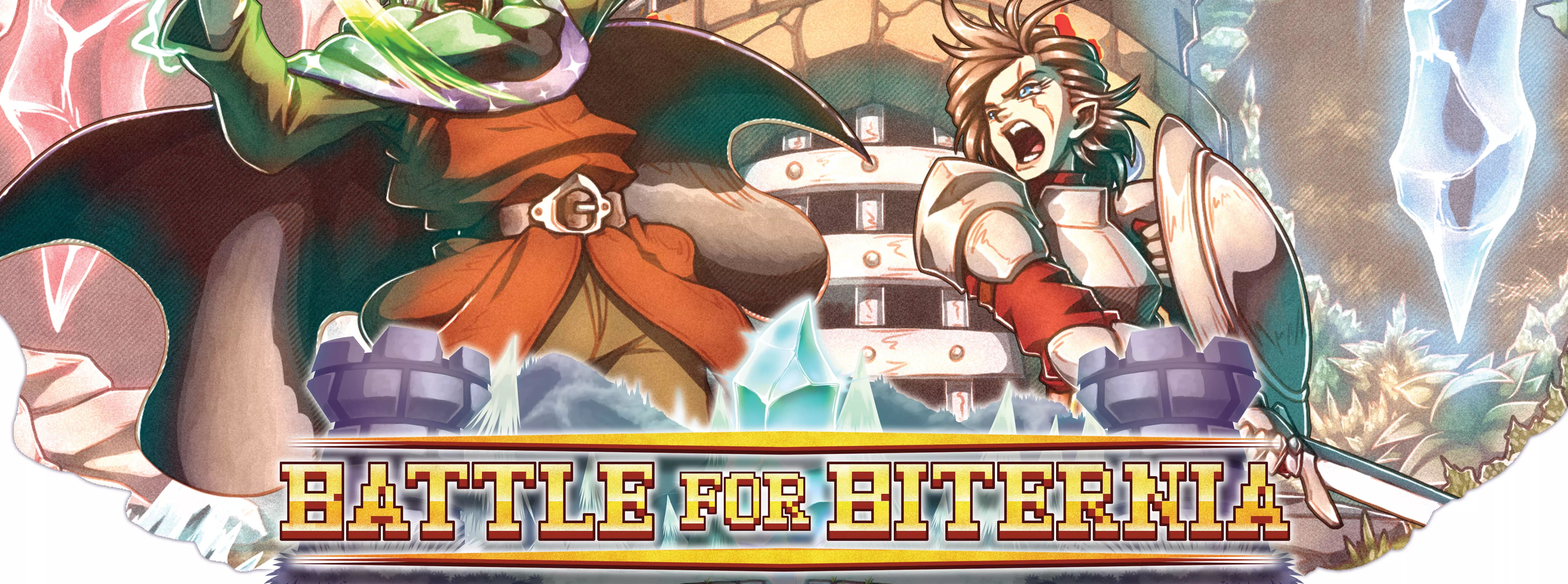
Adapting a video game to cardboard isn’t easy. As I’ve written in the past, the difficulty isn’t limited to replicating the game’s visuals, its characters and events, or even its systems. The hard part is capturing its feel. Its flow. How it operates when you’re at the controls and everything is running smoothly. That’s why making a game about pushing buttons misses the point. That’s like adapting a board game into the digital sphere and carefully modeling the jitter of your fingers and your posture at the table. Those things matter, but only as inputs, not the essence of the game being played.
So it goes with cardboard versions of the MOBA. As a genre, Multiplayer Online Battle Arenas seem like the perfect fit for adaptation. You have a bounded space, clear goals, characters doing cool combo-driven things, and things like cooldown timers that practically beg to be codified as turns. The top-down perspective even mimics the way we view a board and its many counters. So why is Battle for Biternia the first one I’ve played that’s gotten it right?
His Glory Shall Be Dung and Worms

This one is going to take some explaining.
Our story begins with Alexander the Great. If he were the archetype of a Civilization player, he was the guy who scouts and attacks in only one direction, conquering much of three continents while leaving his capital city way back in the rear. Upon his death, it was unfathomable that anyone could administrate a kingdom that stretched from Macedon to India, so his generals spent the next forty years warring over the pieces. Alexander’s empire was fragmented, but his successors spread Greek culture and language and warfare across the known world. The Hellenistic Period was now in full swing.
Jump forward a century. One of Alexander’s many acquisitions had been Judea, claimed during his war against its former overseer the Achaemenid Empire. The encroachment of Hellenistic culture chafed at the Judeans, but they managed to endure the oversight of one Greek successor state (the Ptolemaic Kingdom) until a second state (the Seleucid Empire) claimed their suzerainty during an invasion of the former. The Judeans were now under the rule of Seleucid King Antiochus IV Epiphanes, who took a somewhat more liberal view of his rights within their territory, including the capacity to dictate local religious practices. When ordered to sacrifice to the Greek gods, a priest named Mattathias expressed his disagreement rather sharply by stabbing the king’s representative. This act of disobedience sparked a general rebellion under Mattathias’s son Judas Maccabeus, a years-long conflict that concluded with Judean victory and the founding of the Hasmonean Dynasty.
That revolt against the Seleucids is where the Jewish holiday of Hanukkah comes from. Less importantly but more relevantly, it’s also the topic of Robin David’s Judean Hammer.
New Year, Old Year: 2019 Revisited

As has become a February tradition around these parts, it’s time to rewind a whole year and a month to Best Week 2019. But this is no warmhearted jaunt down memory lane. Oh no. This is an interrogation. This is when we take a look at the titles I proclaimed the best of the year and discuss whether I was right, wrong, or somewhere in between.

 SPACE-BIFF!