Blog Archives
A Place for All My Fussy Guests
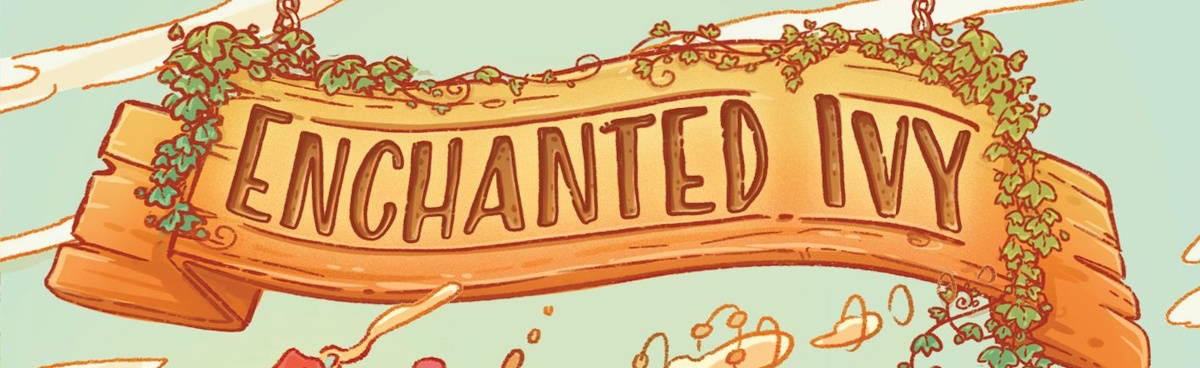
It’s almost too obvious to state aloud, but there’s a lot to be said for the games we actually play. Case in point, Enchanted Ivy, the solitaire game by Sarah Joshua. When I sat down this morning to begin writing this review, I went through the usual steps. Picking and editing the images. Uploading the template and arranging everything into logical order. Glancing through a few notes.
But then I thought to myself, maybe I don’t understand this game yet. Even though I’ve played it well over thirty times. One more session. In endless mode with randomized guests. Just one extra play to make sure I know what I’m talking about.
And then, with such inevitability that I’m not sure why I ever thought differently, I played it twice. That’s Enchanted Ivy for you.
Flapjacks, Magic Tricks, & Sputtering Torches
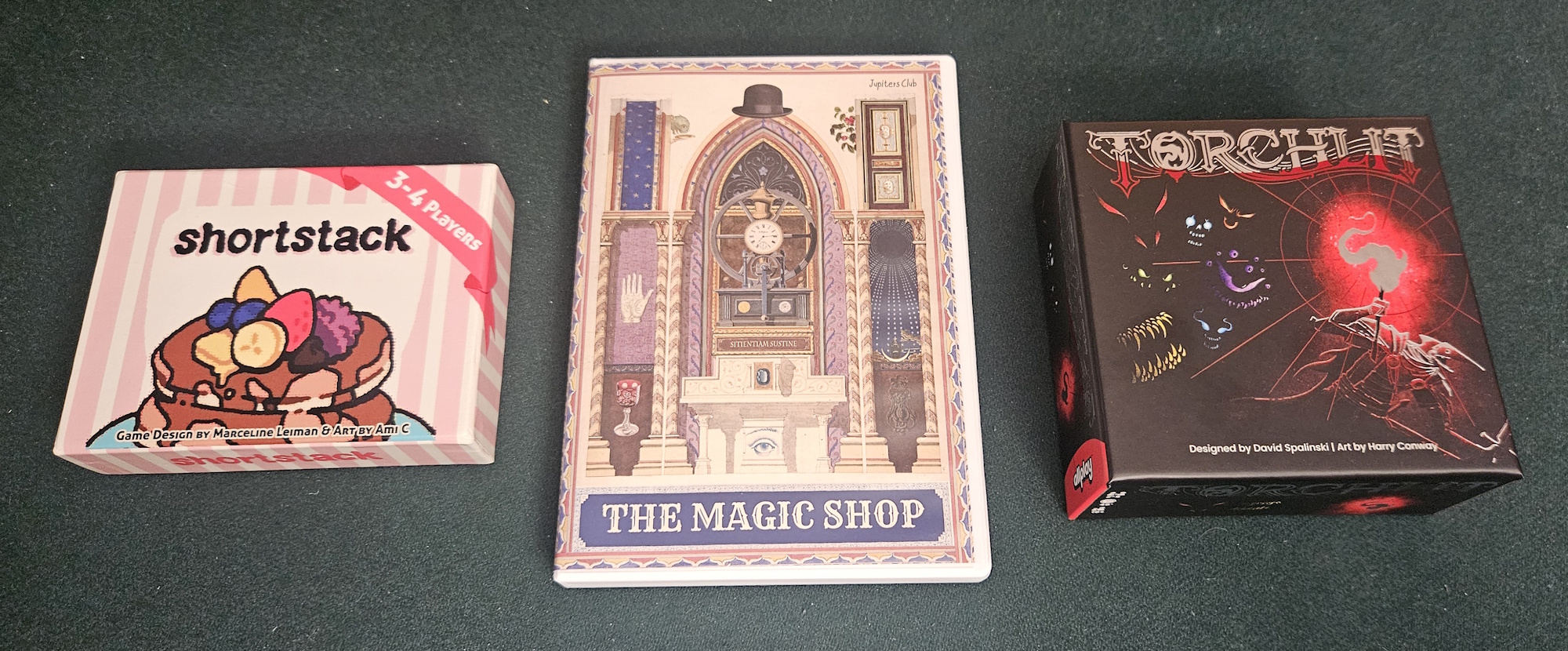
All I play anymore is trick-taking games. Fortunately, it’s an uncommonly smart genre. Today I’m covering three titles that highlight both the format’s breadth and what makes trick-taking one of tabletop’s most enduring pastimes — and one of its meanest.
In other words, these are trick-takers for jerkwads. Compliment intended.
Yawpz
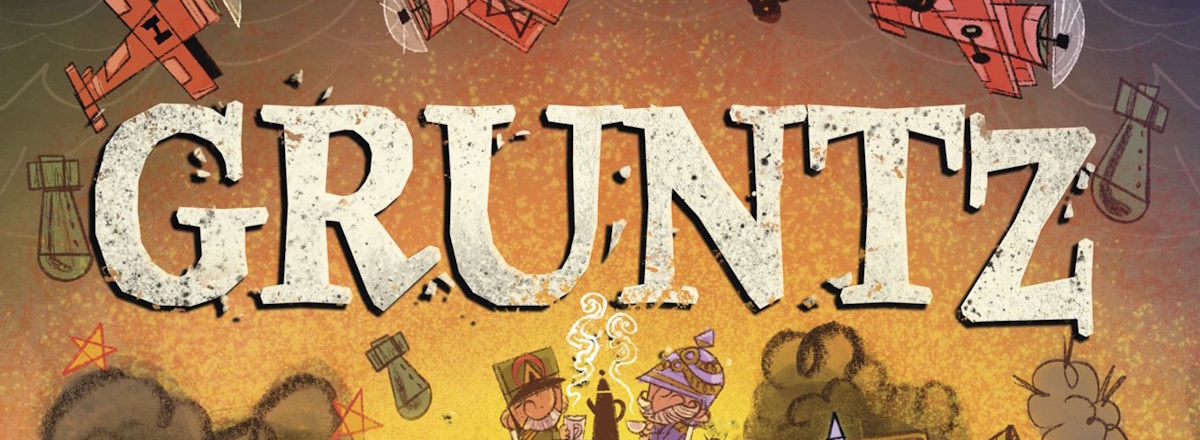
This might sound funny, but the game that kept springing to mind while playing Gruntz, the tiny-as-it-gets wargame by Carter Scott, was none other than Kurt Vonnegut’s GHQ. Like that ancient (but now resuscitated) title, Gruntz is about a pair of World War-era armies bashing it out on the field. They’re both highly attritional, encouraging a tit-for-tat gameplay that’s either enthralling or exhausting depending on your tolerance for swapping one piece for another.
More than that, they’re both games about both movement and reinforcement. It isn’t enough to position your troops smartly. You also need to know when — and what — to call up from the rear. In the case of Gruntz, that sometimes means snapping a range of equipment onto a chassis to create a custom-built war machine.
This is never not cool. Because magnets, baby. I’m always in a mood for magnets.
Buried

Ruins, the card-building, card-shedding game by John D. Clair, served to answer a question that’s been niggling at the back of my skull since I first played Mystic Vale almost a decade ago. Namely, why don’t I like these things?
Not John D. Clair games, to be clear. I like plenty of his games. Rather, these of his games, the ones about sliding inserts into sleeves to build custom cards. At a notional level, it’s a solid concept. Plenty of digital card games let you modify your cards. By using inserts and sleeves, these titles circle some of that bespoke nature back to its origin point. Yet none of Clair’s experiments with the form, whether Mystic Vale, Dead Reckoning, Unstoppable, or now Ruins — which is based on an earlier title, Custom Heroes — has really landed with me.
I now know why. It isn’t the sleeving that’s the problem. It’s that Clair doesn’t exhibit much trust in his own sleeves.
Media Masters

I’m not the biggest fan of trivia games. Especially those that require players to know a specific answer, and a hundred times those that sporadically stuff me into a locker with an unexpected sports question. “Who soiled his pants while stealing two consecutive homers during the 1914 Cinnamon Bakeaway summer camp?” the question will ask. “Nobody could possibly know that,” I begin, only for my father to scream “Mickey ‘The Dugout Dog’ O’Queefe!” for ten thousand points.
Book Club and Movie Night are teensy-tiny trivia games by Peter Hayward. Each session lasts five minutes, sometimes a run of cards will produce an impossible question, and they’re titles that will prompt the most obnoxious person in your gaming group to insist they’re activities rather than games. For all that, they’re the rarest of beasts: trivia games that put creativity and lateral thinking on the same footing as raw factoid retrieval.

Strip Poker

Peter Hayward is on a roll. This year alone he’s released Converge and Things in Rings, and now he’s enabling my lifelong dream of cheating at cards in Las Vegas (and getting away with it, obv). Vegas Strip offers all the glitz and false glamour of its titular location, plus the satisfaction of thieving from the biggest and most legalized thieves of them all. It’s a real hoot.
Red Fish, Blue Fish, Fish What’s Ticklish

Comedy is hard, and that goes double in a medium with no clear speaker and a tendency toward the pedantic. Who’s on first? That guy. The guy who just batted a single. Obviously.
Fortunately, Things in Rings has what we call pedigree. Peter Hayward is a funny fellow, especially when he’s designing games like That Time You Killed Me or Fiction. Even this year’s Converge hits the right beats gameplay-wise to nearly qualify.
Anthropic Rock Collector

Sea glass is the second coolest anthropic rock, ranked right behind fordite and waaaay above concrete. River Valley Glassworks, Adam Hill, Ben Pinchback, and Matt Riddle’s hot game of the moment, is about cute river creatures collecting fragments of discarded glass that have been tumbled smooth by the river. As befits the man-made artifacts you’re collecting, it’s wonderful to look at and feels incredible to manipulate. It’s also a little too superficial for my tastes.
Snack Packs

AAAHHH! Too many games! I didn’t ask for this. Literally, I did not ask for this. I requested A Message from the Stars, and Allplay sent me these four tiny boxes. That’s one way to manage your warehouse overfill.
Fortunately, I wouldn’t call them half-bad. One or two might even be quite good. But since they’re all tiny, it seemed appropriate to write about them all at once. I’ll tackle them in alphabetical order so as to avoid the appearance of favoritism.


