Not-So-Humble Indie Bundle

7 days left to get possibly the best indie bundle I’ve ever seen.
I’m supposed to be finishing up a complainy article on Max Payne 3, but that’s just going to have to get pushed back to tomorrow, because this news is a time-bomb—a piñata time-bomb, filled with delicious joy and the good candies—like Arcor fruit candies, and no Necco Wafers in sight.
It’s the fifth Humble Indie Bundle, and it would behoove you to check it out and give them some money. You can pay basically any amount to get four incredible games, or pay above the average (about eight bucks) to get eight awesome indie games that will amaze and astound you. Five soundtracks (two of which I know personally to be fantastic) are included, and you get to choose (via sliders—everyone loves sliders!) how much of your contribution goes to the developers, the Humble Bundle site itself (for maintenance and such), and to two great charities—The Electronic Frontier Foundation is a non-profit group that works to defend digital rights, and the well-known Child’s Play has probably helped out a children’s hospital near you (if in doubt, you can take a gander at their map). If that sounds great, get to it: you have seven days left to be a part of this great bundle.
No reason to read beyond this unless you want a brief introduction to the games on display.
What Max Payne 3 Got Right

Max Payne, about to jump into action.
I doubt there’s any reason for me to jot this down—chances are you’ve already read everything you need or want to about Rockstar’s latest take on everyone’s favorite lugubrious detective. Still, I have a fond niche carved into my stony heart for Max Payne (the second ranks as one of my ten favorite games of all time), so although I suspect this will be superfluous, I’m just gonna write it anyway.
The Curious Incident of the Tyrrhenian Steamer

A steamer, carrying Count Dracula among its cargo, embarked from Genoa.
Well, everyone knows Count Dracula died at Borgo Pass. What Fury of Dracula presupposes is: Maybe he didn’t?
The riddle of the vampire’s reappearance was not the one plaguing our heroes tonight, however. Rather, they (Lord Godalming, Dr. Seward, Professor Van Helsing, and Mina Harker) were preoccupied with a mystery of an algebraic nature: If a steamship sets sail from Genoa, fixes the setting sun to starboard, and ends its voyage into the Tyrrhenian after but a short distance, where but Cagliari, Naples, and Rome could its passengers have disembarked?
(Not) Just Another Brick in the Wall

A correctly-oriented screenshot from Against the Wall.
One of the primary strengths of videogames is their ability to make hypothetical worlds come alive. In the case of Against the Wall, an indie game in alpha by Michael Consoli, the world is an infinite vertical wall, made of interlocking bricks. All life—plants, humans… monsters?… well, no monsters that I encountered—cling to the side of this unforgiving plane. Against the Wall is far from finished, but it’s already shaping up to be a prime example of the experimentation, wonder, and fun that are often the hallmarks of the indie scene.
The Incredible Exposition of Alan Wake, Ep 4

A cardboard cutout of Alan Wake, gazing into your soul.
The last time I talked about Alan Wake, I mentioned a few of its more brilliant plot points from the first three episodes. Well, I’m still hooked, and I recently finished the game’s fourth episode. I must warn that there are spoilers to come, as episode 4 is entitled “The Truth,” and boy, what an apt name to call it by. So if you don’t mind this great game being spoiled, I’d like to talk about its gentle handling of exposition.
Jumping into Endless Space

Space, of the endless variety. You can even click this image to make the space appear more endless.
It’s usually a matter of policy for me to refuse to read impressions or reviews of games that I’m going to talk about in order to remain pure and unsullied by the opinions of others. In the case of Endless Space, due this summer from Amplitude Studios, I played neglectful mother and left that prohibition back at the supermarket. I can now think of three possible intros, none of them mine, and all of them quite good. The only solution, it seems, is to play it straight and tell you that Endless Space is looking great.
Escape from Chernarus!

Outside of our prison, Thomas and Pariah scavenge for weapons while I stand watch.
In the scenario Escape Chernarus for ARMA 2, the United States is planning a big old barbecue in Chernarus, and invites have been delivered to local insurgents via the usual special recon teams—one of which includes me (The Innocent) and Space-Biff! buddies Pariah and Thomas/Alikchi. Unfortunately, the dictator (or whatever) does not approve of the upcoming capitalist festivities, and has had us locked up. Escaping our prison should be no trouble, but the real question is: can we escape Chernarus? It’s 225 km² (the same map used in the Day Z mod), and we’ll have the entire Chernarussian Army harassing our every move.
The Incredible Plot of Alan Wake, Eps 1 through 3
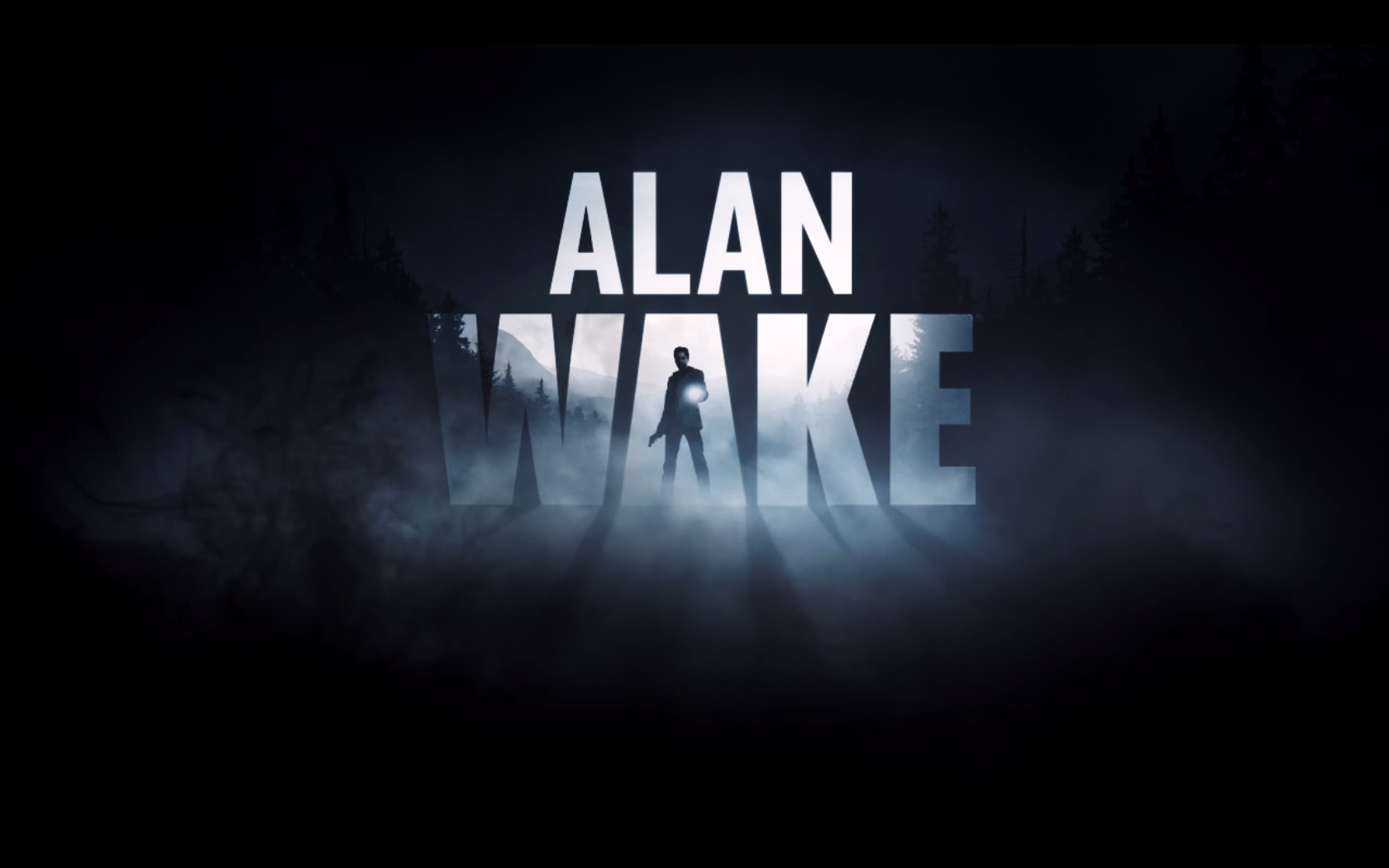
Alan Wake, ancient-curse-solver extraordinaire.
I just finished playing through the first three episodes of Alan Wake by Remedy Entertainment, and I must tell you, it is so good. So good that I want to talk about the things it does really well, and the ways that it deconstructs the horror genre. I hope all you devs out there are listening, because from now on Alan Wake will basically be the definitive how-to when it comes to making horror games.
Day Z: Solving the Bandit Problem
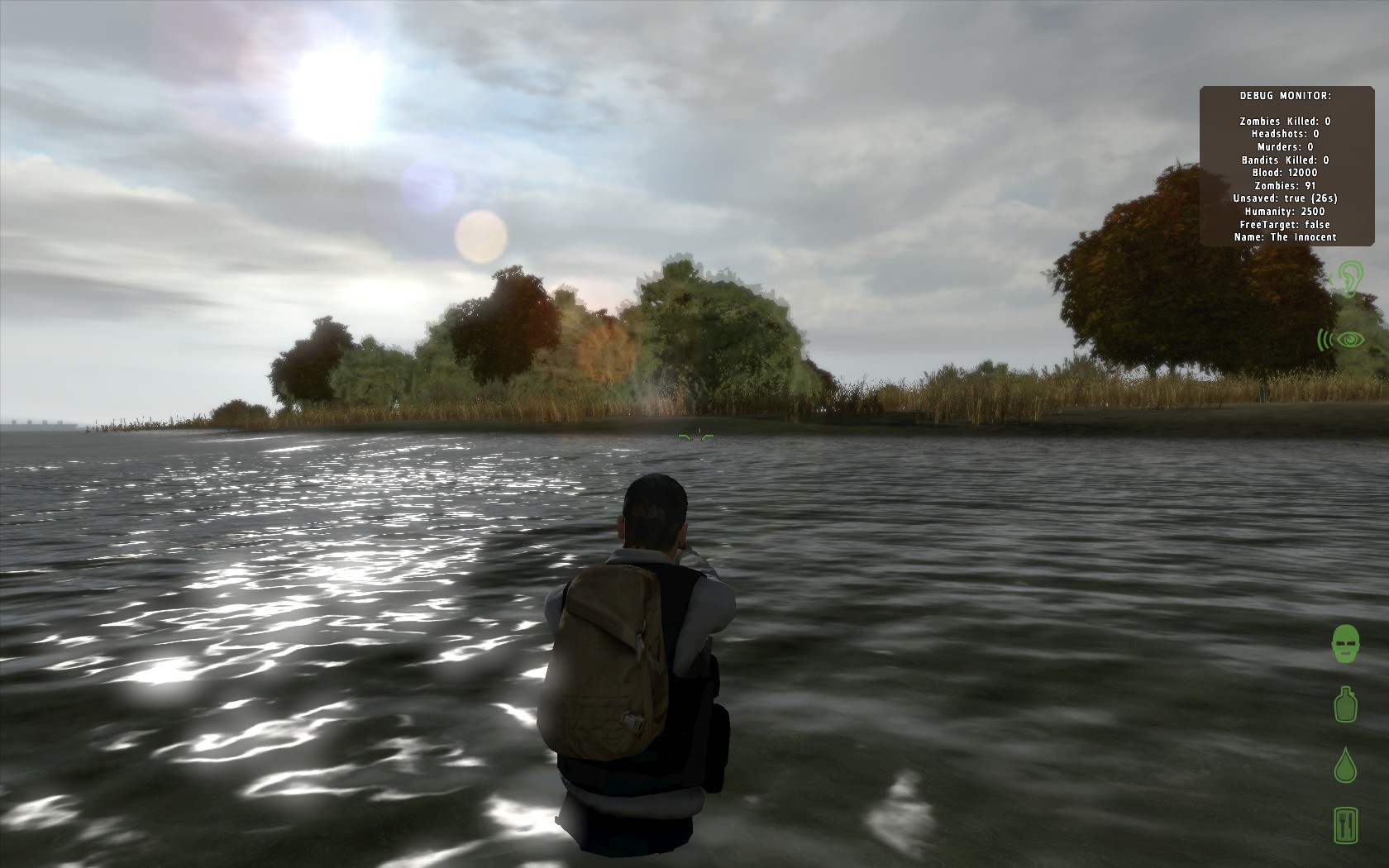
Searching for food along the coast.
Last time I took a hike in Day Z, the hot new mod for ARMA 2: CO, I went looking for buddy Digital Pariah only to end up out of ammunition and trapped on a rooftop with a very agitated zombie. As it turns out, I was incredibly lucky to die of mastication/falling, as most rookies are killed by pesky bandits, who prey on the weak for their Makarov bullets and tins of beans.
So for my next outing, my goal was not only to avoid major populated areas (and thus, zombies), but to figure out some way to deter the bandits that stalk the shoreline of Chernarus. I think I’ve found a solution.
Warlock: Master of the Review

Warlock: Master of the Arcane, the new game from Paradox Interactive.
Gaze into that pic (gaze harder) and tell me it doesn’t look like Civilization V to you. Right, right—it doesn’t look like Civ V to you, but I’m sure you can see how everyone else might assume that Warlock: Master of the Arcane from Paradox Interactive is a mod-gone-commercial. Which is really doing it a disservice. Because even though Warlock looks like Civ V minus the culture and happiness mechanics and polish and broken tactical AI, Warlock has an abundance of soul. You know, the one resource that Civ V desperately lacked.


