The Board Game Box Review

The board game boxes under review on our first installment of The Board Game Box Review!
Okay, I’m taking Space-Biff! across the threshold into true nerd territory. This is nerdier than a sixteen-hour game of Runewars, a GLaDOS pumpkin, or dressing up as characters from RAGE… alright, less nerdy than that last one.
I’m writing this because if there’s one thing I can’t stand (and trust me, there’s at least one thing I can’t stand), it’s poorly-designed board game boxes. That’s right: When the box is too big, too small, won’t play Tetris with other games, or falls apart after a year, it really ticks me off something mighty. And I’m sure there’s at least one other person out there who feels the same way. Cue The Board Game Box Review.
A Parable of Ambition: Syndicate
The opening screen. Which I actually like.
The other day I had a realization: I’ve been talking about so many smart but rough-looking indies here on Space-Biff! that I’ve totally neglected to write about something good-looking but dumb. I recently finished my second playthrough of Syndicate from Starbreeze Studios and EA, and so it feels like the time is right to talk about why I think it’s an excellent but forgettable shooter.
How the Apocalypse Goes: NEO Scavenger

The fifth most likely way that the apocalypse will actually end for you.
Sharing time: I come from a place where a sizable chunk of the population is actively preparing for disaster. Most of the time this manifests as food storage and 24-hour kits, but sometimes the impulse leads to arsenals and air raid shelters. It’s safe to say that I’ve become familiar with the idea of an apocalypse, so I pretty much know what I’m talking about when I tell you that when it goes down, you do too.
If you live in a city, you’re dead. Near a city? Dead. In the proximity of a highway? Take a guess. In fact, despite your location, extensive preparations, probable sticktoitiveness, sunny outlook, and rah-rah attitude, you’ll probably starve. Or contract cholera, at which point starvation starts to sound like spring break.
So it’s nice to see a game like NEO Scavenger from Blue Bottle Games. Most apocalyptic games present worlds that are dangerous but ultimately surmountable. NEO Scavenger tries something else: this is a world that’s out to get you. And it probably will.
What’s Up (and Down) with TowerClimb
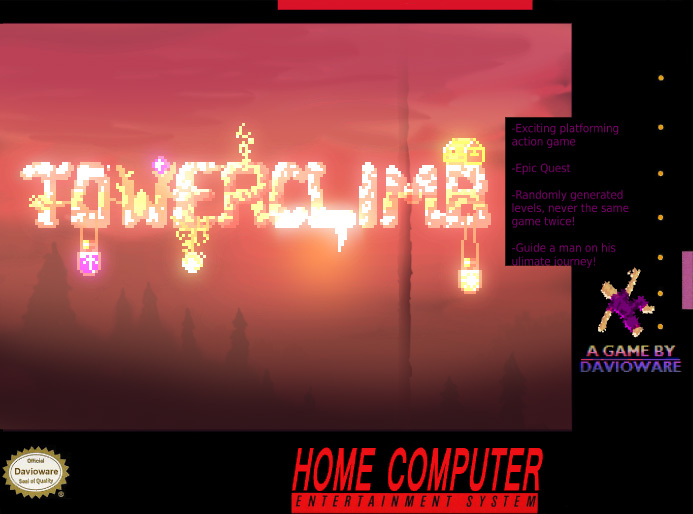
The theoretical game box for TowerClimb.
Possibly the best way to get me interested in a game is to compare it to Spelunky (serviceable link, fancy link). Not that Davioware, the developer of TowerClimb, has been doing this—in fact, my guess is that they’re already sick of that association, just like Aaron Eckhart is tired of his butt-chin being compared to Cary Grant’s. They’re distinct, darn it.
Regardless, the similarity in genealogy is so strong that I think we can be forgiven the comparison: TowerClimb feels like an inversion of Spelunky, and that’s no bad thing. I’ve been playing it for a bit now, and I’ve had a few thoughts about its ups (and downs).
Runewars Mega: The Index
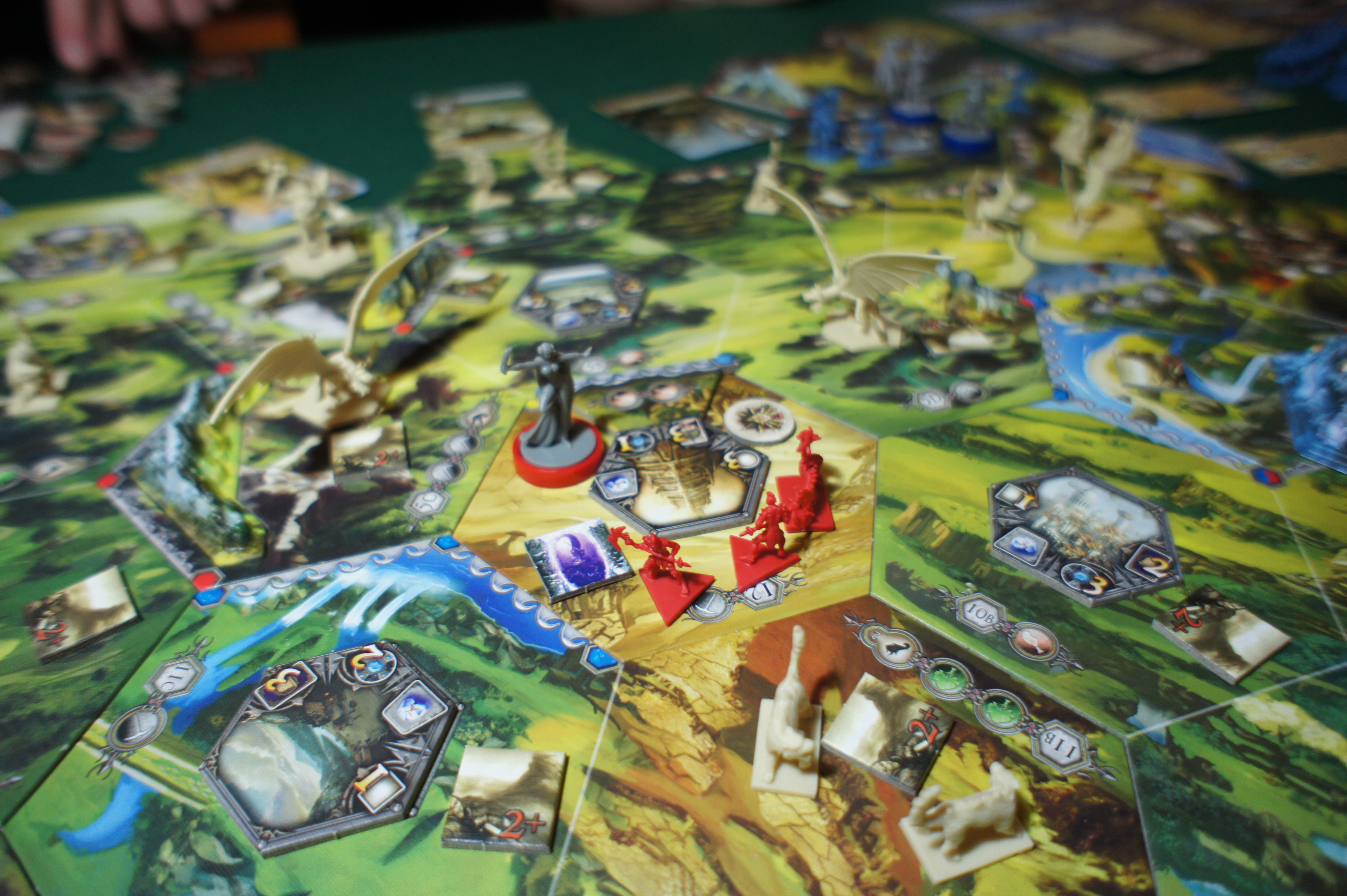
Red Scorpion raises the Lost City, beginning the War for the Dragon Throne.
It is with tremendous relief that I compile the index of everything I’ve written—or will write, I hope—about Runewars. Our game of Runewars took about 15 hours to complete—much longer than average—and over four times as long to write up. So without further ado (though with one further “read more” click), I present the index:
Runewars: But How Does It Play?
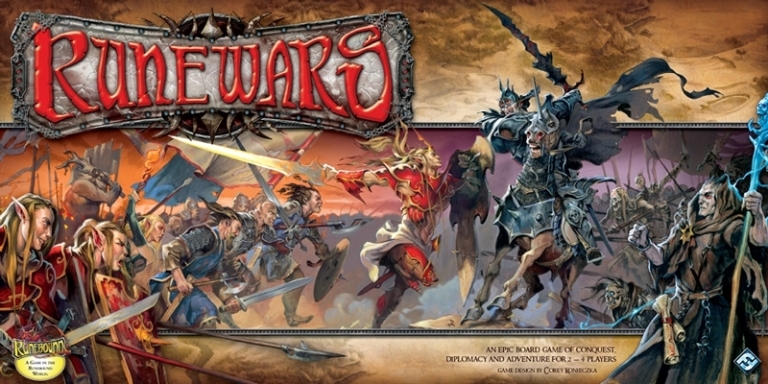
The box. About two times too big until you get the expansion.
I recently wrote a series of articles on a recent gaming session (well, sessions) of Runewars and its expansion, Banners of War. It was humbly entitled Runewars Mega (Part 1 here, and Index here), and I wrote it as a story—a retelling of the narrative that four friends created together. The reaction to this series was encouraging, but I kept getting the same question from readers: “But how does it play?”
In writing about the story of our game, I entirely neglected to explain much about the game mechanics themselves. In so doing, the only applied information I seem to have imparted was that Runewars is incredibly complicated—which, sure, it can be. So now I’m writing this as a sort of formal apology: this is how the game plays, and why I believe it to be one of the best games on my shelf.
Runewars Mega, Year 8: Race for the Dragon Throne
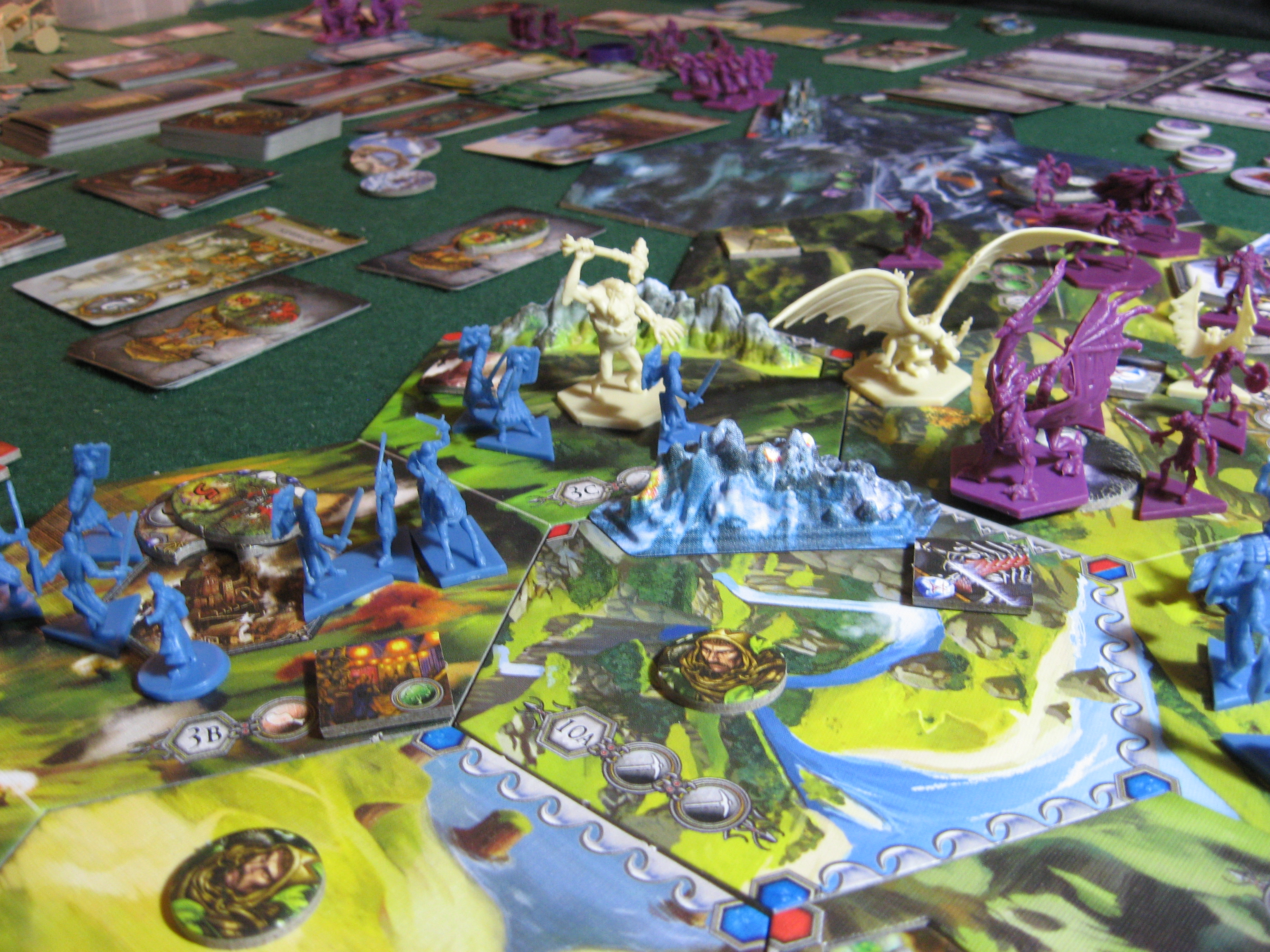
As everyone races to the Lost City and the Dragon Throne, the Daqan head the opposite direction.
Well, our story is drawing to a close. By the end of this year, one of the four nations will have gathered the necessary eight dragon runes and put themselves onto the Dragon Throne—that’s right, both.
At the beginning of the eighth year of the War, it really could have swayed in one of three directions. Waiqar the Undying had taken a few lumps, but his dark empire still spanned quite the distance, and his ranks had swollen fat from a combination of seven years of war and the efforts of his necromancers. The Daqan Lords had a small military, but their alliance with the Uthuk Y’llan barbarians meant that they could focus on expanding without having to protect their flanks—and they had the plans of Andira Runehand to guide them. And the Latari Elves were in possession of nearly half of the entire continent of Terrinoth. Each of the four nations were well-aware of the many prophecies floating around, and it seemed that all the peoples of Terrinoth held their breath at once, eyes fixed on the Lost City.
Conquest of Elysium 3 is…

A picture of Conquest of Elysium 3. Look at all the scary data. What does it mean? Does anyone know?
I’ve been playing and talking a lot about Conquest of Elysium 3 from Illwinter Game Design, the two-man band responsible for Dominions 3. My review? It’s great: simple to learn, plenty of depth, and lots of options for customization so you can play the game you’re in the mood for.
However, it hasn’t been widely reviewed, and lots of folks seem confused about what it is—one review so completely that I couldn’t help but poke some fun at it. I understand this response—its visual style requires some acclimatizing, and it looks like it could be one of those impenetrable stats-based games that you once bought as a kid because you heard you could do anything but then it turned out you couldn’t even figure out how to build a cavalry regiment.
Have no fear! CoE3 is not one of those games. But rather than define what it isn’t, I’ve made a handy list of four things that sum up what Conquest of Elysium 3 is all about. If that doesn’t interest you, you can make like an IGN reader and skip to the end for the final score.
Runewars Mega, Year 7: Uncommon Kinship
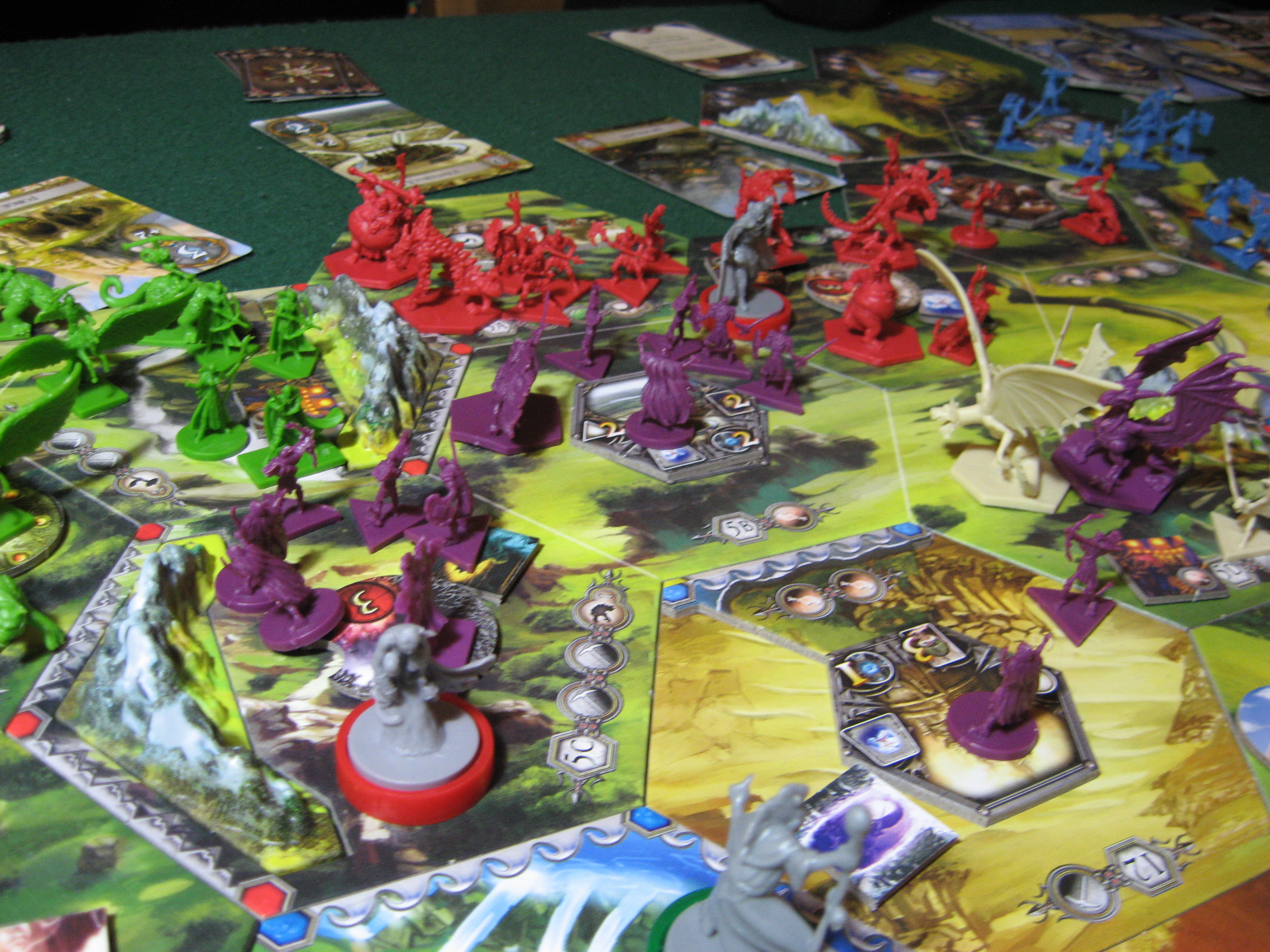
The four nations of Terrinoth stand on the brink of total war.
As the slow sixth year of the War came to an end, each of the four nations found their ranks swelling with volunteers (well, “volunteers” is a loaded term in Waiqar’s army). Hedge-prophets and scrying witches claimed that the coming conflict would dwarf the combined bloodshed of the last six years, and that as winter fell on the eighth year, a new lord would be seated on the Dragon Throne and Terrinoth would have its king.
Can’t Get Enough Human Sacrifices
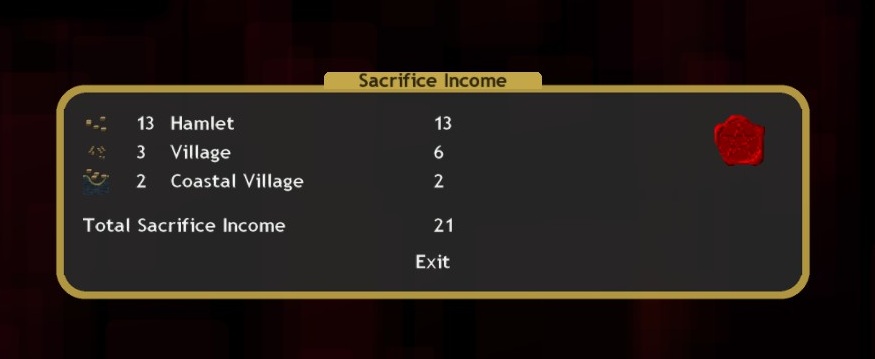
The demonologist's monthly report on incoming sacrifices.
I’ve recently been playing a lot of Conquest of Elysium 3, the new game from Illwinter Game Design, who you might recognize as the creators of Dominions 3. My review is here, and last time I played as a halfling Burgmeister. Today I’m playing as the Demonologist, a mage willing to conspire with devils in order to gain atrocious power.
It isn’t easy being a Demonologist, even if you have learned the dark arts of sacrificing your fellow man to appease the dark gods. No matter how powerful you become, there will always be a demon lord unwilling to join forces once you’ve summoned him into Elysium. And when that happens, not only does the ungrateful spawn refuse to join you, but you’ve got to fight it, further weakening your hellish army.
Oh well. Next time you’ll have to sate the demon’s lusts with a few extra human sacrifices.

 SPACE-BIFF!