Baaad, or Bleating the Competition?
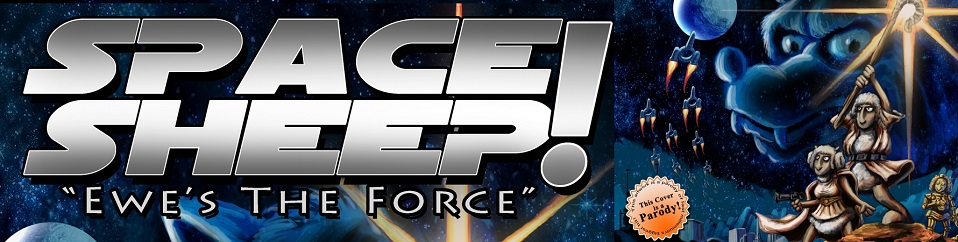
When Stronghold Games asked if I’d like to review Space Sheep!, I jumped at the opportunity. The cover sported a fun little riff on Star Wars, complete with an ass-covering “This Cover is a Parody!” disclaimer, and I was expecting a game about, well, space sheep. Who doesn’t like the idea of space sheep?
Instead, I got this. And I’m not sure what to make of it.
Horror Horrorer Horrorest

You know that part of some of my reviews where I say something like, “This new game is from designer X and he designed games Y and Z”? It’s meant to give you a sense of why you should be interested in that person’s new game, because he’s produced something awesome and recognizable in the past. Sadly, this isn’t the case for the creator of Dark Darker Darkest, whose main distinction is that he designed a game so bad that I didn’t bother to review it, because my mother taught me to always insert something positive into my criticism and I just couldn’t manage it that time. And since you’re already switching tabs to ask Goog-El, patron goddess of all knowledge, what I’m talking about, the designer is David Ausloos and the offending game was Panic Station.
But here’s the good news: Dark Darker Darkest is a hell of a lot better than Panic Station, and the foremost proof is that I’m reviewing it at all! It’s actually rather brilliant in a number of ways, though I fear it might be brilliant the way unpolished diamonds are brilliant, because some of its luster is hidden beneath blackened slag. What follows is a list of three things I really like and three things that could have been improved about David Ausloos’s latest efforts to scare you silly.
Eight-to-Twenty-Minute Legend

When people say they’re sick of Kickstarter, you know who they aren’t talking about? Ryan Laukat. In addition to successfully funding multiple titles through Kickstarter, this time he’s shipped his latest game, Eight-Minute Empire: Legends, sequel to plain old Eight-Minute Empire from earlier this year, and done so two months ahead of schedule. A whole mess of delayed projects are suddenly seeming that much more tardy.
Exciting as that is, the question I keep hearing everyone ask is whether Legends is really necessary, riding as it is on the heels of the previous game. Is it worth picking up Legends if you already have the original? The short answer is yes, but I suspect you’ll want the long answer. You can find it below.
Addendum Time: With an Inner Light

For this month’s issue of Alone Time, I covered a stellar little game called Darkest Night from Victory Point Games, the “Little Game Company That Could” (no really, that’s their actual self-designated nickname) (no, really, would I lie to you about that?). Well, as much as I loved Darkest Night, now I have to retract some of my praise — because however good it is, I’m never going to play it again… unless I’m also using With an Inner Light, which takes a fabulous game and makes it even fabulous-er.
How does With an Inner Light manage such a makeover? Good question! Let’s find out together.
It’s In Their Nature, After All

Over the last week, a few hundred of you wrote in to express your extreme disappointment that this most recent issue of Alone Time wasn’t about yet another Todd Sanders game. Thank you kindly for your ebullient correspondence. My only defense is that I’ve instead been playing some of Mr. Sanders’ two-player games, which don’t really fit the solo requirement of that series. Which is to be, ahem, solo.
The good news is that I’ve recently wrapped up a few plays of Mage Clash, one of Todd’s more recent print-and-play projects, and I’m ready to tell all.
Twice the Pixels, Double the Tactics

As it did for so many others, Pixel Tactics from the Level 99 Games Minigame Library took me by complete surprise. Here was a game every bit as deep as it was slight, as expansive and expandable as it was compact. At a mere fifty-two cards, including a pair of references, it had more game packed into its box than most full-sized titles cram into packages many times the size. So not only was I entirely unsurprised when Brad Talton announced its sequel, an expandalone version that could be merged with the original or not according to my mercurial whims, I was also decidedly pleased, raising a single well-groomed eyebrow at my monitor at the news. Indeed.
Well, it’s now out (along with a healthy restock of the first game, for those who struggled to lay hands on it), and after a few days of heavy play, I’m ready to tell you whether it’s a worthy extension of the Pixel Tactics namesake.
Alone Time: Keep It Secret, Keep It Safe

Remember that scene in the second The Lord of the Rings movie where Frodo, Sam, and Gollum ran out from under their marsh-bush to shoot arrows at the passing Nazgûl and its fell steed so they could do battle? Yeah, me neither. Because instead, they cowered under that bush and shat their britches and hoped they wouldn’t have to do any fighting at all.
Most fantasy games don’t operate that way. Instead of sneaking about, their heroes barrel in with nocked arrows and raised swords, even though any halfway decent dark lord would seize the opportunity to fit them for some shallow graves. Not so in Darkest Night from Victory Point Games. The theme of this one-to-four-player co-op is familiar in one sense — a necromancer is polluting the kingdom, etc., etc. — but this time, your valiant heroes are going to be creeping around on their bellies and praying they don’t attract too much attention, because if they do, the necromancer is going to mosey over and put some serious hurt on their noble bottoms.
One More Reason to Love Dominions 4
I love Dominions 4. It’s the sprawl of the thing. The thousand thousand units, spells, magic items, deities. The expansive mythology. The steady build from small armies supported by a little bit of magic to massive armies that exist only to protect wizards who cast world-ending doomspells. The fact that I’m running a 13-player, 15-AI game that will likely last over a year and generate stories I’ll remember for the rest of my life — and yes, I’ll also report the whole thing here once the game is done and nobody can use the writeups to suss out my team’s strategies.
Today though, I found one more thing to love about Dom4. You can find it after the jump — though be warned, what follows contains about 85 pixels (no, I didn’t count) of Not Safe For Work thanks to some mythological nudity.
Chess Checkmated: The Duke

Today I’m going to introduce you to a game that’s so good, it basically reviews itself, and one of the few games I’d ever recommend to every human being regardless of their taste in other games. As a lifelong amateur of modern Chaturanga (or Chess, if you insist on being vulgar), it’s also the first abstract game I’ve played that’s both reminiscent of that ancient classic and wildly fresh in its own right. Ladies and gentlemen, may I introduce: The Duke.
Maybe They Should Stay That Way
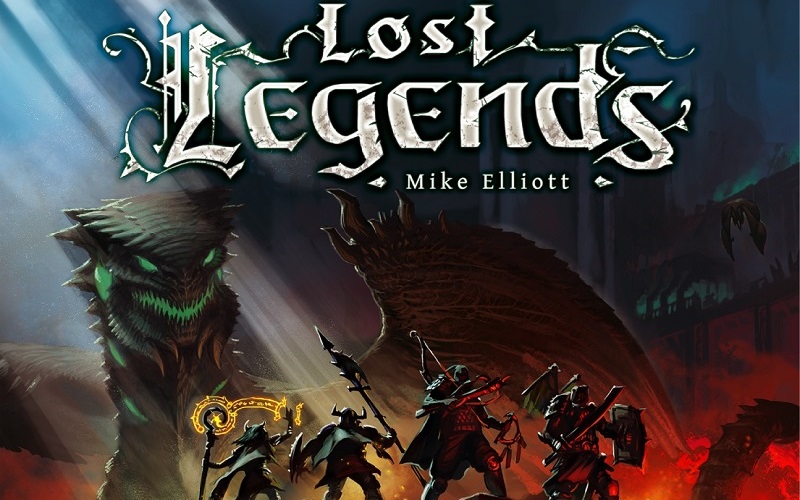
Remember the last time you played 7 Wonders and thought, This is nice and all, but it really could use some dragon-slaying!
Yeah, me neither. Still, maybe we should have thought that, because then Lost Legends would have shown up sooner. Also, maybe then it would have included the pyramids or an evil animated Colossus of Rhodes or something. Anyway. Lost Legends is a drafting game, simple in scope and execution: you’re a member of an incredibly selfish party of dungeon-divers, determined to forge your name into the greatest legend around, and leave your friends behind as footnotes in the process. And drafting! Everyone loves drafting.


