Blog Archives
One Through Nine

Every so often a publisher will send me a game out of the blue. I try to take a look at every title I’m sent, but when I’m working through a backlog twenty boxes deep, I’ll confess it isn’t beyond me to judge a game by its lid. Eternal shame, I know. But look at this thing. TEN? That’s the name of your game? TEN? With that epileptic seizure of colors passing for box art? I only knew Shawn Stankewich, Robert Melvin, and Molly Johnson from Point Salad, but, uh, I’m not especially fond of Point Salad. Onto the pile of giveaways it went.
And then something funny happened. TEN got nominated for a Golden Geek. My curiosity was piqued. It was sitting right there, after all. How much opportunity cost could it represent? At worst, it would take fifteen minutes to learn and play. Fifteen lousy minutes. It’s a rare game night if we don’t chat about Geoff’s fashion sense for at least twenty. Might as well give it a try.
Since then, we’ve hardly hosted a game night without playing a round or two of TEN. It’s phenomenal.
Cryptidcurrency
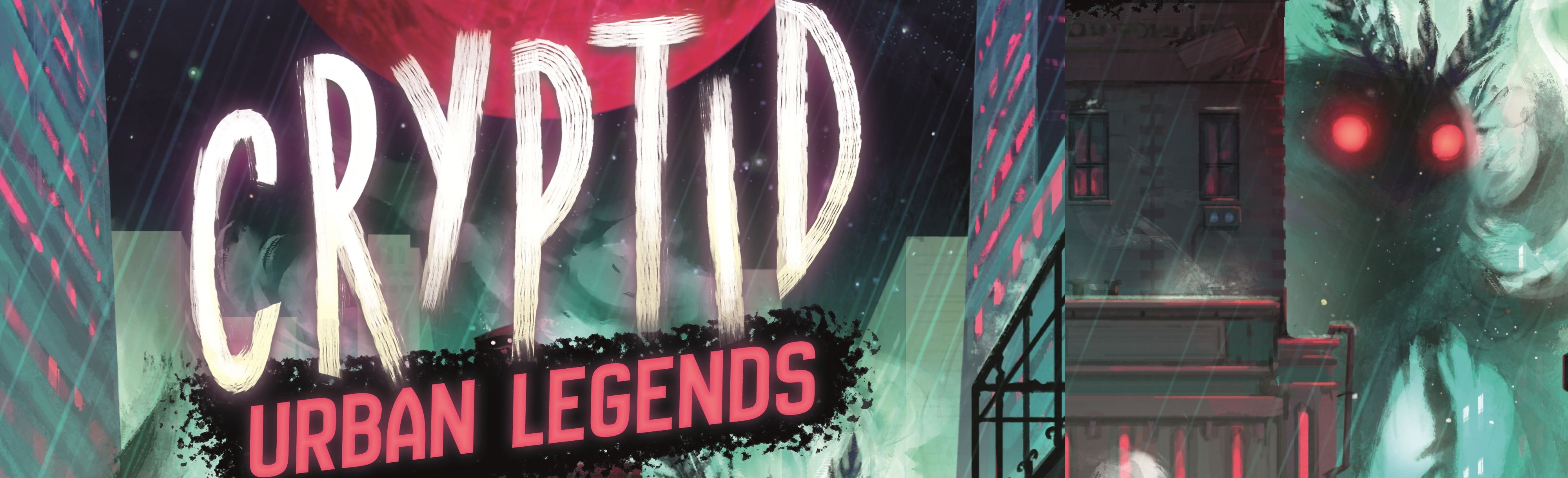
Hal Duncan and Ruth Veevers’ Cryptid had a lovely idea at its core. What if the world’s undusted corners are the habitat of the Loch Nessies and Bigfeet and every other unseen (but much reported) creature? While the game itself didn’t do much to sell the idea that you were documenting actual cryptids, it had cleverness in spades.
Cryptid: Urban Legends doubles down on the idea that you’re chasing a yet-to-be-catalogued creature. Unfortunately, that’s about all it does.
But Who’s Fate?

You may have heard the story about the fertility doctor who donated his own, ah, material to his patients, thereby fathering a host of children. A surprising amount of ancient mythology falls back on pretty much the same concept. So does Veiled Fate, the game of questionable divine parentage by Austin Harrison, Max Anderson, and Zac Dixon. Everybody at the table is a god. The nine heroes roaming the board are their demigod offspring. Nobody’s sure who belongs to whom. When will we get the daytime talk show version?
I Have Three Sisters

Pitch me the words “three sisters” and my mind reacts in this precise order.
- My actual three sisters.
- The play “Three Sisters” by Anton Chekhov.
- Three Sisters Peak on the north end of Salt Lake Valley.
- The “three sisters” standing stones down in Goblin Valley.
- The “three sisters” even farther south in Monument Valley.
- The Three Sisters method of companion planting, in which Native Americans planted maize, winter squash, and climbing beans together for their mutual benefits.
- Now also a roll-and-write game by Ben Pinchback and Matt Riddle.
- There’s a tomato plant called Three Sisters that grows one of three different sizes of fruit.
- Seems a lot of people had three sisters.
Razing Wonderland

It’s madness that Wonderland’s War works as well as it does. Codesigned by Tim Eisner, Ben Eisner, and Ian Moss, the description is a mishmash of play verbs and unnecessary plastic minis. An area-control bag-building press-your-luck rondel-drafting wagering game? Leave the sequence adjectives to the professionals, honey.
The avalanche works in part because of the game’s setting. Lewis Carroll’s madhouse world is as zany and starkly drawn as ever, and only made slightly more madcap by the world war currently scouring its environs. The other part is more to the credit of its design team: it’s rare to be treated to a game quite this funny.
Croissant Moon
There’s an undeniable beauty to script that has yet to be deciphered. I recall watching a street artist pen words in soaring Arabic calligraphy. As a child whose English cursive looked orcish, the artist’s handiwork seemed indistinguishable from magic. The words themselves could have been anything. Whatever they were, they were elevated by the form itself, transferred from paper to some glimpse of a divine image.
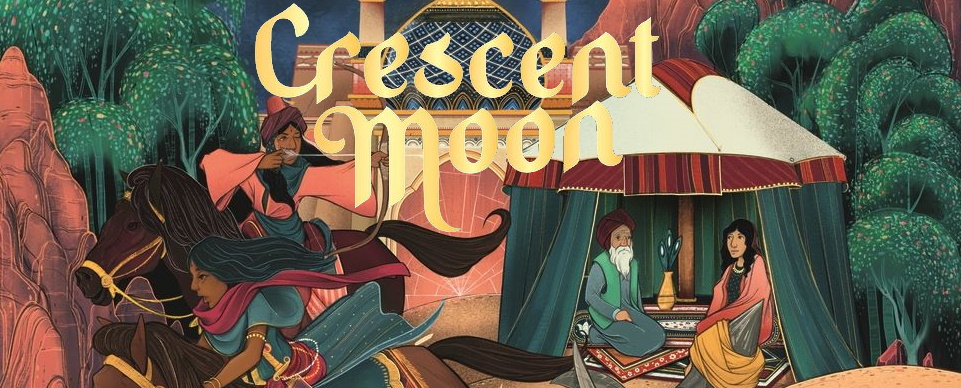
Every so often, a board game prompts a similar feeling. Colored inks on shaped cardboard, painted wood in various sizes and arrangements, cards laden with unfamiliar symbols, their combinations speaking to some deeper understanding into which we have yet to be initiated. Crescent Moon, the recent design by Steven Mathers, draws on lush illustrations by Navid Rahman to evoke a world apart. I think I’ve finally decoded its meaning.
Space-Cast! #20. The Acts of the Interviewees

Come to hear about Jeff Warrender’s The Acts of the Evangelists, stay for the rambling discussion about New Testament scholarship. Or don’t. Stay away, all ye who fear extended chats about religion, independent publication, and games as devotion.
Listen over here or download here. Timestamps can be found after the jump.
City of Something, All Right

With Detective: City of Angels, Evan Derrick wants so badly to channel L.A. Confidential. Book or film, take your pick. The same goes for Chinatown and The Big Sleep. Anything noir, really. I’m not sure what else he could have done to say so. Stash a pack of unfiltered cigarettes beneath the box insert? Bribe your dame to go full femme fatale? Call the game master a Chisel? Oh wait, he did that one.
As with any setting as starkly drawn as the hardboiled genre, City of Angels runs the risk of slipping across the line from pastiche to parody. By now, the tropes have calcified into the bones of American fiction. So thorough is their digestion that certain notes are America. What does Derrick do with those bones?
He makes one heck of a detective game.
Talking About Games: Excavating Memory

There’s a phrase we use in English, one meant to strike upon its hearer the importance of a topic or the need to keep an atrocity close at heart for fear of its repetition. You’ve heard it before, cast in somber and memorializing tones: “Lest we forget.” The irony, of course, is that we’re a fastidiously forgetful species. We forget things all the time. As a defense mechanism, forgetfulness is unrivaled. In the rare occasion that we don’t forget, we do our damnedest to afflict ourselves with collective amnesia. Lest we recall.
John Clowdus’s history trilogy plays like variations on a theme. Its three titles, Neolithic, Bronze Age, and The Middle Ages, are mechanically similar. They’re all about excavating cards from a deck and then using those cards to build toward a brighter future.
They also express something deeper: cultural memory, in all its complexity and simplicity.
Streets Behind
When I contemplate Haakon Gaarder’s Villagers, its defining characteristic is its “light touch,” a careful avoidance of going too far with its complexity or authorial intrusion. Instead, it employs sparing strokes: a few abilities, sparse rules, a shared social space that made immediate sense to everyone involved.
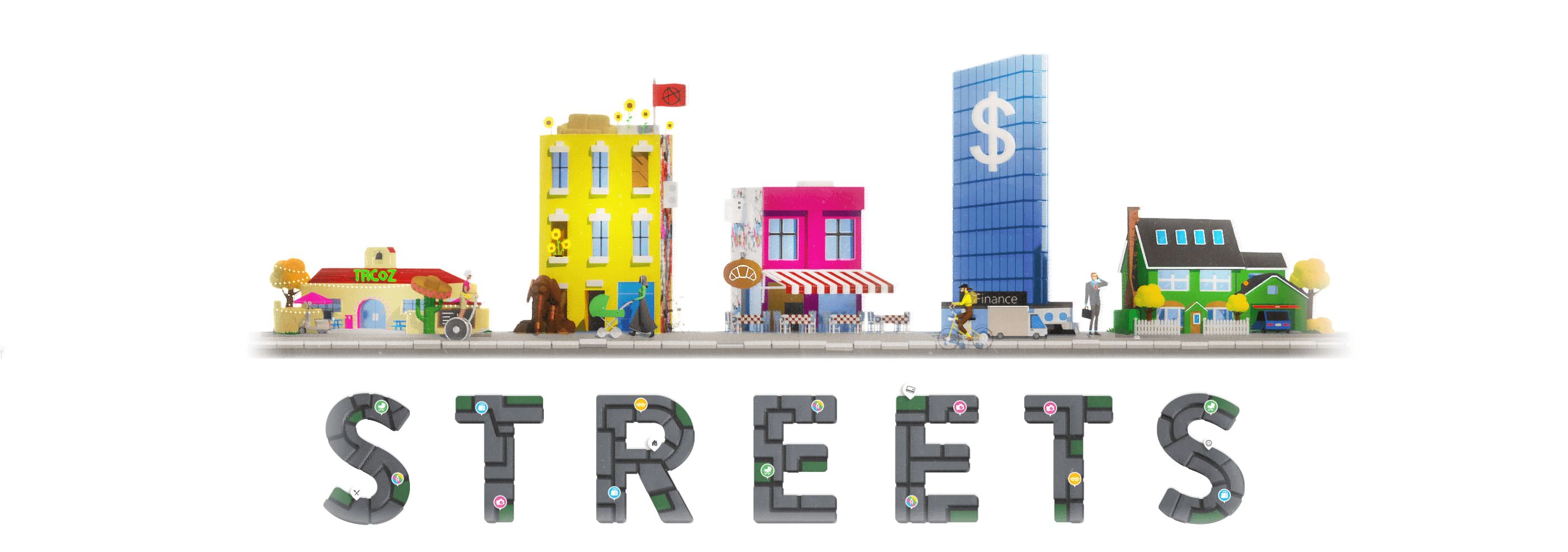
Streets is a follow-up to Villagers in more ways than one. And it could have used a heavier touch.


