Blog Archives
Geralt Was Never This Unsexy

It was announced back in January that The Witcher would soon be transformed into cardboard form courtesy of an alliance between Fantasy Flight Games and Ignacy Trzewiczek, famed designer of Imperial Settlers, 51st State, Robinson Crusoe: Adventure on the Cursed Island, and The Convoy. For fans of The Witcher, it was quite a bit like when Geralt of Rivia teamed up with Siegfried of Denesle to take down the rogue Grand Master of the Order of the Flaming Rose.
For the uninitiated, that was a pretty cool moment. Best bromance ever, at least until Geralt teamed up with Vernon Roche in the sequel. Sniffle.
And no, I’m not crying about the bromances. I’m man enough to admit these are tears — but this time, the thing bringing water to my eyes is the fact that The Witcher Adventure Game simply doesn’t live up to its legacy.
Uno Was Drunk, Fluxx Looked Great

The other day someone asked how I’d describe Red7, from designers Chris Cieslik and Carl Chudyk. That’s an easy one: imagine Uno and Fluxx got plastered and had a one night stand, and their illegitimate love child grew up surprisingly well-adjusted and clever, but never forgot its roots even as it transcended them.
That’s Red7. Yes, I’m basically a genius at similes.
Medina Musings
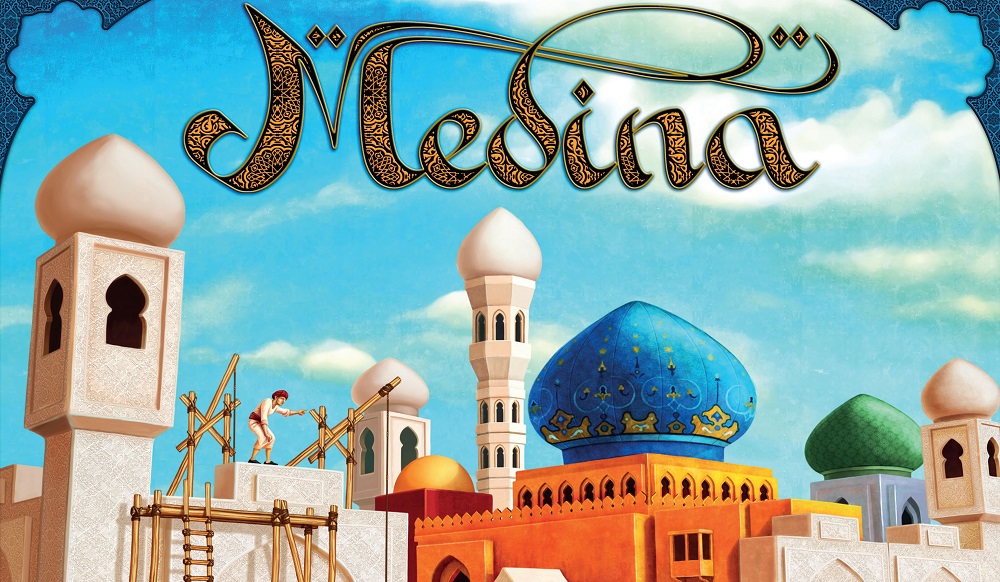
Every so often I come across a game that fills me with more a feeling of respect than love, or even of enjoyment. It’s like that one time I met myself from the future, after I’d sacrificed countless human and alien lives to end the Hydrangine Wars — don’t worry about it, you’ll find out about those soon enough — and I found my usual narcissism replaced with something a touch more distant, more like the relationship I might have with a teacher. Okay, bad comparison, and perhaps too much information. The point is, now and then I’ll play a game that I don’t have much desire to play ever again, but I still can’t help but like it, in its own way.
Medina is possibly this year’s most glowing example of that conundrum.
The Ancients Had No Turnips
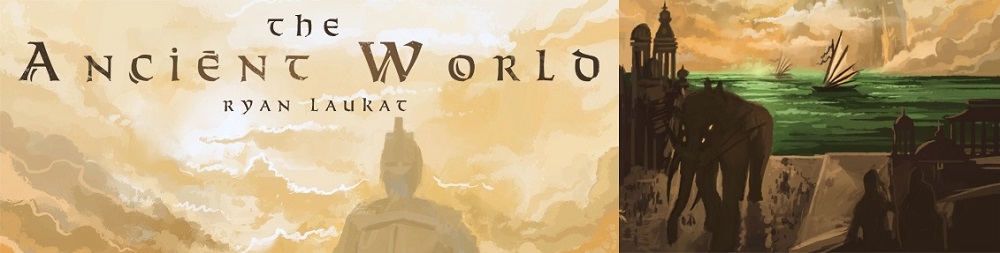
“It looks like City of Iron,” one of my friends said upon first judging The Ancient World by its cover.
Not that there would be anything wrong with that, but The Ancient World, the latest Kickstarter success from Ryan Laukat, has very little in common with his previous game City of Iron. Let me persuade you.
A Salvo of Space Expansions
In all honesty, I get bored reviewing expansions. As with the assembly of a cloak-seeking photon torpedo, it’s only fun once — which is why, across all of Star Trek’s many series and movies, they only did it the one time. The Federation could have obsoleted cloaking technology altogether, but one man had already boldly gone there before.
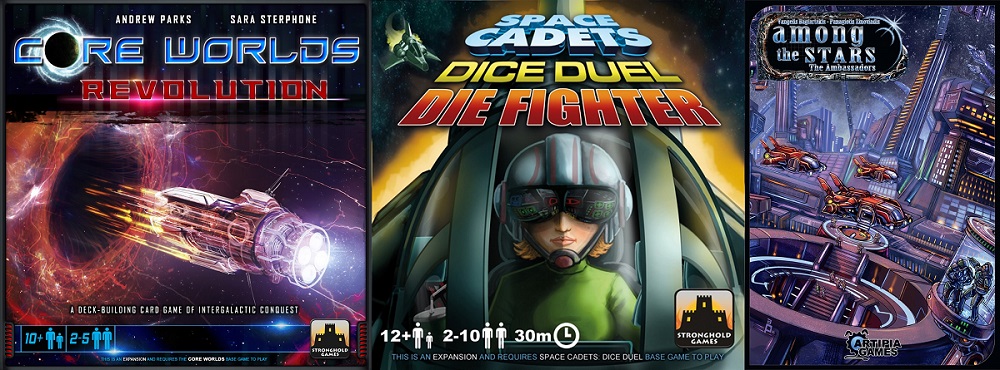
So today I’m going to rapidly launch a full three expansions reviews out my aft torpedo-tube, which is just one of the many phrases I use to refer to my bum. These are all expansions for games I enjoyed — Core Worlds, Space Cadets: Dice Duel, and Among the Stars — and as happy coincidence would have it, they’re all set in outer space. They’re also all published by Stronghold Games, but that’s not quite as interesting as the first coincidence.
Here we go:
Page One — Core Worlds: Revolution
Page Two — Space Cadets: Dice Duel: Die Fighter
Page Three — Among the Stars: The Ambassadors
The Xia Drift

There are two ways of looking at Xia: Legends of a Drift System, and the perspective you adopt is very likely to determine how you feel about its spacefaring antics.
At Long Last, Elephants!

The original Clash of Cultures was easily one of the best Civilization-style 4X games I’ve ever played, and was one of my favorite games from last year — despite three major problems:
1. There were no elephants.
2. The yellow miniatures were trapped in a state of perpetual melting (though this was rectified in later printings).
3. Really, not a single elephant to be found anywhere. The box showed elephants. So where were the elephants?
Lords of Dixit
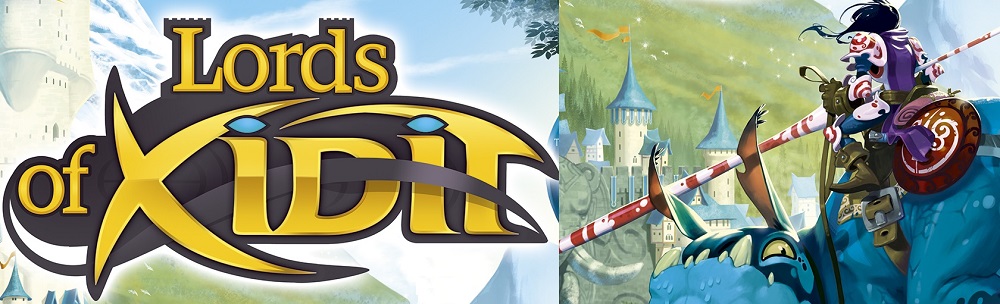
Once upon a time there was a game called Himalaya about yak traders plying their wares in the exotic mountains that separate the Indian Subcontinent and the Tibetan Plateau, and I absolutely did not play it. I’d never even heard of it.
Well now I’ve played it, or something very like it. Libellud, publisher of some of our favorite games like Dixit, Seasons, and Ladies & Gentlemen, recently rebranded Himalaya as a game about noble heroes who wander the countryside, recruiting soldiers and fighting monsters as they go — and let me tell you this new setting is a relief, because I’m buried up to my ears in games about yak trading.
Land of Marginally Better Moves

Lagoon: Land of Druids would really like you to settle in and be a druid for the evening. Which is pretty cool, right? There aren’t many board games that cast you as a druid, or that are set in such a pleasantly drawn world full of peculiar floating edifices, tiny glimmerwisps playing ball with conifer cones, and day-glo mushrooms, shrines, and caves. Which is to say, Lagoon is a gorgeous game, painted with vibrant strokes, colors popping like a drive down the Las Vegas Strip at midnight.
But is it any good? Well… let’s talk.
The Mythotopia Mallet

Martin Wallace has already earned the distinction of being one of my favorite game designers this year thanks to his wonderful and anarchic A Study in Emerald, which casts its players as saboteurs, detectives, and political agitators fighting against (or secretly supporting) their alien overlords during the dawn of the 20th century. It’s basically the unholy spawn of H.P. Lovecraft and Sir Arthur Conan Doyle, and as far as genre mashups go, that’s the one that pushes all my buttons with squamous webbed toes. Which is why, upon hearing that Wallace was making another deck-building-on-a-map hybrid, I did a little happy-dance.
Sadly, Mythotopia is more of a spiritual successor to Wallace’s earlier title A Few Acres of Snow, a game I only played once and wasn’t particularly taken with — a relief, as it later turned out that a single strategy (ominously deemed the Halifax Hammer) was so potent that all other strategies soon crumbled before it.
The question, then, is whether Mythotopia transcends that earlier game’s shortcomings, or if there’s a Mythotopia Mallet waiting to fall.

 SPACE-BIFF!