Category Archives: Board Game
More Than Merely a Civilization Game

When I complain about civgames, my harping comes from a place of deep affection. It’s just that civgames tend to be very good at one model of how civilizations flourish, and very bad at every other model. If it isn’t steady border expansion and technological growth, with very little diversity or ideological synthesis, it doesn’t usually rate. Because really, how many civilizations have spanned from remote BCE to far CE without redefining who they are? Without changing languages, dynasties, ethics, goals? I’ll give you a clue: not many. Even fewer were captained by Sid Meier’s immortal and nuke-happy Gandhi.
Enter Phil Eklund and Jon Manker’s Bios: Origins. As the third in the Bios trilogy, set after the multi-cellular life of Genesis and the prehistoric beasts of Megafauna, Origins is a civgame right down to certain familiar trappings. Tech tracks, cities, and special resources are all present and accounted for. But these trappings are only part of the story. What makes Origins special is the way it answers the questions that other civgames don’t even begin to think about. Questions like who you are — you, the player — what you want, and how very different peoples and civilizations can prosper across the ages.
Cairn or Cairn’t?

I’m always befuddled when somebody asks if a higher-count title will work with only two people. Say, Christian Martinez’s excellent Inis or its expansion. Friend, let me stop you there. Don’t you already have the entire world at your fingertips? Aren’t you drowning in two-player games? Isn’t 2p your most competed-for count? It’s certainly mine. I can barely play the best two-player games, let alone those that are merely good.
Cairn is a two-player game. By Christian Martinez. Two facts that stand in diametric opposition in the tug-of-war for my interest. Let’s see how it fares.
Catan, Carcassonne, Cosmic Frog
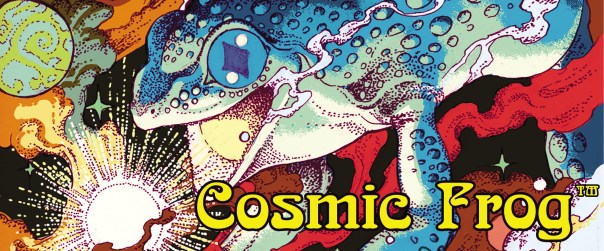
The other day my buddy punched my sister-in-law into the fifth dimension. Upon returning to our reality she got revenge by shoving her tongue down his throat, extracting the forest he’d been storing in his gullet, and using it to create a pocket universe.
That’s really all you need to know about Jim Felli’s upcoming game, Cosmic Frog. But if you absolutely must hear more, I’ll add that Felli is known for Shadows of Malice, Bemused, Dûhr: The Lesser Houses, and Zimby Mojo — deeply weird stuff, in other words — and somehow Cosmic Frog, with its kilometers-tall amphibians, planet-shattering hailstones, and dimensional buffoonery, is by far his most accessible title yet.
Villainous
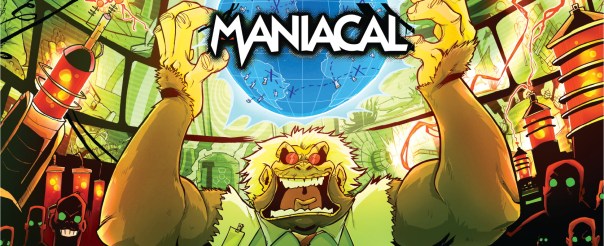
Two titles isn’t enough to tell, but I’m beginning to think Hassan Lopez’s talent might lie in reduction. That sounds too negative. Rendering? Distillation? Refining? Sublimation? No, reduction must serve.
Like Clockwork Wars before it, Maniacal takes an idea and reduces it to its most essential. In Clockwork Wars, magic, technology, and religion were reduced to special buildings and their bonuses, but in an especially clever way that placed them inside the game world, both concrete and vulnerable. Maniacal does something similar for its Evil Genius simulator. Nearly every detail feels like there could have been more. Except, when placed in parallel, those parts accrete into something so smooth, so sparing, so — yes, I’m going to say it again — reduced, that anything extra would have been as vestigial as a hangnail.
Lifeless Planet
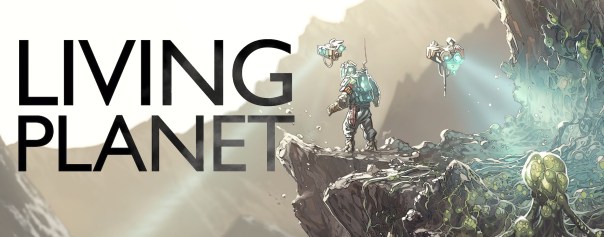
All you need to attract my attention is an utterance of three little words: Boelinger. Archipelago. Sequel. Everything else — the distant setting, the stock market, the expansions you can swap out to generate countless planets to explore — are really just icing.
Want to learn how to stop my attention dead in its tracks? Christophe Boelinger’s Living Planet knows the answer.
Talking About Games: What Is Critique?

In my field we spend a lot of time talking about the ambiguity of categories. One of the big examples is a relatively “new” period called Late Antiquity. The argument goes like this: in many imaginations, including those of many historians, there was Antiquity, with its Roman Empire and thickly-forested Europe and distant dynasties that we don’t talk about very often in the West; and then, after an ill-defined collapse, we eventually arrive in the Medieval Age, with its castles and plagues and religious wars.
The problem is that this model was too simple. Which, well, that’s part of any model’s goal: to simplify something complex into discrete parts so we can talk about it. Hence, a paradox. If your model is too granular, it’s impossible to conceptualize within a reasonable span of time. If it’s too simple, you overlook all the stuff that happened in the cracks. Like, y’know, what the collapse of the Roman Empire actually looked like. Or what all those distant dynasties were doing in the meantime. Categories enable us to learn, but they can also inhibit our learning.
Here’s another story about categories. Once, at a convention, I was invited to dinner with some fellow board game folk. We got to talking about our varying experiences in the hobby. Some were podcasters, others crafted visual media, and some were actual game designers or developers — another distinction that’s not entirely defined. When asked, I mentioned that I was a reviewer. The person beside me leaned forward and said, “Yes, but really, Dan is closer to a critic.”
A critic, you say? What’s that? Never mind. It sounds important.
Life Is the Bubbles

Game design is principally iterative. How’s that for an axiom? Although board gaming is no stranger to innovation, these are occasional detonations compared to our hobby’s long, slow, uphill periods of refinement. If that doesn’t sound glamorous, don’t shoot the messenger. Even less glamorous, the best refinements are often so granular that they often escape the untrained eye. How many cards you draw. The difference between drawing blind or from a market of visible offerings. The clarity of a user interface. Whether a defensive ability trumps all comers or merely hampers them. How smoothly points are calculated. What determines when the final tally is counted. The hundred small decisions that sum into a game that’s wildly different from another game, despite any number of outward similarities.
Oceans, designed by Nick Bentley, Dominic Crapuchettes, Ben Goldman, and Brian O’Neill, raises a sound question: how different is it from Evolution or Evolution: Climate? All were released by North Star Games. All are about explosive biological transformations and player-generated ecosystems. All are about eating your friends. Not like that, you dirty dog. With so many similarities, are there enough changes beyond the setting to warrant a second look?
Here’s a hint: everything I mentioned up in the first paragraph is something Oceans gets right, and those improvements still aren’t the best thing about it.
Floatzilla

Here’s a riddle for you: how can you tell when a board game’s setting has been wallpapered over the top of an economic engine?
Flotilla blurts out the answer without even raising its hand. By giving everything a name — phases, card suits, scoring tiles, resource movers, tile bags, dice, tracks, discs, and even the little hexagons on certain tiles that appear so rarely you’ll forget they had names in the first place — except for the actual resources. You know, the things you’ll handle more regularly than any other component. In Flotilla these resource cylinders are red, green, blue, and yellow. Not medicine, food, oil, and tech. Not blood transfusions, seaweed, fresh water, and plastic. Not sneakers, fishing rods, blue raspberry bubble gum, and frequent flyer mile cards. Nor anything else with some remote connection to the game’s waterlogged setting. Red, green, blue, and yellow. Constant reminders that when you aren’t pushing cubes, you’ll be pushing cylinders.
Winterbjorn

There’s a pleasant familiarity to rondels. Around and around your pawns go, their position determining what you’ll be doing this turn. Why do they complete this circuit, this flat circle of time? Are they fleeing or chasing, running toward or running away? Perhaps there is a deeper reason. Perhaps, if they repeat these rotations to satisfaction before the game is concluded, they will come face to face with themselves at last. Then there will be no more running. Only acceptance.
Or maybe it’s only because rondels are an efficient way to narrow a wide range of options to a digestible handful. That’s the case in Winterborne, anyway.
Five Generations: A Look at Oath

History is a funny thing. Ask yourself, what era do you live in? The modern age? Postmodern? Information? The Holocene, more specifically the Meghalayan? Or will the historians of far-flung generations assign a designation that doesn’t capture any of the details you personally associate with this moment? Everything our culture has accomplished, compressed by distance and necessity, into the Aluminum Age. At long last, the dead of the Bronze Age will nod in satisfaction at our diminishment.
When I spoke to Cole Wehrle about Oath, he called it a “hate letter” to civilization games and legacy games. It’s easy to see why. Like digging the fragments of a lost civilization from the compacted mass of an ancient trash heap, there are fragments to be found, shards and sherds, enough to make out an unmistakable imprint or two. Oath is a civilization game, but not like any you’ve played before. And it’s also a legacy game, but even less familiar. This is what I think about it. This is also the story of my first six plays. I hope you’ll soon understand why they’re the same thing.

 SPACE-BIFF!