Press the Blade to the Hilt
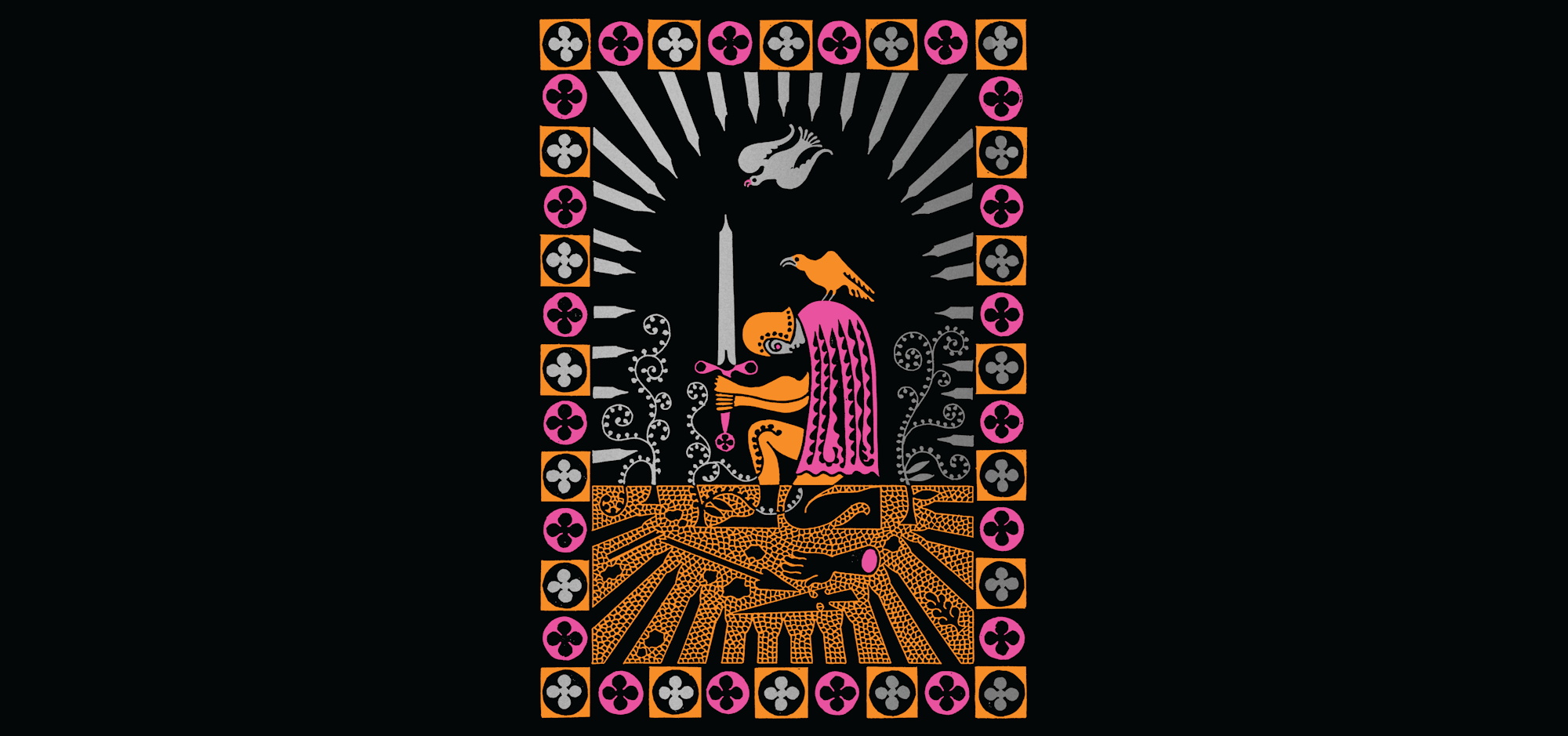
Condottiere. Oh, Condottiere. Dominique Ehrhard’s classic game of battles-within-battles is over thirty years old. It’s been a part of the hobby longer than most of its current adherents, myself included. That’s old enough for any alterations to feel downright excommunicable. What would Condottiere be without the vague Renaissance setting? Without the illegible cards? Without the map of Italy gobbled up one city-state at a time? Without Fantasy Flight’s fiddly extra cards?
Now we know. Condottiere, having shed five layers of padding and plate armor, is still one of the leanest, smartest, and frankly best card games ever designed. If anything, it’s all the better for shedding the extra weight, giving it an agility it previously lacked. Newly adapted into CMYK’s Magenta line, Condottiere is now Hilt. Hail to the king.
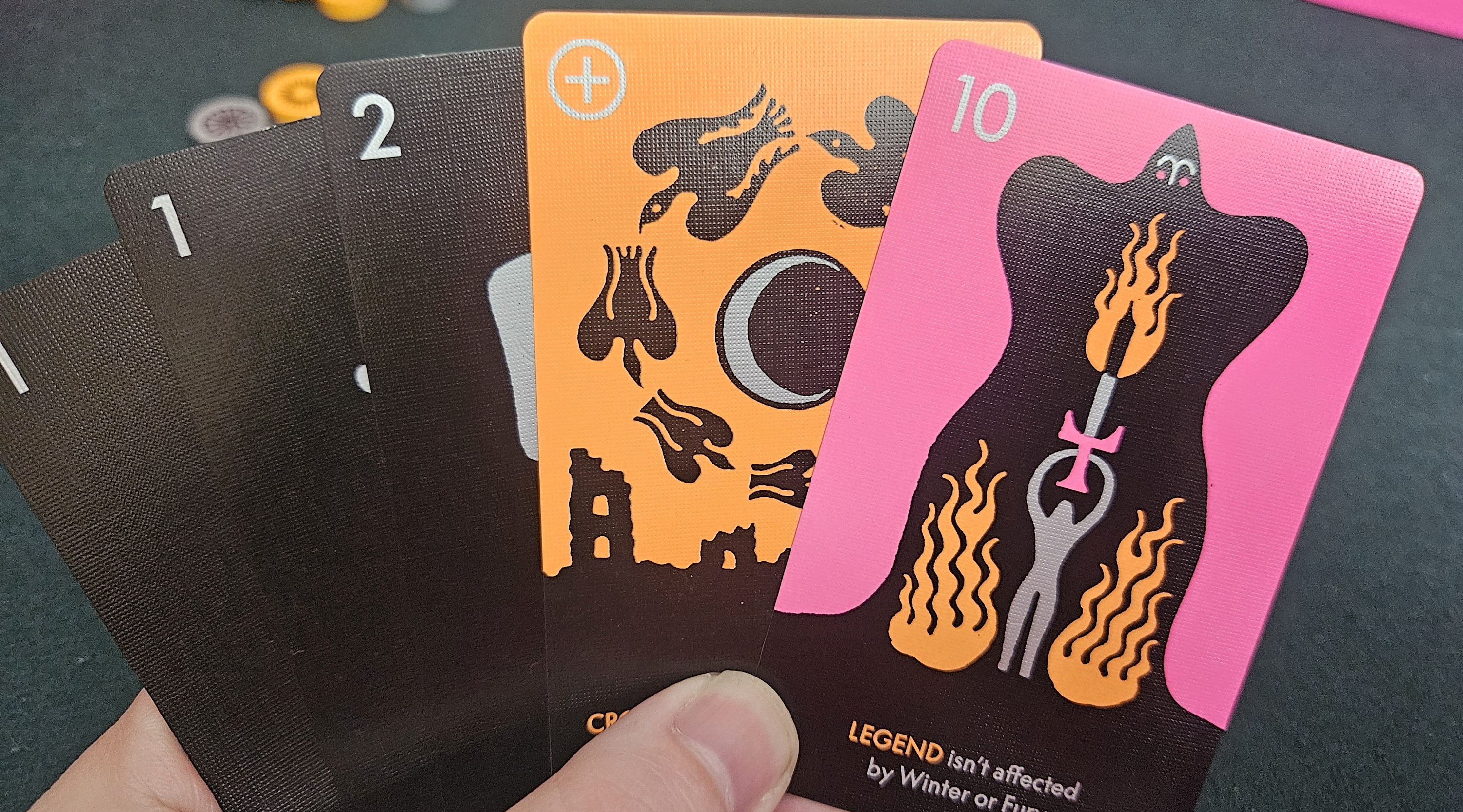
Oh hey. Cards that are legible. What a thing.
For those who haven’t played Condottiere, Hilt marks an easy entry point to Ehrhard’s classic. Starting with hands of ten cards, players vie to win a series of battles. The clue here is “series” — those cards must sustain you through an unknown number of fights, only refreshing once everybody but one player has run out entirely.
There’s a keen sense of brinkmanship to the whole thing, each battle escalating in dribs and drabs, only for certain cards to alter the landscape with all the force and clarity of a lightning bolt. A large army becomes mired by winter. A legend strides onto the field to rout the enemy. Crows or doves end the battle either in bloodshed or peace. Depending on your circumstances, the peace might be far worse than an arrow to the eye socket.
Veterans of Condottiere will quickly note the identity of these cards. Bait, which allows one to retreat a committed troop back to their hand, were originally scarecrows. Doves are the bishop, following the original Z-Man rules rather than the contentious altered rules from the Fantasy Flight edition. Courtesans and springtime, the most persnickety additions to that latter edition, are gone altogether.
We’ll get to the biggest change in a moment, but first it’s worth taking some time to note the game’s improved art direction. Condottiere had a masterful setting, its Machiavellian tricksterism suiting the game’s lacing of the Italian boot. It was unusually flavorful for 1995, but there’s no denying the cards could be difficult to parse from across the table. Paired with the game’s deliberate pacing, which required — and still requires — repeated tallying of each combatant’s relative standing, the art always suffered from a certain muddiness.
Not so any longer. When the legend struts onto the field, you know it because he’s wreathed in the product line’s hallmark magenta. The appearance of a dreaded winter card is chilly with silver. Force cards, Hilt’s name for basic soldiery, are presented as huge stonking digits. Maybe not the most exciting, but at least they’re easy to read.
Which is fine, as these things go, because the real drama of Condottiere was never found in its city-state set dressing. It was found, rather, in the mind-games and feints and brash over-committals that played out between rivals. By clarifying its legibility, Hilt puts those contests front and center. When someone looks across the table and announces that they’re passing, forcing a peer to commit the rest of their cards lest a third party claim victory over the game-winning battle, that’s high drama. No brown-speckled soldiers necessary.
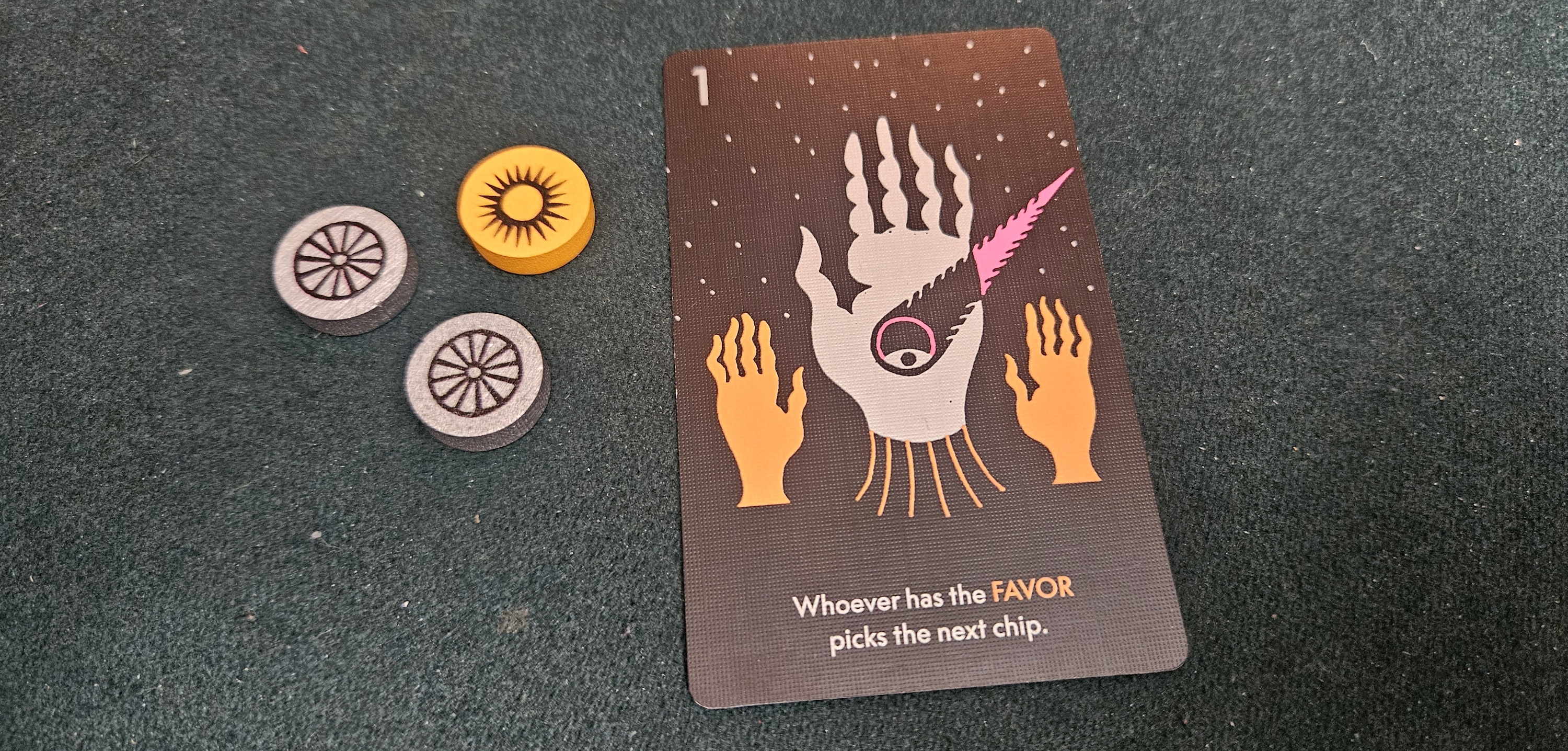
Italy is out. Tokens are in.
But this brings us to Hilt’s biggest revision to the original formula, and I suspect the reason why Hilt has been rebranded rather than retaining its original namesake. Namely, the map is gone. Tossed out entirely. No more parlaying around the edges of Italy. No more trading territory. No more bottlenecking or stalemating around those dead thigh-high regions.
Instead, wins are now tracked via tokens. When you succeed in battle, you claim its current token and then decide which color — of which there are three — will be fought over in the next scuffle. Final victory is awarded to whomever claims either a set of all three colors or a trio of the same.
This change works wonders for Condottiere. I’m sure it will have its detractors, and Condottiere is storied enough to feel beyond reproach, but its cardplay was always so deliberately paced that it sometimes grew sluggish, especially when players began collaborating to prevent someone from chaining together the necessary city-states to win. To be clear, collaboration was and still is the meat of the game! But the default maneuver was to declare war in a region that mattered little and then pass early in order to preserve one’s cards for the fight that would secure an actual lead. Now there’s no taking back a win, encouraging players to… well, still pass, but not nearly as often. This brings the playtime to heel, capping it at something like 45 minutes rather than 90.
Best of all, Hilt’s sinister sense of collaboration is still alive and well. It begins early, almost the instant somebody wins the first duel, but there’s no need to crane one’s neck to peer at that undersized map. You can see the stakes at a glance. Geoff has two orange tokens and passes like a five-foot quarterback, so don’t put in an orange. Jessica has an orange and a silver, so be careful about the magenta token. Silver it is.
Alongside the collaborative nastiness, Hilt preserves the original game’s weaknesses. Bad hands are still bad hands. Not participating in every battle means there’s some dead air. Winter still sucks, even when it’s a necessary suckitude to prevent handfuls of force cards from running away with everything.
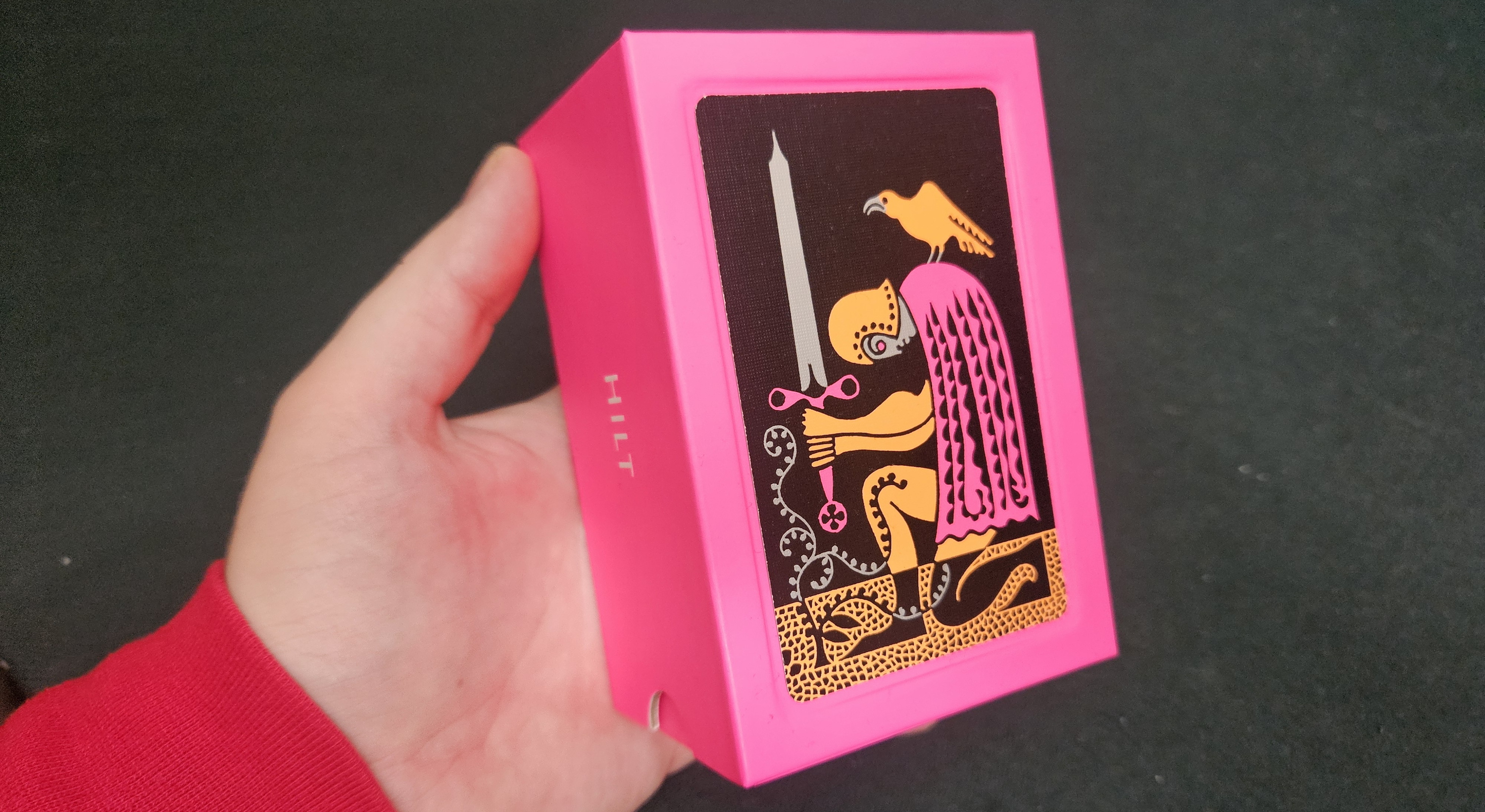
I appreciate a small box.
In the grand scheme of things, these are minor points. Hilt is so good that it even persuaded the powers at CMYK to offer a smaller box alongside their criminal huge-box option. Attaboy, Hilt. You played the long game, passing on the previous six battles so you could sweep this one. Still. Bottom line, even in its larger format, Hilt is excellent. This is the new version that Condottiere has deserved for years.
A complimentary copy of Hilt was provided by the publisher.
(If what I’m doing at Space-Biff! is valuable to you in some way, please consider dropping by my Patreon campaign or Ko-fi. Right now, my third-quarter newsletter is open to all.)
Posted on November 17, 2026, in Board Game and tagged Board Games, CMYK, Hilt, Magenta. Bookmark the permalink. Leave a comment.


Leave a comment
Comments 0