Blog Archives
Playing with Cellulose Fiber
Paper! Despite the meddling of the internet, it’s still everywhere. There’s a good chance you have some in your very own home. In fact, it’s probably within arm’s reach right now. Coming for you. Fluttering closer. Ready to give you a stingy cut on the fingertip.
But for all its sins, paper is good for a few things. Making board games happens to be one of them. And today, I’m going to talk about three paper games I’ve been playing this week.
Fifty-Two-Card Squick-Up
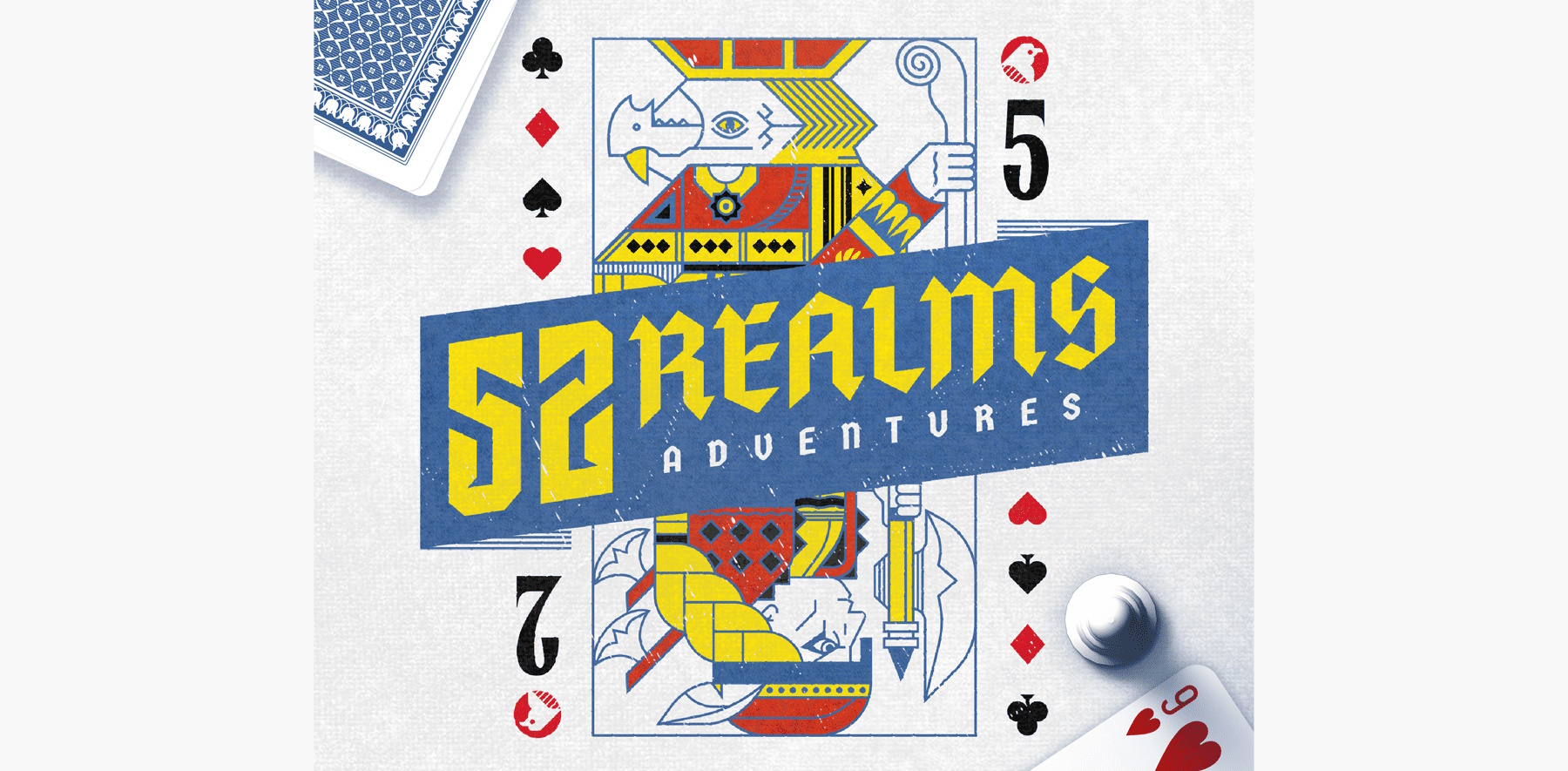
Thus it came to pass that Postmark Games graduated from dice to cards. After some of the finest print-and-plays in recent memory — after Voyages, Aquamarine, Waypoints, and Scribbly Gum — I suppose we were overdue for a title where the input isn’t limited to six sides.
How about fifty-two random numbers instead? Using nothing but an ordinary deck of cards, which surely you have lying around the house somewhere, 52 Realms: Adventures generates an entire dungeon dive. In a vacuum, it’s quite the accomplishment. If only vacuums weren’t so chilly.
Scribbly Koalas
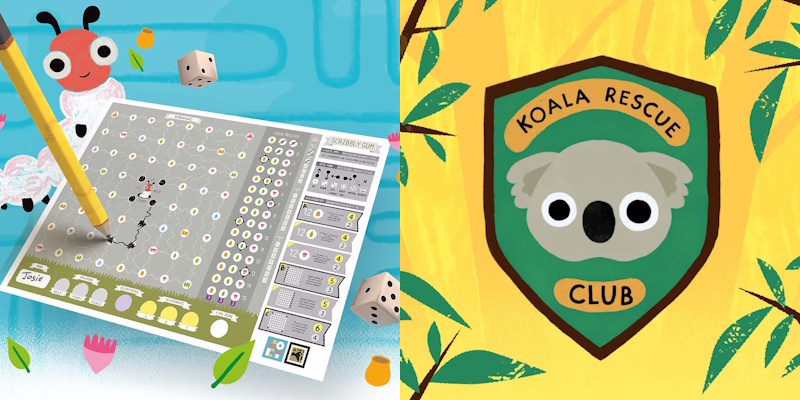
My odyssey through Postmark’s catalog of single-sheet print-and-play games continues. This week’s titles are none other than Scribbly Gum and Koala Rescue Club, both designed and illustrated by Phil and Meredith Walker-Harding.
You can tell we’ve reached the really good games when I’m covering them two at a time. Although this makes for a good twist, because one of them is pretty dang solid. For babies. I mean that in a good way.
Combat Results Postcard
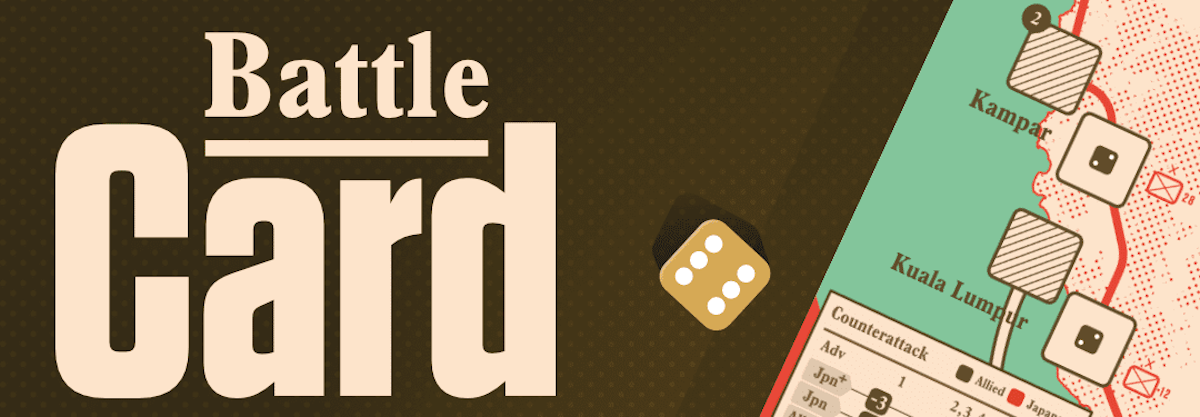
Battle Card is as apt as descriptions get. Designed by David Thompson and Nils Johansson, this is the fourth project in the Postmark Games lineup. Like its earlier peers — Voyages, Aquamarine, and Waypoints — this is a print-and-play title that can be produced with functionally zero budget. Unlike those projects, however, Battle Card is billed as a wargame on a single postcard-sized sheet.
That’s true enough. With a few dice and a smidgen of experience to help interpret the rules, Battle Card covers six engagements from the Second World War. And their format is indeed very small, highlighting some real resourcefulness on their designers’ part in compressing battles and even campaigns into ten-minute experiences.
But unlike those other titles, Battle Card is a mixed bag. I’ll give an example.
Touch Grass (Metaphorical)
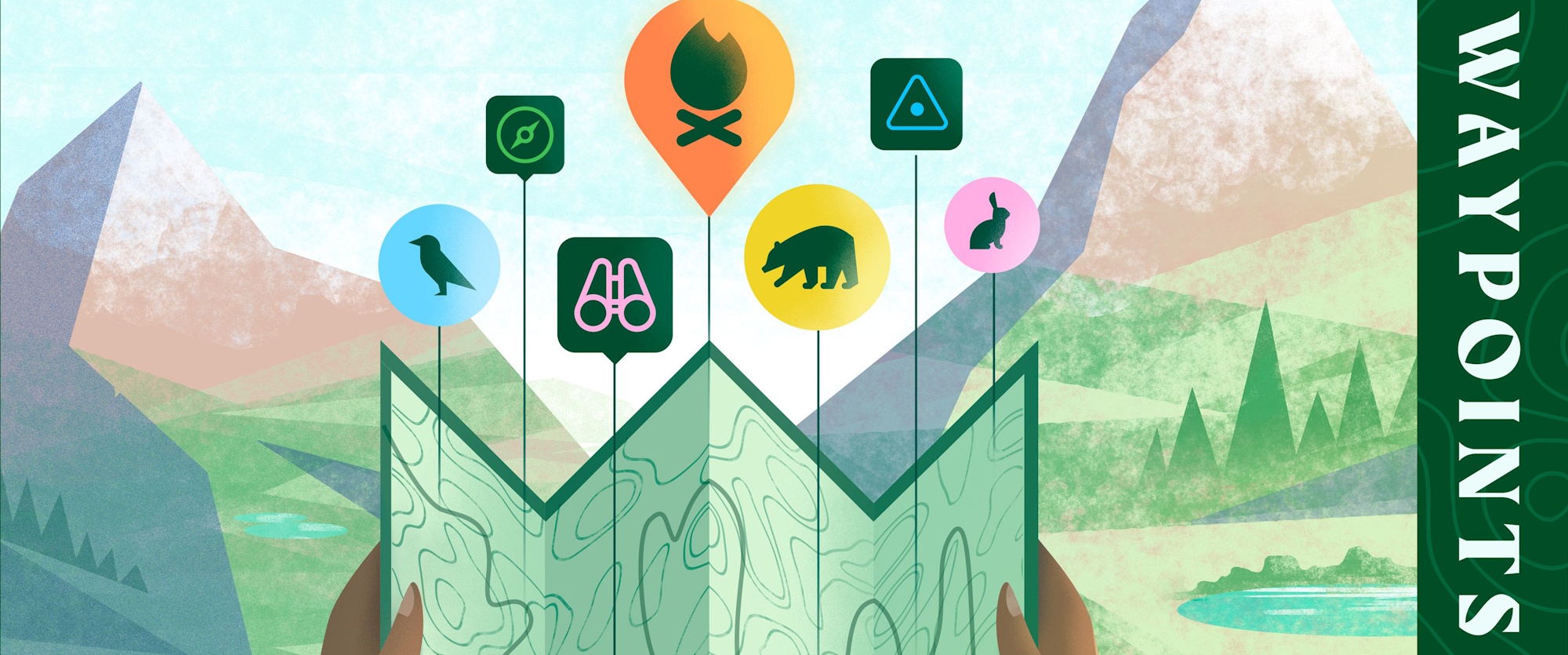
Voyages, the first of Matthew Dunstan and Rory Muldoon’s single-sheet print-and-play roll-and-write games, used three dice. Aquamarine used two. Waypoints continues the trend by using a single die.
That’s cool in its own right. But that isn’t what makes Waypoints special. What makes Waypoints special is the way it handles the movements generated by its rolls. Where those other titles — and let’s face it, most board games — featured straight movements, point to point, A to B, nearly every move in Waypoints is the sort of move you might actually make while traversing an open space.
Here, I’ll show you.
Dive Tables

Here’s something you probably didn’t know about old Dan Thurot: I’m a scuba diver rated for search and recovery. There aren’t many of us here in the desert, which is probably why I receive unexpected calls to dredge the ponds of local golf courses whenever there’s a Silver Alert. Thus far, I have declined these requests. Those waters are, like, four feet deep. That’s a job for snorklers. Or a tall guy with hip waders.
Instead, I mostly use this as qualification to comment on scuba stuff. That cave rescue in Thailand? Legitimate. The roll-and-write shenanigans of Aquamarine? Um. Okay, look, Aquamarine isn’t the most robust scuba simulation. But as another print-and-play title from Postmark Games, it’s a worthy followup to Voyages.
High O’er the Billows We Are Wafted Along

Let it not be said that I don’t take requests. A number of readers have pointed out that it’s been a long time since I’ve covered any print-and-play games. Too true. But there’s a reason for that. Voyages, the six-map design by Rory Muldoon and Matthew Dunstan and the launchpad title from Postmark Games, is both an illustration of my reticence and a roundhouse kick to that same reticence’s noggin.
Bowie Back to Bowie

My brain associates Dan Bullock with new-wave wargames like No Motherland Without, 1979: Revolution in Iran, and (hopefully published one day) Blood & Treasure. I’ve been consistently impressed with his ability to tackle tough topics, imbuing them with uncommon humanity while delivering a few well-deserved body blows to those who put politics and profit over personhood.
Or at least that was true until recently. From now on, I think I’ll forever associate Bullock with Bowie. Namely, the card game Bullock has designed about the life and existential crises of David Bowie in the 1970s. For reasons that will soon make themselves clear, Bowie is not an “official” title. Independent designer Dan Bullock has not somehow acquired the star’s life rights. Rather, it’s a print-and-play design, free to anybody with a printer and some scissors.
But here’s the thing: the unofficial nature of Bowie is precisely what makes it a treasure.
Going to Bed Angry

I occasionally think back on the mudslide of advice I received when Somerset and I got married. There was so much, and we were so inexperienced, that at the time it was impossible to sort into good or bad. Hindsight helps. Some of it has proved apt (“Keep making the choice to love each other”). Other tidbits were stale even at the time (“Always listen to your wife, but as the man of the house you’re the tiebreaker”). And then there were the lines that sounded good until we realized they were soul-crushing (“Never go to bed angry”).
Xoe Allred’s Persuasion is about a brand of holy matrimony not all that far off from the partnership Summer and I entered into — young, rapid, religious, and oh so very Victorian. But where other recent games about the courtship rituals of yestercentury have been drier than hardtack, Allred’s take is viciously seductive. Not because it’s particularly spicy. Oh no. Because it’s so toxic it could break a Geiger counter.
All Is Bomb Is Bomb

Here’s a scenario for you. The Princess slumbers in her bed. Soon she will awake. What will she want for breakfast? Since she’s a bit of a, well, princess, she will neither wait to be served nor accept anything other than what her rumbly tummy desires most. You summon the breakfast prophets to foretell the proper meal. Except they’ve gone missing. A dozen other matters also consume your attention.
Also, everything is a bomb.


