Blog Archives
Trans-Siberian Gauge

I’ve been playing a handful of train games lately. Try not to faint. I’ve suffered through by reminding myself that the trains aren’t the actual focus.
Honestly, I’m glad I did. Amabel Holland’s 2015 Trans-Siberian Railroad recently earned a reprint from Rio Grande Games, which means its winsome self has been trotted out for the enjoyment of a new generation. It’s bursting with ideas. Sometimes in a good way.
A Monumental Clash

Christian Marcussen is a name I associate with Sid Meier, and not only because both of his published games, Merchants & Marauders and Clash of Cultures, could be described as adaptations of Sid Meier’s Pirates! and Sid Meier’s Civilization. More than that, it’s because Marcussen has a way of taking big ideas and making them… well, still big, since both games are long-winded, but more compressed, more digestible. More distilled.
Clash of Cultures in particular is one of the finest portrayals of the rise, rise, rise, and earthquakes that beset ancient civilizations. It now has a Monumental Edition from WizKids that preserves all the highs the lows of the original game and its impossible-to-find expansion — and, in some cases, smooths out the original’s rougher corners.
Sick Rift, Bro
Longtime readers may recall that I’m a bit of a snob when it comes to location-grabbing horizontal area control games, a.k.a. Battle a-Line-ks, a.k.a. Schotten-tots. Don’t know what I’m talking about? Why, none other than titles such as Omen: A Reign of War, Haven, and Air, Land, & Sea, all of which put their own spin on this simplest of genres.
Now I have a fourth favorite: Carlo Bortolini’s Riftforce. The trouble is that its spin is best expressed via numbers.
Gravel vs. Puddle

Some tile-laying games are fresh takes on one of board gaming’s oldest genres. And then, for those who want to hear the comment “It’s a lot like Carcassonne, isn’t it?” there’s Jon-Paul Jacques’ Land vs Sea.
Interior Design for Ghouls

What’s a dungeon without a rack of swords? The odd pile of bones? A tasteful corridor-obstructing sheet of cobwebs? In Jeff LaFlam’s Dungeon Decorators, probably not very many points. Depending on which scoring card you’ve drawn, that is.
Sheepy for GOTY

Come Halloween season, I’m always on the lookout for games of the scary variety. Something not only frightening, but filled with building tension and jump scares and moments that will have everyone gripping the edge of the table in apprehension. Something unexpected. Something that will stay with you.
This year, that game is absolutely Neil Kimball’s Sheepy Time.
Whirling B-Word Craft

By some measures, Erik Andersson Sundén’s Whirling Witchcraft is broken right down to its witchy heart. The second time we played — roughly eight minutes after the first time we played — Geoff turned to me and asked, “Is that all? We aren’t doing some tutorial mode?”
Indeed. I can’t even imagine what a tutorial mode to Whirling Witchcraft would look like. Passing cubes without any reason, maybe. But here’s the thing: despite its brevity and its chanciness — because of its chanciness — Whirling Witchcraft has given me a minor epiphany.
Colonizers vs. Pirates vs. Egyptians!
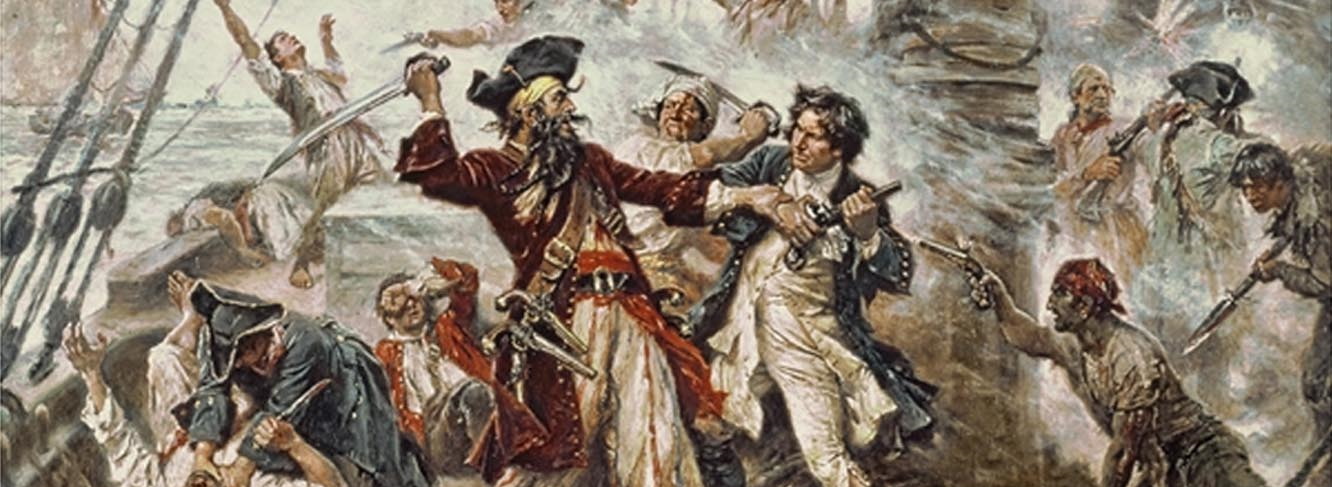
In the month since I published Greenwashing History, my examination of how Martin Wallace’s A Study in Emerald and AuZtralia portray certain historical figures as aliens in order to justify their extermination, one question has bobbed to the surface more than any other:
Do I care as much about the ancient Egyptians?
Oh, it could be anyone. Egyptians. Pirates. Ancient Roman slaves. Atlanteans. It isn’t exactly a new question. It’s come up under varying degrees of good faith over the years. One suspects its regularity betrays an agenda. That maybe someone would prefer I shut up about some topic. But since I don’t like to presume, today I’d like to offer, sans the usual degree of snark I’d normally reserve for such a question, the three informal criteria that I use to determine whether I’ll write about a particular historical topic in board games.
Off with Your Head
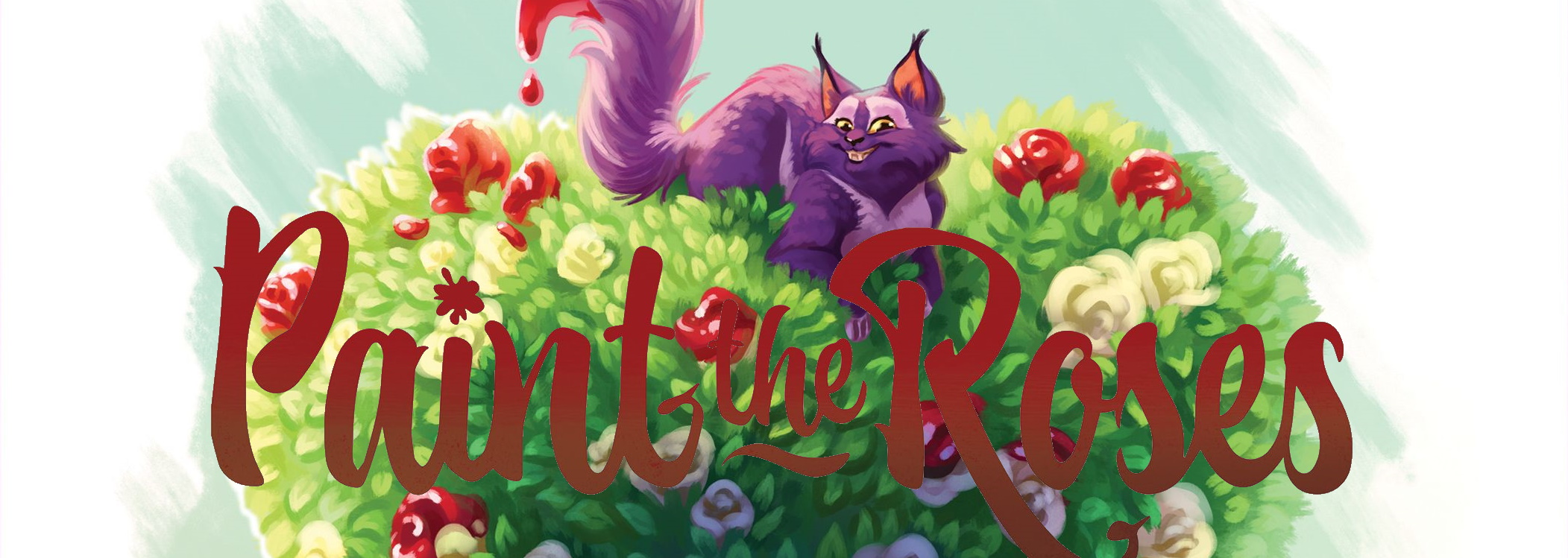
The latest trend in puzzle games is to tinker with communication. More properly, limitations on communication. The Mind, The Shipwreck Arcana, Codenames — the last few years have offered plenty of supernal examples. Have the player identify an island in a sea of noise, give them a way to provide limited glimpses of that island to their fellows, and then tell them to shut up. There you go. Puzzle game.
Ben Goldman’s Paint the Roses works in that same space, but according to a rhythm that feels more naturalistic and less constrained than its peers. Behind its pleasing Alice in Wonderland veneer, it just might be one of the finest limited communication games I’ve played.
Ruination Rumination
Everything about Ruination, the post-apocalyptic game of feuding post-apocalyptic maniacs by Travis R. Chance, screams in neon color squiggles that it would be the perfect eccoprotic for a trashy mood. Vibrant colors, thick miniatures, dice. Dice for days. Dice for miles of dusty motorbike trails. This is what the warboys play when Max Rockatansky isn’t helping Imperator Furiosa steal their rigs and breeders.
So why has Ruination left me colder than the wasteland after dark? Witness me as I try to explain.

 SPACE-BIFF!