Blog Archives
1775: Upstarts vs. Tax-Happy Oppressors

Last month I covered a heart-wrenching title from Academy Games called Freedom: The Underground Railroad, notable for its uncanny ability to create an emotional investment over the fates of a few wooden cubes. I think I even cried at one point. Manly tears, of course. Manly abolitionist tears.
Now I’ve had a chance to try another of the titles in Academy Games’ catalog, a simple wargame by the name of 1775: Rebellion, and… well, I’ll put this delicately: stand back, because I’m about to gush like a fry cook’s neck pimple.
Euphoria: Build a Better Worker Placement

It might surprise you to learn that I’m a huge fan of dystopian fiction. Or it might not, who knows. Maybe it’s such a critical component of my being that it bleeds into the open, and upon our first meeting, a stranger will instantly feel the tug of intuition whispering, “This guy likes dystopian fiction.”
Regardless, it was the subtitle of Euphoria: Build a Better Dystopia that first drew my attention, because I would love very much to do that. Yes indeed. For pretend, of course. Ahem.
Triplayereste

There aren’t many good games out there specifically designed for third wheels — pardon me, for three players. It’s a niche that often goes unfilled, frequently leading to the phrase, “Let’s just wait for Geoff to show up, and then we’ll play something for four.”
No longer! Trieste may or may not be named for the city in Italy (more probably because it sounds like “three” in some magic language), but it’s certainly determined to be one of the best three-player games you’ve ever played. Does it succeed? Only one way to find out.
You Can Choose Your Family, But Not Your Friends

Having grown up in a culture that places about a hundred times more importance on genealogy than basically every other culture that has ever existed, I naturally shied away from Legacy: The Testament of Duke de Crecy, a game about tending your family tree in early 18th century France. It frankly sounded like the second-worst possible way to spend an evening, trumped only by the utter tediousness of a train game that doesn’t include the displacement of native tribes, the breaking of strikes with Pinkerton agents, or the abusing of migrant laborers.
Boy, was I wrong. About the genealogy one, that is, not the train games. Those still suck.
Parsex is Way Better than it Sounds

Want to hear a secret I haven’t told anyone else ever? I think 4X games kind of drag. I mean, you’ve got to explore, expand, and exploit, and by the time we finally reach that point, I’m all, enough already, but then you’ve gotta go exterminate everyone too. I mean, sheesh!
Alright, alright, put down those torches, you’ll make black spots on the ceiling. And anyway, I’m just being controversial to bait extra clicks. The real problem is that while I love 4X games, I rarely have enough time to get through the exploit part, let alone the meatier extermination bits.
Once again, Todd Sanders leaps to the rescue, this time with Parsex — pardon me, Parsec X, which for the life of me I cannot pronounce or spell properly. Here’s a game that’s 4X, compact, free (to print yourself, anyway), and takes about 30 minutes to play. Oh, and even though you wouldn’t expect a 30-minute 4X game to be any good, this one is actually pretty respectable.
Hawken: Now with Inverted K, Also Cards
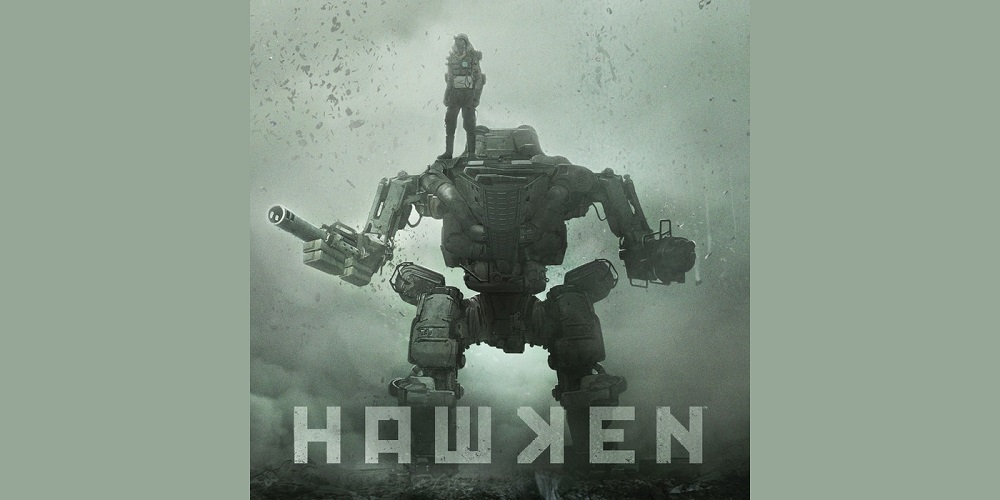
Sometimes I think it’s kind of sad that mechs are built for war, live out their short existence fighting one another, and then die in battle. Then I remember it’s actually awesome.
Meanwhile, Cryptozoic Entertainment is still in a whirlwind frenzy of making board games out of licensed properties, including the relatively recent mech-war PC game Hawken. What’s more, in order to capture the frenetic excitement of mech combat (we assume, since nobody’s done it yet; maybe it’s boring), they’ve decided to make it real-time. I know, I was thinking the same thing: huh? Well huh no more, because I’ve got the lowdown on what’s going on with the inspirationally-titled Hawken: Real-Time Card Game.
Cloaks vs. Jungle Elves, Round II
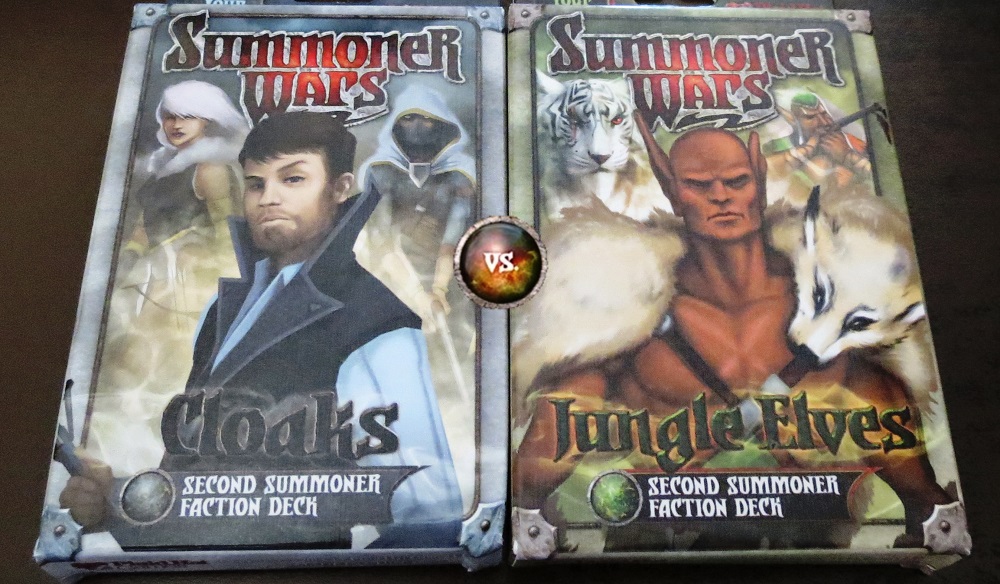
Poop just got nonfictional. I’ve always preferred an assassination strategy in Summoner Wars, and now two of my three favorite factions — both of whom are among the slipperiest, most low-down assassins of all — have just received their second summoners, and entire sacks of tricks, traps, and mean horribleness to go along with them. This time, the nomadic Cloaks and the probably-also-nomadic Jungle Elves are having a go, and their appearance on my doorstep means another duel with Somerset.
Now You Can Actually Floop the Pig

Cryptozoic Entertainment has eked out one hell of a niche for themselves. Their business model consists mostly of building games around licensed properties and then selling said games to the fans of said properties, and not bothering to worry about how little they’ll appeal to everyone else.
I’m saying this because the same is essentially true of Adventure Time: Card Wars. If you looked at the header image and thought — or better yet, shouted aloud, possibly while fist-bumping your Jake plushie — “Adventure Time Card Wars?! Mathematical!“, then this game very well may be your cup of tea. And on the other hand, if you muttered something like “Why’s that kid got a hat with cat-ears on?” then, well, you might as well move along.
Alone Time: Suboptimal Moves

I don’t make suboptimal moves on purpose. Okay, that’s a lie. If I’m teaching a game, or a friend seems like they need a win, or the current best move will just piss off everyone at the table, then sure, I’ll intentionally make a less-than-ideal move now and then. Just to keep things breezy. But not when I’m playing solo games, because nobody will get angry because I’m winning or store a grudge for next game or flip my handcrafted game table. When I’m playing alone, there’s simply no reason to take any move other than the best one I can see at any given moment.
That is, until I played Freedom: The Underground Railroad. Let me explain.
They Who Were 8 (out of 10)

It wouldn’t be a Tuesday in February without a look at another print-and-play title from Todd Sanders, or at least that’s what my grandma used to say once the dementia had really dug in its claws. Our previous features of Todd Sanders’ work have mostly focused on his solo and two-player efforts, but today our topic is They Who Were 8 — or They Who Were ∞, if you’re an altcodemancer — which is a four-player team-based microgame about a jealous pantheon of gods as they seduce, give birth to, and conflict with one another. Just another day at the Mount Olympus office for these guys.

 SPACE-BIFF!