Blog Archives
Friends Don’t Let Friends Slay Alone
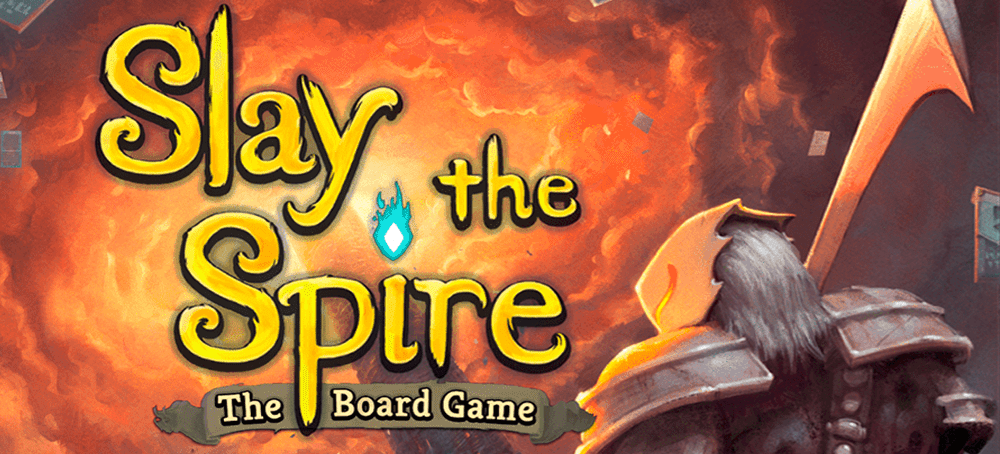
Cards on the table: I prefer Monster Train.
But it would be folly to deny that MegaCrit’s Slay the Spire has wielded massive influence over the digital deck-building sphere. Without Slay the Spire, an entire cohort of excellent successors would never have strode forward to claim the throne. Still, despite the odds, Slay the Spire remains unbeaten, a modern classic that’s less a game and more akin to a digital addiction.
How Gary Dworetsky got the go-ahead to adapt it for tabletop is beyond me. Don’t get me wrong, Dworetsky is a talented designer, and his previous game, Imperium: The Contention, as unfortunately titled as it may be, was fantastic. But it was also his only previous game. There’s probably some insider baseball we’re not privy to.
Not that it matters. Whatever its provenance, Slay the Spire: The Board Game is here. And it’s good. Every bit as good as the video game. Which isn’t the same as saying it’s an essential title.
Legends of a Dog System

Remember Xia: Legends of a Drift System, that sandboxy romp through outer space that didn’t really cotton to skilled play, but felt great anyway? Dog Star Shippers, the diminutive title by Sam Pugh, operates like a downscaled version of that game. It’s chancy, silly, and offers a pleasant way to pass an hour.
Cute as a Button

In video games there’s the concept of the “demake,” in which a particular title is reimagined according to the limitations of earlier hardware. If there’s an equivalent in analog games, it might be the impulse to miniaturize. If so, there may not have ever been as extreme an example as Gloomhaven: Buttons & Bugs.
The original Gloomhaven, designed by Isaac Childres, is famously enormous. I would list a sampling of the contents (seventeen heroes, ninety-plus scenarios, etc.), but even that’s an exhausting endeavor. By contrast, Buttons & Bugs fits in the palm of one’s hand. Not comfortably, mind you. It’s a rather big miniature box. You could probably deal some damage to an intruder if you pitched it with enough force. But compared to Gloomhaven, the shrink ray has done its job.
Here’s the thing. Just as a demake can prove clarifying of the core elements of a video game, so too does this miniaturization. By stripping out the many many many things contained in that big box, it zeroes in on what makes Gloomhaven so interesting — and to some degree, so limiting.
Chewing the Scenery

There’s no hiding it: Earthborne Rangers feels like a gigantic leap forward for a particular niche of card game, a quiet revolution of contextualization and setting that effectively relegates its predecessors to the nursing home. Those predecessors, adventure card titles defined by the release model of Fantasy Flight Games — The Lord of the Rings: The Card Game and Arkham Horror: The Card Game, to name the most durable examples — have been defrocked, shown to possess creaking knees and prosthetic hips.
But while it would be possible to write a thousand words bemoaning the business model that trickled out those games one expansion pack at a time, it’s far more interesting to highlight what Earthborne Rangers gets right.
Glimmer, Lantern, Glimmer

When I looked at Kinfire Delve: Vainglory’s Grotto last month, my conclusion was optimistic. Kevin Wilson’s sidequest in his Kinfire universe was rather good, with colorfully realized characters and a solid deck-delving system. If it also happened to be too easy, its titular villain wadding up like a spent hankie, well, at least our heroes were relieved to not require a potion to recoil their intestines.
The second set, Scorn’s Stockade, continues the spin-off’s tradition of pairing a negative trait with a generic destination. Mechanically it’s the same game, but what a difference the new cards make.
Kinfire. Not That One.

Every time I mention I’m playing Kevin Wilson’s Kinfire, somebody asks if it’s really as big and intimidating as they’ve heard. This sparks a clarification: the Kinfire in question is Kinfire Delve, which is considerably smaller than Kinfire Chronicles, the latter of which is so sprawling and so expensive that it would probably be compromising for me to even glance at the thing.
No, Kinfire Delve — specifically Vainglory’s Grotto, the first of three proposed releases in the Delve line — is neither big nor intimidating. To the contrary, it’s compact and easy. Both solitaire and with two players, it’s as smooth as they come. Maybe too smooth. But only by a scooch.
The Plum Island Park Stroll

One of the finest solitaire games of all time is Dawn of the Zeds, Hermann Luttmann’s masterful riff on the States of Siege model. Not that it should be taken lightly. It presents a vicious struggle for survival that might end in calamity faster than the game can actually be set up. It doesn’t help that further editions and expansions cluttered the table with so many optional modules that even veterans of the zed wars might pause before breaking it out. At least this veteran has.
So it was with no small measure of excitement that I approached The Plum Island Horror, a spiritual successor to Dawn of the Zeds, and a perfectly schlocky reimagining of the small town under siege by reanimated horrors.
The Suns of Malvios

The suns of Malvios are dying.
I haven’t a clue what that means. Evocative, though. I wouldn’t expect any less of Peter C. Hayward. He created That Time You Killed Me, which featured some of my favorite writing in any board game to date. Give me one good sentence over a languid storybook any day.
Converge is the card game equivalent of one good sentence. Maybe four good sentences. This is a Button Shy production, and like all Button Shy productions it’s an 18-card wallet microgame. Except there are three wallets plus a solo mode, and they can be mixed and matched. Purists might argue that this pushes it past some self-imposed boundary of microgamedom. Good thing I’m no purist, because Converge is possibly the best microgame I’ve had the pleasure of playing.
The Better Part of Valor

The Battle of Hegra Fortress saw 250 Norwegian volunteers holding off a Wehrmacht battalion for the better part of a month. It was a comparatively minor engagement in the grand scheme of the Second World War, but the unexpected success of the defenders against overwhelming numbers, artillery and air bombardments, and the weather itself became a symbolic victory for Norway.
Petter Schanke Olsen’s version of the battle, Halls of Hegra, turns to modern mechanisms and systems to immortalize the battle. The result is exceptional craftsmanship, a depictin of warfare that goes far beyond the customary in its portrayal of courage under fire.
Flippin’ Heck

Round these parts, we mostly know Steven Aramini for his 18-card wallet microgames, fare like Circle the Wagons, Sprawlopolis, and Ancient Realm. Now he’s set up his own imprint, Write Stuff Games. While its inaugural title is rather compact, it’s downright massive compared to a wallet game. It’s also one of the best flip-and-write games I’ve played. Ever.


