In Defense of Monopoly

Monopoly gets a bad rap. Recently, an amusing video by YouTube channel Actualol even featured a woman getting shot point-blank in the head for having the gall to recommend a pleasant evening of purchasing properties and driving someone bankrupt two hours before the actual conclusion of the game. A few short minutes at your friendly local game store will confirm the sentiment that Monopoly is this generation’s favorite target of oppression and bigotry.
But surely 275 million copies sold can’t be wrong. Fun fact: did you know Hasbro prints $30 billion in paper Monopoly money every year? That’s roughly what The Bezos earns every time you enable one-click purchases on Amazon, but less depressing. Which is why I’ve decided to stake my reputation on defending this wonderful game with seven reasons why it’s better than you remember.
The Crisis Gets Lonely

Given this hobby’s churn of new releases, it isn’t often that I get to stick with a single game long enough for an expansion to roll around. Wray Ferrell and Brad Johnson’s Time of Crisis is an exception, and has reappeared on my table regularly ever since its release nearly two years back.
Good thing I waited around, because The Age of Iron and Rust may be one of my favorite expansions, adding three modules that transform this into one of my absolute favorite deck-building hybrids — and a considerable solo offering to boot.
Middara: Unintentional Apple
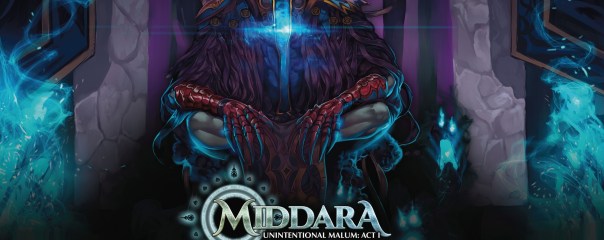
At this point, there almost isn’t much to say about Middara that hasn’t been said about a hundred other games.
Four years since it funded on Kickstarter. Preposterous production values counterbalanced by preposterous quantities of miniatures and cards and words. Those words, bound up in a 480-page adventure book, weaving a tale that speaks much while saying little, despite being only the first act of something grander and longer-winded. A gorgeous aesthetic that will certainly leave some people questioning why this fantasy world’s women feel such a universal need to bare breasts and thighs, and others responding that bared manly muscles make all fair. A dice-heavy combat system that’s simultaneously expansive and that’s it?
It’s dungeon crawling as a microcosm. All the excesses and shortcomings and triumphs and stipulations of the genre, compressed — or, more accurately, expressed, expanded, blown outward — into the confines of a single box that could serve as the cartoon anvil in a real-life homicide. Even the title tells you something important. This isn’t Middara. This is Middara: Unintentional Malum: Act I.
Brace for impact.
EXCEED Finds a Home in Street Fighter

I’ve been championing EXCEED for a while as the best card-driven implementation of the two-dimensional fighting game. It’s fast, it’s punchy, and it prizes smarts over speed — which means I can play it at all, since I have the reflexes of a loris. Unfortunately, the roster for EXCEED’s first two seasons was as unknowable as it was unique, borrowing or inventing characters with plenty of pizzazz but no recognizability. What’s the difference between Nehtali and Kikurage? Here’s a hint: one is a character from EXCEED and the other is a mushroom that’s delicious in ramen.
But let’s try this again: what’s the difference between Ryu and M. Bison? Or Chun-Li and Zangief? None of them are mushrooms, I’ll tell you that. Even someone like me, who as a child was kept far away from arcade cabinets for fear of demonic contamination, can tell you with some degree of accuracy what everyone from Street Fighter is capable of. That’s the value of a solid license, draping a familiar framework around something new. A context. A reason to care.
That license is also why this is the best time to give EXCEED a shot, because this fighting system has never been stronger.
Slip N Slide

There’s a shelf in my friendly local game store that I’ve only recently taken any interest in: the kid stuff. Not because of any stigma, mind you. I’ve always been of the opinion that the un-seriousness of kid games should be taken seriously, if only because they strip away every appendage and appendix, letting you isolate and interact with the gooey chocolate center that is the game’s — for lack of a better word — “fun.” You don’t have to be a child to recognize that Rhino Hero is a masterpiece.
Still, I’m an adult human man, and the kid shelf is literally beneath my level. Eye level. Because I don’t have eyes in my shins. And only recently have I had a companion whose eyes tend to be located shinward. When she saw a game with a wobbly penguin on the cover, I said sure. At the very least, maybe she’d cool it on Blob Lobber.
I Have Played So Much Blob Lobber

Of all the games I never expected to review here on Space-Biff!, Blob Lobber is pretty much at the top of the list. I can sum up nearly all of its gameplay in one sentence. Here, I’ll prove it: it’s about flipping flimsy cardboard discs to hopefully touch other flimsy cardboard discs — which, last I checked, you could do with a deck of secondhand playing cards and benefit from a heavier cardstock than these suckers provide. Blob Lobber was published by Steve Jackson Games, but it’s the polar opposite of their monstrous deluxe edition of Ogre. A game so small I’ve lost it in the couch cushions. Twice.
But here’s the twist: I’m going to give it a positive review. Positive-ish. Not glowing. I’m not insane. But it’s entered my regular rotation for one very dependable reason.
Hot Men at Work

This probably isn’t something you would guess about me, but I can be a bit snobbish about stacking games.
Don’t comment on that. Instead, let’s talk about why Rita Modl’s Men at Work is one of the world’s perfectest stacking games ever.
Two Minds about Discover: Lands Unknown
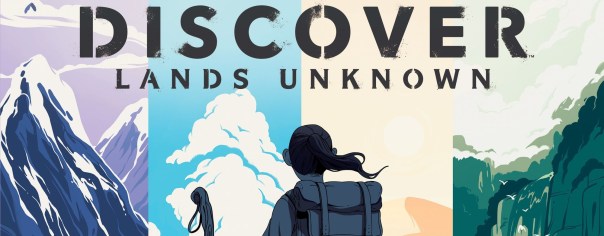
It’s that time again, when Dan Thurot and Brock Poulsen merge as one — mentally merge, don’t be gross — for Two Minds About…, the only series on the web in which two board game critics named Dan and Brock discuss how they felt about a board game. Today’s topic, the computer-assembled Discover: Lands Unknown. It’s the computer-generated future. And it’s a grim one.
Brock: Hear me out: spreadsheets.
Dan: Oh no.
Book-Space! #8: The Cabin at the End of the World

What do two men and their daughter have in common? Being trapped in a cabin by psychopaths, of course! Join Brock, Summer, and Dan as they discuss the fearsome nature of farmers, magical realism novels, and whether The Cabin at the End of the World by Paul Tremblay is worthy of your time. Listen over here or download here.
Next month, we’re reading A Darkling Sea by James L. Cambias. Read along with us and deposit your thoughts below to hear them read aloud by Professional Podcasters!
The Seven Best Prototypes of SaltCon 2019

Ah, SaltCon. Not only is it the third-best Mountain-West Board Gaming Convention in the Mountain-West, but it’s also where designers congregate from far and wide to compete for the prestigious Ion Award. Although I was barred from participating as a judge thanks to an embarrassing event which I’m currently appealing with Chili’s corporate headquarters, I still managed to swipe a badge from reception and take a close look at almost one dozen prototypes. What follows are my own personal awards for the top seven contenders of the convention.
Take that, Dr. Ion, whoever you are.

 SPACE-BIFF!