Author Archives: Dan Thurot
Best Week 2022! Go Go Gimmick!

“Gimmick” doesn’t need to be a nasty word. When you get right down to it, a gimmick is something done to attract attention. Stretch that definition even the tiniest bit and you get nearly every board game ever made. Since that would result in far too long a list, today we’re examining the year’s games that used singular concepts to draw eyeballs — and won me over in the process.
Welcome, friends, to the first day of Best Week 2022.
Lok Out!
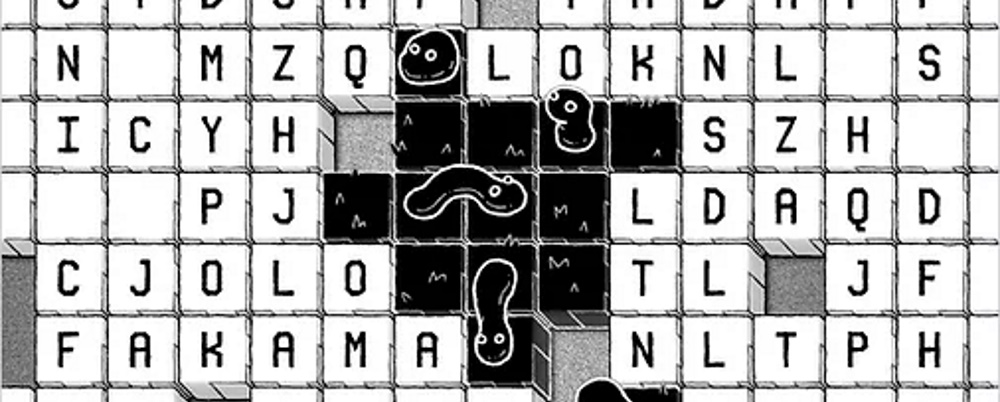
A few months back, I found myself unexpectedly delighted by Blaž Gracar’s All Is Bomb, an 18-card microgame that felt ten times its size thanks to some serious puzzling and a bevy of expansions. Since then, I’ve been playing through one of Gracar’s puzzle books, the pocket-sized LOK.
And when I say “playing,” I mean “fumbling.” In a good way.
In a Wooden Boat in the Shipping Lanes

Everybody’s racing to make the next half-hour CDG, both a testament to the staying power of Twilight Struggle and a play note that the thing had a tendency to drag on. The latest aspirant is Harold Buchanan’s Flashpoint: South China Sea. Buchanan, you might recall, is the designer Liberty or Death, the fifth volume in the lauded COIN Series, which for no specific reason remains the only volume I’ve never gotten around to writing about. South China Sea rather boldly, perhaps presumptuously, announces itself as volume one of the Flashpoint Series. It’s like the kids say: always be branding.
For what it’s worth, I do hope there’s a volume two. Although maybe not for the reasons one would expect.
Gimmick’s Got Game
I didn’t grow up playing many board games. In our household they fell into three camps. There were classic games like Risk and Monopoly, also known as “boring games.” There were the complicated multi-session games my friend Brent played, which required more investment than my periodic visits could provide. And there were demonic games, those that might rupture the fabric of reality like a turgorous pimple and allow the devil’s hordes to pour into our plane. These included ouija boards and face cards.
But then, in between episodes of Duck Tales, a commercial showed me something new. In vivid colors and a thespian’s voiceover, it boasted of something that was as much a mountain of plastic as it was a game. It was mechanized. It made sounds. Its turbulence was part of its gameplay. I had to have it.
That game was Forbidden Bridge. Its commercial was seared in my memory. That Christmas, it became my first encounter with gimmick-as-gameplay.
Watching You Watching You Watching You

When we talk about theme in games, we’re usually talking about the wallpaper. I’ve deadened plenty a pixel ranting on that point, which is perhaps why Daniel Newman’s Watch struck me with such force. Watch is a game about stealing office supplies. It’s almost irrelevant that these office supplies happen to be pocket watch parts and surplus WWII munitions. That it takes place on a literal clock face plunges it into the realm of fever dream. One doesn’t need to work in a Soviet factory to feel like a cog waiting to snap.
Now this is theme, adumbrated through a dozen minute details.
Space-Cast! #24. Air, Land, & Snap

Like everybody else, Jon Perry and Dan Thurot have been playing Marvel Snap. Unlike everybody else, Jon Perry has designed games such as Time Barons, Scape Goat, and — more relevantly — Air, Land, & Sea. Listen in as we discuss lane battlers, Marvel Snap, the perils of porting digital games to tabletop, and much more.
Listen over here or download here. Timestamps are after the jump.
Chits Around the Table
There are perils to self-publishing. Take Renaud Verlaque’s Swords Around the Throne, a sky-high vantage on the Napoleonic Wars that, unlike his earlier published titles Age of Napoleon, The Price of Freedom, and The Big Push, is available only through the Game Crafter. As a consequence, Swords Around the Throne defies ease of entry. Its rulebook is a muddle of misplaced information, details that could have been offloaded to cards or the board are absent, and like many wargames there are exceptions aplenty.
Which is a pity, because somewhere behind a veil of its own devising is a novel portrayal of European upheaval.
Dunc: Immorality

The foremost question about Dune: Imperium: Immorality is one of abundance. Does Imperium really need another expansion? It hasn’t even been a year since Paul Dennen gave Dune: Imperium its first big addition, Rise of Ix. At this rate we’ll soon be juggling expansions for the Honored Matres and Fish Speakers. Talk about power creeps.
Speaking of power creep, have you ever heard of the Tleilaxu?
The Anarchy Comes Home

The thesis for John Company is drawn right onto the lid of the second edition box. Two worlds, starkly divided, seemingly incongruent. The first, drawn with affrontive rotundity, features genteel Englishmen and Englishwomen drinking and flirting, debauched in their plumpness, as without care as people ever were. The second, illustrated as angularly as the first image was curvaceous, reveals a fortified seaside factory, sternly defended and given scale only by the many ships gathering beneath the hem of its skirts. Despite their dissimilarity, it’s like the meme says: they are the same picture.
The first time I wrote about Cole Wehrle’s most ambitious title I called it his magnum opus. Later I discussed how it and its sister volume An Infamous Traffic put two dueling economic systems on trial. The third was a preview for this second edition, but the final product hasn’t changed enough to invalidate any of the praise I heaped on it at the time.
But a few things remains to be stated. What follows is less of a review than a statement on why games like John Company are the most essential ludic texts of our day.
Mountain Copper

In Plato’s description of Atlantis, Critias mentions orichalcum — literally “mountain copper” — a metal second in preciousness only to gold but no longer known except by name. To this day its identification offers a minor mystery to historians. Was orichalcum some bright alloy of gold? Platinum? Remnants of an alien civilization that taught humans how to embed circuitry into the Acropolis? Probably not. A few years back almost forty ingots were recovered from a shipwreck off the coast of Sicily. A gold-hued alloy of copper and zinc, some experts believe these may be our last remnants of the lost metal. They’re on display at the archaeological museum of Gela.
Orichalcum is also a board game by Bruno Cathala and Johannes Goupy. It’s considerably less mysterious than its namesake.

 SPACE-BIFF!