Author Archives: Dan Thurot
Maybe Check Under the Mountain?

The old king has disappeared. Inconvenient. We were barely holding the place together as it was. Now four claimants are scrambling to seat their bums on the royal pillow. The pillow is on the throne, you understand. But it’s a sublime pillow. Too bad it’s no good for sharing.
Longtime readers will be well aware that one of my favorite types of game is the lane battler, whether we’re talking about classic Battle Line and Schotten Totten or something newer like Omen: A Reign of War, Haven, RiftForce, or Air, Land, & Sea. Even Marvel Snap qualifies.
The Old King’s Crown is a lavish addition to the genre. Designed and illustrated by Pablo Clark, this forthcoming title is certainly one of the handsomest games I’ve played in a long time. I mean, just look at the thing. Mwah.
In Case You Didn’t Get Enough Zoom
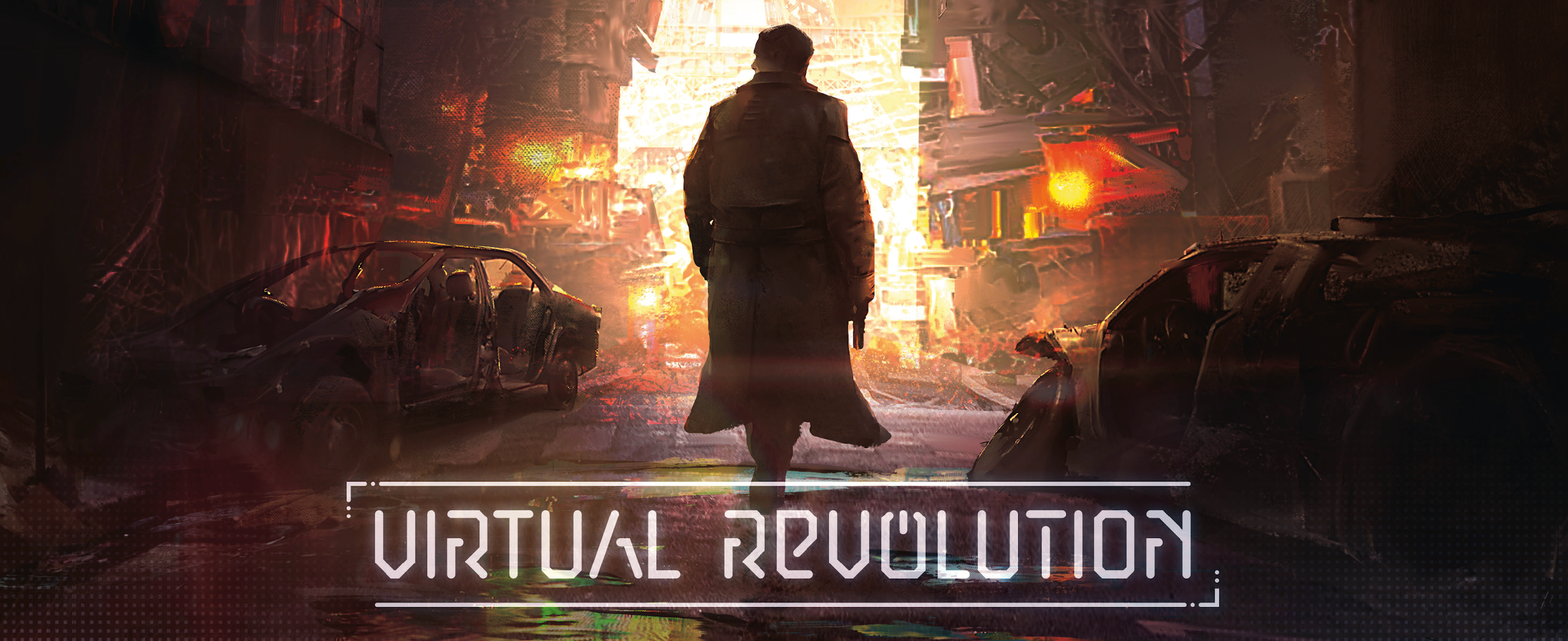
It’s the future. Plague and government neglect have caused humanity to retreat into the virtual world. No, I’m not talking about the COVID lockdowns of 2020. Fate dictates that we’re going to do it all over again in 2047 — although apparently this time the Metaverse won’t turn out to be such a deflated whoopee cushion.
Based on a film I haven’t seen but redolent of well-worn cyberpunk tropes, Virtual Revolution is the brainchild of Guy-Roger Duvert, who both wrote and directed the movie, penned a prequel novel, and has now designed the board game. I’m wary whenever an author adapts their fictive world to cardboard; a talent in one medium doesn’t often translate into another. Imagine my surprise, then, to discover that Virtual Revolution is a worthy non-virtual plaything.
Our House Is a Very Very Very Molly House

I often joke that I’m a class-four prude. Like many jokes, this one hides a kernel of truthfulness. For reasons that are far beyond the purposes of today’s discussion, sexuality is not something I discuss easily or often. When I do, it’s often behind a veil of playfulness. In laughter and mirth, the untouchable is momentarily set free.
Although the comparison is an imperfect one, that also seems true of molly houses, gathering places such as coffee houses or taverns where homosexual men in 18th-century England could socialize freely, veiled from the gaze of polite society. In some ways, their idea of queerness was different from ours. Indeed, they lacked terms like “queerness” at all. The laws of the time lumped homosexuality and bestiality together, and those who were arrested could be pilloried or even hanged.
Despite these penalties, men risked shame and death to create places where they could become more fully themselves. That’s the topic of Molly House by Jo Kelly and Cole Wehrle. Molly House was one of the finalists of the first Zenobia Award. Now it’s nearly here, and I can safely say there’s nothing quite like it.
Messy and Tame

Dmitry Belyayev’s fox experiment is well known today. Launched in 1952 in Novosibirsk with 130 silver foxes rescued from fur farms, the objective was to determine whether the animals could be domesticated. Forty breeding generations later, the project had produced a cohort that was fully tame, if rather messy. But while tameness was the principal objective, other traits had also become evident: floppier ears, spotted faces, and a curiosity for sniffing and licking humans, among others.
Designed by Elizabeth Hargrave (of Wingspan fame) and Jeff Fraser, The Fox Experiment replicates Belyayev’s domestication project. It’s about as tame — and as messy — as that experiment’s descendants.
Winds of Change, Part One: Palestine

If you’re invested in historical board games, you’ve probably heard about Phil Eklund’s infamous essay defending British colonialism. Personally, the backlash against that essay was a pleasant surprise. Perhaps I had become numb to imperial apologetic. To me, the essay was merely the latest impressionable perspective in a century that had been meticulously prepared for selective memory. The notion that the British Empire was a gentle overlord has been a constant drumbeat across its tenure, from its earliest adventures in the New World to its participation in my generation’s quagmires in the Near East and Central Asia. Where other empires were vicious taskmasters, so the story goes, the British were invested in winning the hearts and minds of their colonial subjects.
That’s precisely the topic behind The British Way by Stephen Rangazas. This is the first official spinoff of Volkho Ruhnke’s now-formidable COIN Series. Rather than tackling a single conflict, The British Way functions as a folio series in a single box, covering four wars from 1945 to 1960. It has quickly become my favorite expression of the system. Which is why I intend to cover each of its conflicts separately. Today we’re looking at the first battle of the era: the Jewish insurgency against British rule in Mandatory Palestine.
Now I Know My ABDECs
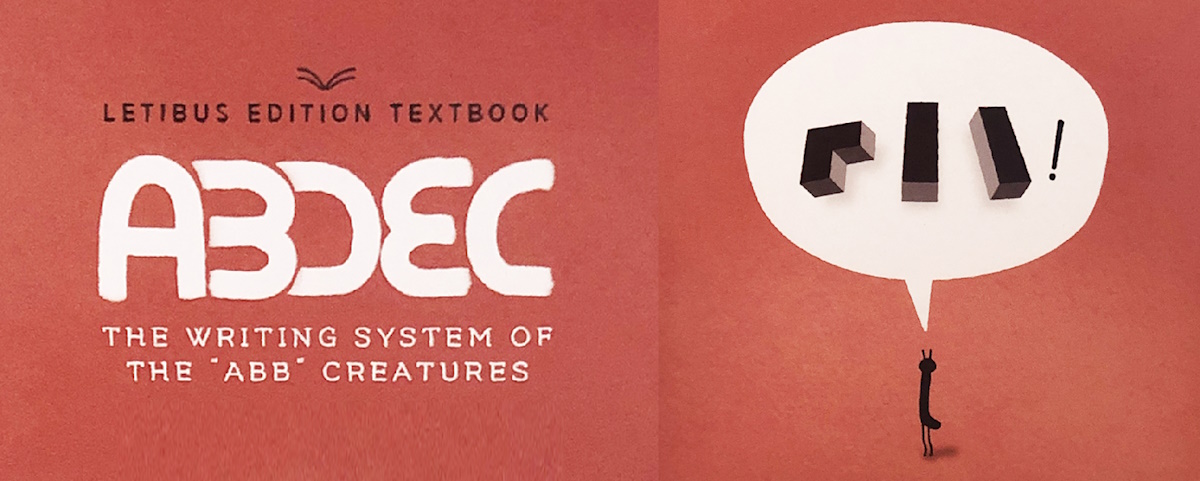
Abdec is an abusive little thing. It says mean things behind your back and passes along your vulnerabilities to everyone who bullied you as a child. Together, they’re planning a comeback tour.
Designed by Blaž Gracar, one of the up-and-coming designers I’m most eager to follow right now, it’s also fiendishly clever. We know Gracar from two previous puzzle games, All Is Bomb and LOK, both of which were similarly clever and nearly as abusive. I want to tell you about Abdec because it’s a puzzle game for everyone who wrapped up the base puzzles in digital titles like Baba Is You, The Witness, and The Talos Principle, only to crack their knuckles and begin decoding the secret stuff behind the curtains.
The problem is that I can’t actually tell you anything about Abdec. Even the rules are spoilers.
Knizidito
Cascadito is a tiny version of Cascadero. That’s the easiest way to sum up the similarities between these twinned titles by Reiner Knizia. They’re both about placing grouped envoys next to cities in order to move up tracks. In some cases, they even award the same spills of bonus points.
But the differences between them are more interesting than their similarities — and more telling. Cascadito is a roll-and-write game. It also sheds much of what makes Cascadero so good.
Knizidero
Zoo Vadis, Bitewing Games’ reprint and update of Reiner Knizia’s long out-of-print classic Quo Vadis?, has only been available to the public for a few weeks. But the good Doctor has never excelled at resting on his laurels. Already he has two more games on the way: Cascadero and Cascadito.
If those titles strike your ear as sounding somewhat similar, you aren’t experiencing auditory hallucinations. Knizia is well known for riffing on his own designs, sometimes producing games redolent of previous productions. Now, apparently, he’s expediting that process. Cascadero and Cascadito are deeply similar, and not in name alone. Today we’re looking at the “original” of the two.
The Wine-Dark Aegean Sea

I know Carl Chudyk can design a great game. That’s because he has. Many times. The Glory to Rome black box sells for like a bazillion dollars, and not only because it’s out of print. Innovation has fifty editions, all well deserved. And I still regard Impulse and Red7 as overlooked gems. Not because they’re overlooked, really. Because they don’t get the same attention as those first two I mentioned.
So it’s with no small degree of perplexment that I have struggled to understand Aegean Sea. The bones of a Chudyk game are there. You can line them up to make a proper skeleton. But once assembled, there’s no telling how this dinosaur was meant to function.
Ulos & Euphrates

Dawn of Ulos is seriously smart. Designed by Jason Lentz, and ostensibly set in the same universe as Roll Player and Cartographers, its intelligence is less a question of innovation than one of tactical inspiration. By drawing from classics such as Sid Sackson’s Acquire and Reiner Knizia’s Tigris & Euphrates, but still applying his own modern spin, Lentz has created one of the sharpest stock-profiling games I’ve ever had the pleasure of playing.

 SPACE-BIFF!