A Crack in the World
I wouldn’t wish to inflict board game drama on anybody who wasn’t already saturated in the stuff, so I’ll keep the details sparse, but the past couple of weeks saw a minor authority figure on BoardGameGeek sharing his views on demonic possession with a potential customer. I try to stay away from such dust-ups, but I found myself compelled to weigh in. My resultant post discussed the textual development of an adversarial spirit in Judaism and Christianity and made an impassioned plea to anyone basing their decisions on the existence of otherworldly beings.
Over the coming days, I heard from a number of people. Some had been touched by what I’d written. Others were just glad to have encountered something informative on the internet. One or two were offended.
But what stood out to me the most were those who had, like me, encountered “demonic possession” in the wild. Not the real thing. Not actual demons clawing their way through the cracks in the world. I’m talking about the excuses, usually offered by pastors, who couldn’t explain some phenomenon, but who needed to be the authority figure on everything. The undiagnosed illnesses. The non-mainstream gender orientations. The people who wanted nothing to do with the good news.
Playing Martha McGill’s Witch Hunt 1649, it was impossible to not mull over those thoughts all over again. It was impossible not to think back on the time I met a witch.
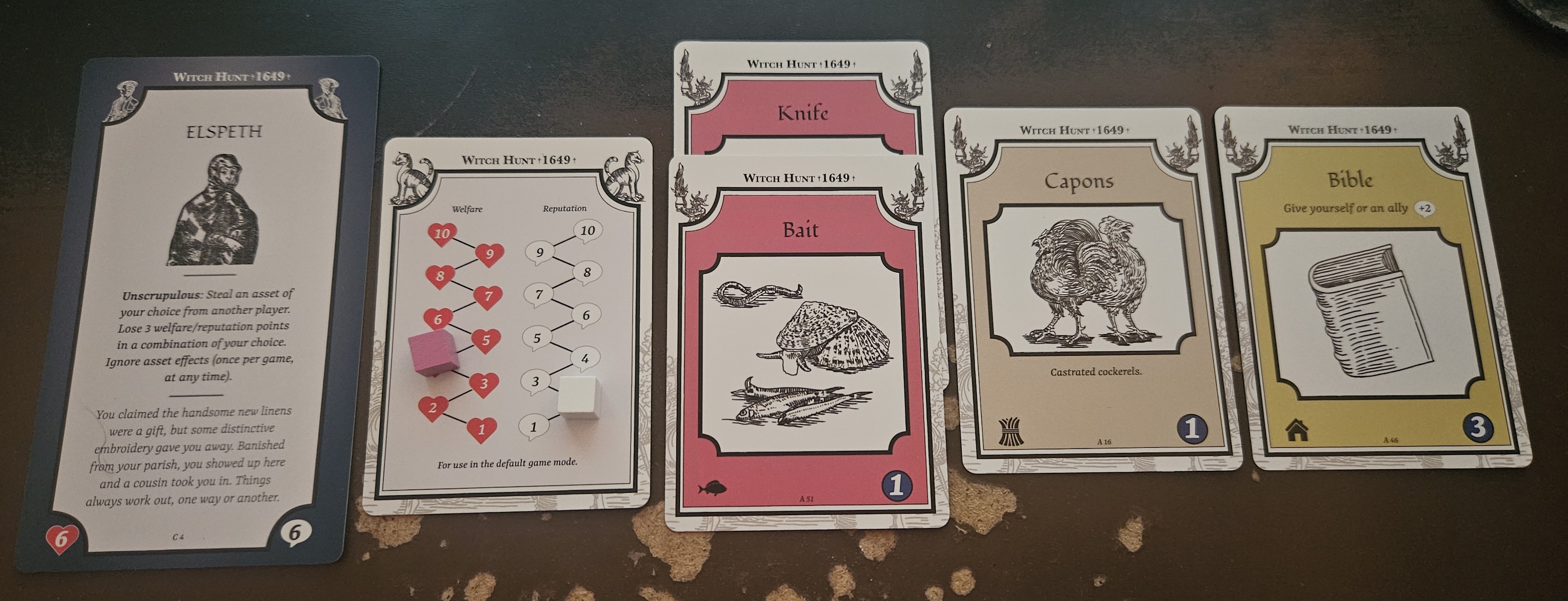
Living my worst life.
Statistically, you’ve already assumed that I’m talking about a woman.
Witch Hunt 1649 isn’t about the witch hunts that dominated my schooling. Those were New World witches, the result of mistrustful Puritans living on the edge of a world that seemed immune to their understanding. McGill’s telling predates Salem by half a century and takes place far across the sea. In the same year that Charles I lost his head and Oliver Cromwell prepared the New Model Army to march northward, villages in Scotland reacted to their uncertainty the same way that countless communities had done before: by blaming the women they didn’t like very much.
There were men witches, too. Not many. Just enough to ensure that nobody was above suspicion. Of the 3,800 Scots accused of witchcraft, eighty-nine percent were women.
In the game, the figure is similarly skewed. At the start, everybody receives a character to embody. These cards offer only a few tidbits. A name. A woodcut illustration. A once-per-game special ability. And a small blurb that explains why these people are subject to suspicion. There’s Elspeth, who once nicked some nice linens. Agnes, who knows which herbs might ease a fever. Bessie, whose primary sin is that she’s a bit lazy. Janet, isolated after cutting the sheep-stealing cousins out of her family. William, who loves a ribald joke. Helen, over-eager to share her conversion experience with her neighbors.
Ordinary people, in other words. To most of us, it would be their neighbors who seemed too buttoned-up. Too prying. Too obsessive about the minutiae of everyone’s lives. Too willing to fling an accusation that might get one of their neighbors strangled with a cord and their stake-bound body charred to ashes.
Of the fifteen character cards, eleven are women. Seventy-three percent. If anything, Witch Hunt 1649 short-sells the divide.
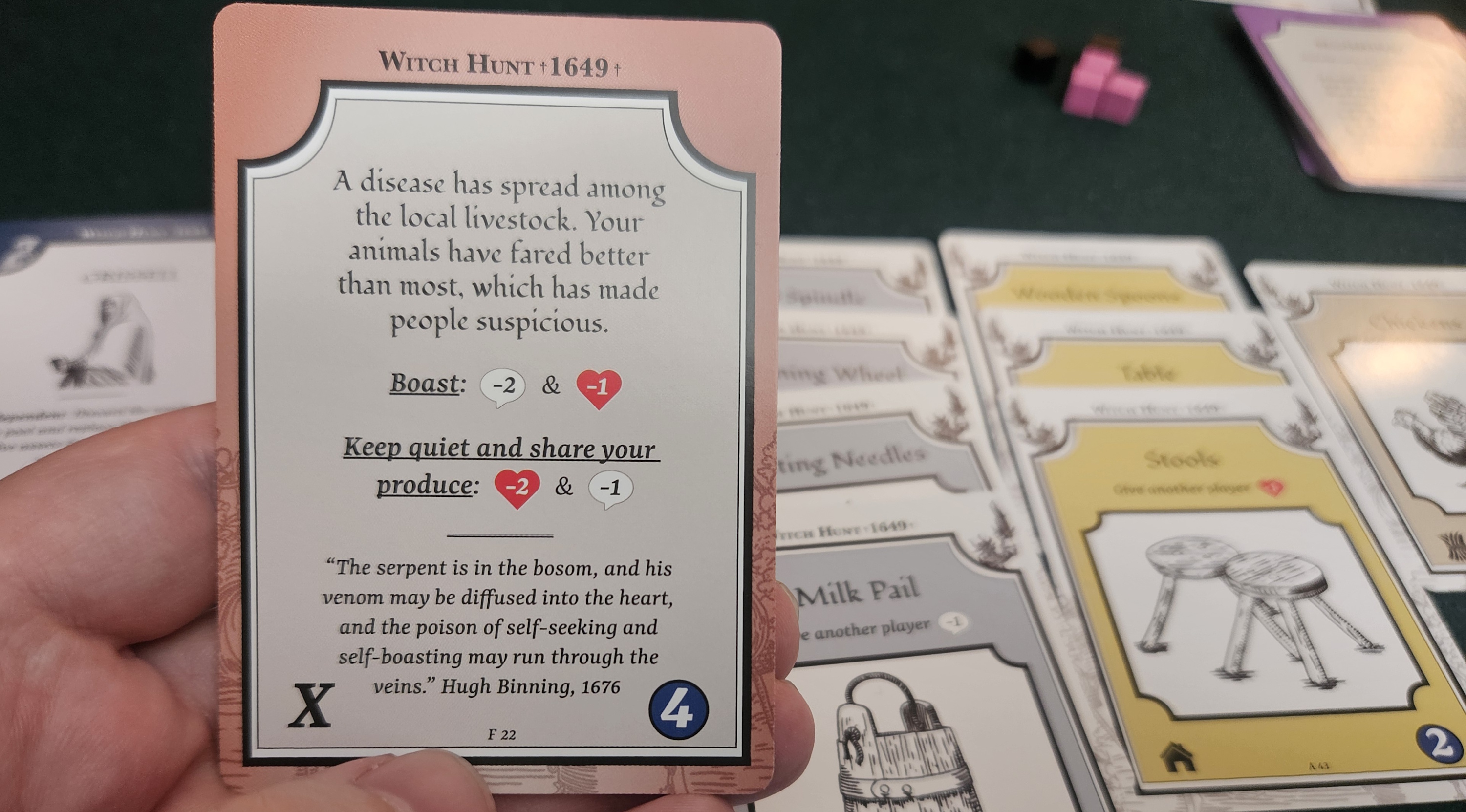
Fate cards present ethical conundrums between suffering and suffering a different way.
As a game, Witch Hunt 1649 is a simple thing. That’s to be expected. Published by Central Michigan University Press, this is closer to an educational tool than a hobbyist product. Like Greg Loring-Albright’s Keep the Faith from the same imprint, there’s an element of role-play, with most turns consisting of a single card-flip. This card presents some stroke of ill fortune that has befallen your character. Chronic headaches. Extra tithes. A cousin’s hasty marriage. The rumor that you’re a closet Catholic. You’re allowed to choose how to respond to these misfortunes, but there’s no such thing as coming away richer. Every choice is a Sophie’s choice. Waning physical welfare, waning standing in the community, or waning material goods. After a while, you begin to wonder why anybody bothers trying to be good.
The one respite is that you’re still here, still alive, still capable of improving your situation. You take the card fate has dealt you and acquire something from the market. Like everything else in Witch Hunt 1649, these are meager possessions. Your goal, apart from survival, is to accrue enough to place yourself in high society. Higher society. One sickle and pair of shears at a time, one cow-shed and kiln, you construct a life.
As often as not, those possessions become anchors. That Bible improves your standing in town, but you might have to part with it to support the local poor. The local poorer. That basket helps you carry more fish from the stream, but it hurts all the worse to lose it. Other items, like creepy rams, are liable to trick some farmer into thinking they’re striking a pact with the devil. When the trial begins, everything becomes potential evidence.
The witch-trial is the centerpiece of the game. As soon as you have three black marks, you’re dragged before a council of fifteen propertied men and put to the test. Black marks, it must be noted, have nothing to do with your choices; either you gain them or you don’t, entirely irrespective of your decisions. They’re also drawn face-down. When the trial begins, you have no idea of the substance of the accusations against you. At times, they’re as harmless as a rumor. Other times, they’re as damning as a rumor.
To secure an acquittal, you spend your meager health, your meager reputation, your meager possessions. You try to persuade your friends and family to stand by you. You’re well aware that these are hard requests. If you’re found guilty, your relations will also stand trial. It isn’t until the accusations are revealed, flipped one by one, that your fate becomes clear. Even then, survival is only momentary. There’s nothing preventing you from being dragged before the council at a later date, no matter how much of your property you’ve parted with, no matter how many teeth you’ve lost to the stress.
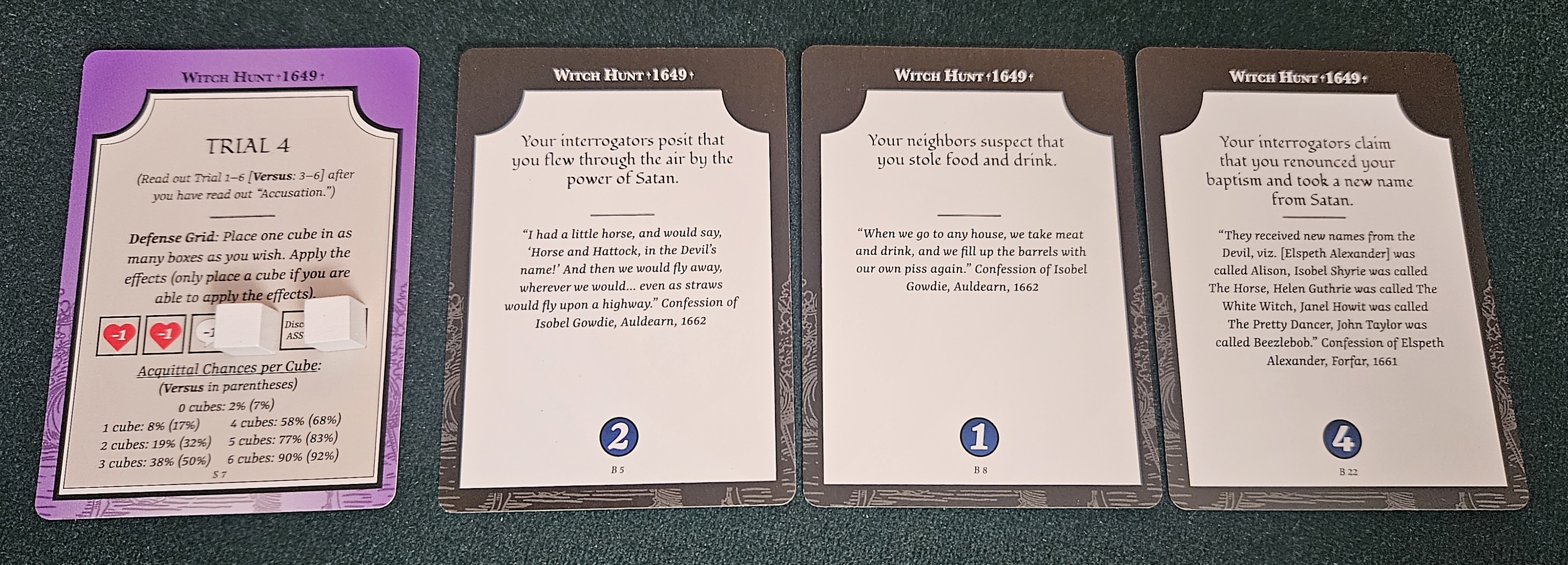
Accrue three black marks and it’s time for a trial.
For the first few years after I came home, it wasn’t uncommon for someone to ask if I’d seen any demonic possessions out there. Possessions or skinwalkers or witches, anything like that. I’d served a portion of my two years as a Mormon missionary among the Crow Nation, and people were always quick to note how “Those folks are more spiritual than we are.”
In this case, “more spiritual” meant more susceptible to the beings that dwelled on the other side of the crack in the world. Spirits, demons, angels. Beings we never saw as white folk. Beings that only seemed to gather around those with brown skin, on land they’d been planted on by the government, or else in faraway places where people still practiced cannibalism and wife-burning and whatever else.
Whenever anybody asked the question, I thought about the witch.
I first heard about the witch from a guy in Hardin, the half-white, half-native port town on the edge of the reservation. We were set to baptize a man. Crow. Maybe already a member of the church, but records were spotty. On the scheduled day, he didn’t show up. “He was probably called away by that witch,” the guy said. I laughed, but he insisted that, no, he was being serious. “He’s taken up with a witch,” he said. “Those folks are more spiritual than we are. We can’t hear their call because we aren’t as spiritual,” he said. “We,” he said, meaning white folk. I asked if we should go find him. Find him and help him. If he was under thrall to a witch, surely that meant he needed us more than ever. Needed Jesus. Needed baptism. Needed something. “No, there’s nothing for it,” he said.
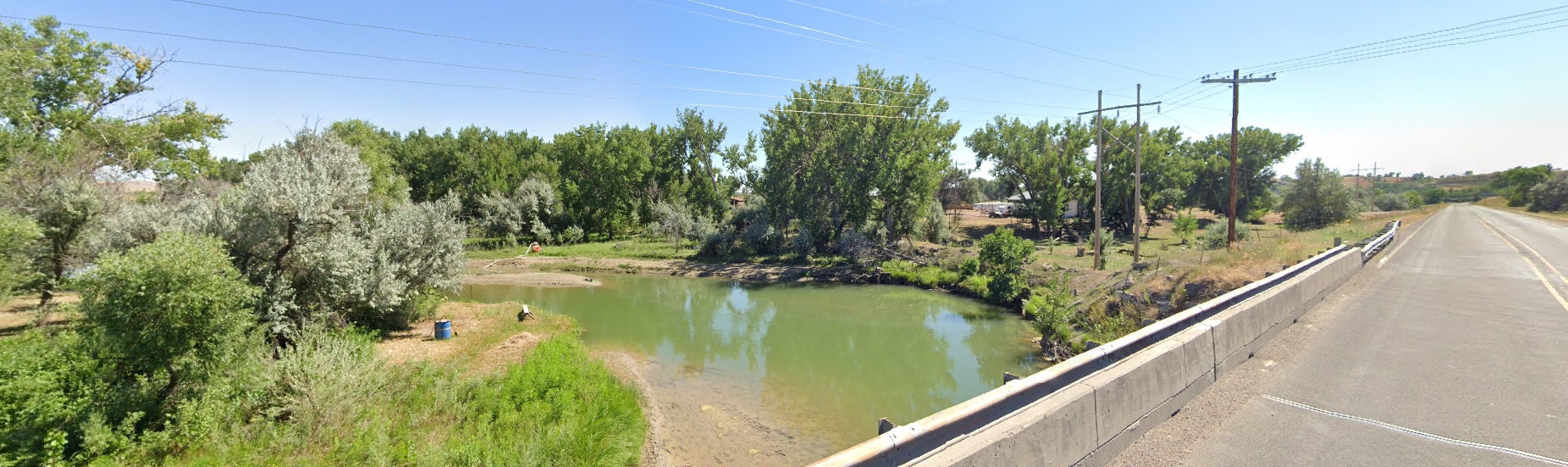
A mile or so outside Hardin.
I returned to the Crow Nation many months later, after many people had asked me about the spiritual folk out there, about whether I’d seen any possessions or skinwalkers or witches. It took some phone calls, but we found the witch’s address. We hopped in the truck and took off, the missionaries who now lived on the rez seated in front, talking excitedly about how they’d exorcise the witch’s demon or dust off their feet against her house.
When I met the witch, I was surprised. Not because she was a woman. (Eighty-nine percent of witches are women.) It was how ordinary she seemed. Her trailer looked like the other trailers that dotted the rez. Her dogs barked like the other dogs that barked on the rez. Her wind-chimes chimed like every other set that chimed on the rez. I asked if she’d seen our man. The one who’d skipped out on his baptism.
“Sure,” she said. “He comes around when he’s trying to get off the meth. He stays a few days, sweats it off, then he goes home again.”
Oh. Well. It wasn’t true, then, what I’d heard. Someone had told me she was a witch. Ha ha, what a mix-up.
“Sure,” she said, laughing brightly and rubbing at the sunspots on her forearm. “I’m a witch. I’m a witch at helping people get off the meth.” Then she told me about her degree in nursing, how the learning had come naturally. How she’d worked for years in addiction recovery. How she was, indeed, an actual witch, with a power for curing people of their killing habits.
On the drive back, as we talked about our encounter with the witch, two of the other missionaries bubbled first with excitement, then with righteous upset. We hadn’t done anything. No denunciations had been leveled. No demons had been cast out of their hosts. One told a story about how a devil had once held together a person’s broken leg, then the prophet had cast the devil out. This caused the leg to break again, because evil magic sometimes imitates good things. “We should go back,” he said. “No way,” his companion shot back. “What if she uses Satan’s priesthood on us? You know they’re more spiritual than us.”
I didn’t say much. Between this and my previous visit to the reservation, I was starting to harbor some serious doubts about the shape of the world. There was a crack in it, all right. A crack that ran right through it. But the crack wasn’t what I’d been told. It wasn’t us on the one side and evil spirits on the other. It seemed to me there were good people all over, lots of them, some with addictions or problems or sicknesses, and some who wanted to help. And then there was us. The people in the white shirts and ties. Telling stories about everyone else. Trying to square them so they looked the way we wanted. And then, when they wouldn’t be squared, pretending they must have widened the crack to the other side and beckoned something ugly into themselves.
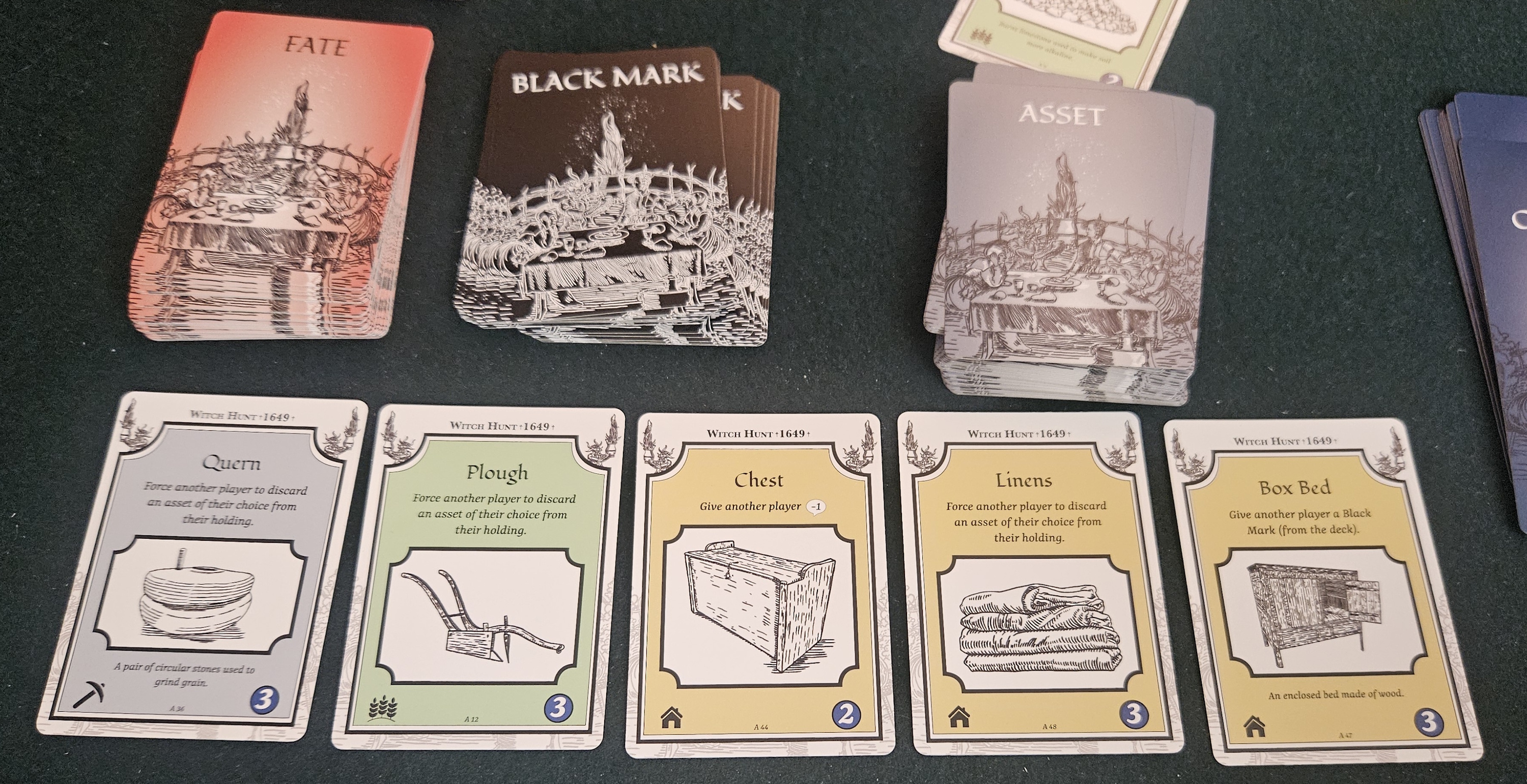
I do want a nice box bed.
I no longer believe in witches any more than I believe in teenage boys being sent by Jesus to proclaim the restoration of an everlasting gospel that keeps changing on itself. But I do believe there are demons out there. There’s nothing supernatural about these demons. They look like us and dress like us. They eat our favorite foods and watch our favorite reality shows on television. They do pretty much whatever they want to do, and then they come up with compelling reasons why they were in the right to do it. Those are normal enough behaviors, but the way to tell a regular person from demon, I suspect, is that a regular person might come up with a reason why they were a good fit for nursing school. A demon, on the other hand, explains why they’re the chosen one who’s been endowed to save the world from itself. Whether anybody wants it or not. Whether they have to bind a person to a stake and flick a torch into the straw.
Witch Hunt 1649 pulls a lot of weight for such a small game. It shows how insular communities can curl in on themselves until they sour and curdle. It examines how people on the margins, women especially, become scapegoats for no greater sin than being marginal. It preserves the memory of the crimes against those people rather than letting us forget the cruelties we can unleash on our neighbors.
But for me, mostly, it gets me hoping that the only witch I’ve ever met has helped a bunch of people with their methamphetamine addictions.
A complimentary copy of Witch Hunt 1649 was provided by the publisher.
(If what I’m doing at Space-Biff! is valuable to you in some way, please consider dropping by my Patreon campaign or Ko-fi. Right now, supporters can read my first-quarter update of 2026: the best board games, movies, books, and more!)
Posted on June 2, 2026, in Board Game and tagged Board Games, Central Michigan University Press, Witch Hunt 1649. Bookmark the permalink. 11 Comments.

 SPACE-BIFF!
A friend of mine decided about 25 years ago that he was a witch. When challenged to do some magic he declined saying that he was a good witch that helped lost souls onto the afterlife. He was barking mad but we humoured him and as far as I am aware he never turned anyone into a newt.
It seems strange that in the 17th Century, ordinary people who didn’t conform to general expectations, removed themselves from society in an effort to be alone but were treated with suspicion and mistreated as a result. Now in the 21st Century, ordinary people go out of their way to openly declare their ‘witchy’ supernatural abilities to the world but are generally laughed at and dismissed as freaks.
same as it ever was…
So it goes.
As always, I appreciate the view of Dan’s experiences with the world beyond board games, but also how the board games help explore those experiences anew.
Thanks for the kind words, JT.
Seriously, though . . . I like reading the way in which you see board games transcend the medium of “play thing” or “toy” or even “game” to something that can teach us about history, art, ourselves.
Your reviews are educational and thought provoking.
Also, your post reminded me of the 90s, how we had purple haired freaks wearing gender bending makeup and dress on MTV and in pop culture . . . And how much the world has swung back against that. I thought the 90s would teach people to be more accepting of differences.
I know that in many regards our culture is more inclusive than it was in the 90s, and many strides been taken to ensure equality and equity for many groups in our country . . . But well . . . We know the but all to well I’m afraid.
But we strive on, right? We strive to make a world where everything is beautiful and nothing hurt (and lean into the irony, embracing it, even).
I saw the beginning of the furore on BGG and made the sanity-retaining decision to avoid it, of which I am glad. But my willpower isn’t strong enough to stop me from writing at least a brief response here.
The way you write it Dan, it is very convincing – you used to be naïve, but now with your greater wisdom and experience you know that there are no witches or actual demons – just people, mostly good-ish and some evil. No spiritual or supernatural realm, which is just “excuses, usually offered by pastors, who couldn’t explain some phenomenon, but who needed to be the authority figure on everything”.
The ability to rationalise away anything inexplicable is a big part of our “scientific” society of the past 100+ years, it’s a tendency I also have, but it is no nobler or truer than the tendency to see supernatural effects even where a mundane explanation is easily found (or to give superstitious power to zodiac signs and “knock on wood” etc.). I consider myself a spiritual person, though I have little spiritual “sense”. Even so I have had some spiritual encounters and I know a number of people who have been through a lot of very bad spiritual things, including demonic attacks, and have been helped by prayers. “Witches” (and warlocks or whatever one might call them) won’t be wearing pointy black hats – and they will probably sound very reasonable when talked to. Plenty of them could attend church, some can be liberal, others conservative etc. Some of those openly claiming to be Wiccans will be acting it out or just wishfully thinking, some will be real. There is plenty of spiritual good as well, just to note it is not one-sided.
I don’t ask anyone to believe it. But I would encourage you to rethink your condescending approach to the topic – just because the strange “white shirts and ties” environment you grew up in could not understand or feel the spiritual world, it doesn’t make the opposite true.
That’s all from me. Thanks for the thoughtful reviews. Peace.
Woooooow. Accusing the author of condescension AND saying he must be spiritually stunted AND telling us that demonic attacks are real AND admitting you didn’t read what he wrote about that entire controversy. Some people have the self reflection of a cashew.
Dan – could you please share the post you mentioned in the first paragraph regarding your response to the BGG dustup? Much appreciated!
Found it!
https://boardgamegeek.com/thread/3711200/article/47707968#47707968
Thanks for digging this up. Gives more context to Dan’s perspective. And makes the accusation that he doesn’t know what he’s talking about seem even more out of pocket.