Blog Archives
The Existential Horror of Dixit

There’s something both magical and terrifying about Dixit. And I mean that in a far more literal sense than usual.
Communication is tough, as anyone who’s been in a regular human relationship can attest. Our attempts often fall short. Too much, too little, too vague — even too precise. With effort, you can get better at it. Refine it. Figure out when to use it and what type and how much, maybe even realize that sometimes you shouldn’t use it at all. But even then, you can’t ever quite get there. To the point that everyone will know exactly what you’re talking about, I mean. Sure, they’ll hear the words that are coming out of your mouth, assembled from a limited set of vowels and consonants, but how often will they understand, really understand, what you’re trying to say? Sometimes, maybe. But not as often as we’d like to think.
Well. That’s what Dixit is about.
COIN Volume III: Afghan Altercation

It should already be apparent that I’m a huge fan of Volko Ruhnke’s COIN Series. It even led to the formation of my gaming group’s “COIN Collecting Club,” which is our way of code-talking that we’re going to play COIN games all Saturday afternoon. See, the real genius lies in the fact that certain people at our regular game night think it’s a club for the collecting of metal currency, when really we’re betraying each other and occasionally getting pissed about it.
To those certain people, who I’m aware read this site: I apologize. It couldn’t be helped. We just really didn’t want to play with you more than once a week.
Anyway, the COIN Series has already taken us on a tour of drug-war ’90s Colombia and Revolutionary Cuba, and today we’re talking about its headiest subject matter yet: the still-ongoing war in Afghanistan.
COIN Volume II: Clash of Cubans
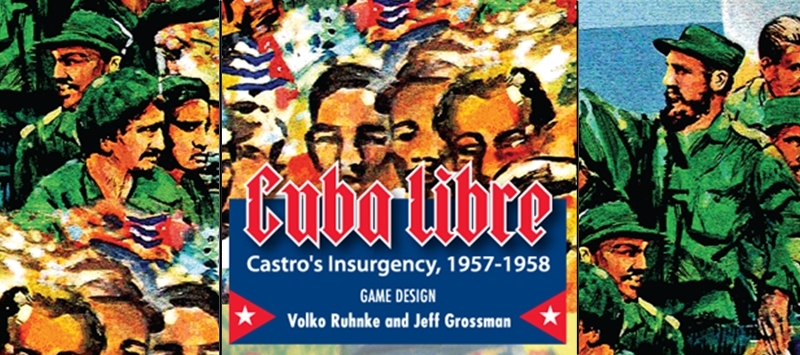
As you may remember, I’ve been working my way through Volko Ruhnke’s COIN Series (COIN for “counterinsurgency,” though my little group goes by the “Coin Collector Club” to sound barely less nerdy), beginning with the first volume, Andean Abyss. I liked it quite a lot, but felt it was a tricky entry point to a series that’s known for its complex asymmetrical conflicts.
As though on cue, the second volume of the series bursts through the door, dressed in an army jumpsuit, drab olive field cap, and underwear over the top of the pants. It’s Cuba Libre, here to save the day!
Saving Us: And Then We Held Hands

Just for tonight, Space-Biff! is going to act as my personal tell-all gossip rag. Gather round, because I’m going to spill a whole mess of secrets about my celebrity marriage.
COIN Volume I: Colombian Conflagration

Space-Biff! has been quieter than usual over the past couple weeks. Apologies. Couldn’t be helped. After all, I’ve been devoting most of my board gaming attention to figuring out Volko Ruhnke’s formidable COIN Series, which, if you haven’t heard of these behemoths, are all about insurgency and counterinsurgency — guerrilla warfare, hearts and minds, that sort of thing — and they’re endlessly and utterly compelling. The first volume, for instance, is called Andean Abyss, a four-way conflict over the jungles, mountains, and cities of Colombia, and it’s possibly one of the most thrilling, deep, and disheartening board games I’ve ever experienced.
You Can Choose Your Family, But Not Your Friends

Having grown up in a culture that places about a hundred times more importance on genealogy than basically every other culture that has ever existed, I naturally shied away from Legacy: The Testament of Duke de Crecy, a game about tending your family tree in early 18th century France. It frankly sounded like the second-worst possible way to spend an evening, trumped only by the utter tediousness of a train game that doesn’t include the displacement of native tribes, the breaking of strikes with Pinkerton agents, or the abusing of migrant laborers.
Boy, was I wrong. About the genealogy one, that is, not the train games. Those still suck.
Alone Time: Suboptimal Moves

I don’t make suboptimal moves on purpose. Okay, that’s a lie. If I’m teaching a game, or a friend seems like they need a win, or the current best move will just piss off everyone at the table, then sure, I’ll intentionally make a less-than-ideal move now and then. Just to keep things breezy. But not when I’m playing solo games, because nobody will get angry because I’m winning or store a grudge for next game or flip my handcrafted game table. When I’m playing alone, there’s simply no reason to take any move other than the best one I can see at any given moment.
That is, until I played Freedom: The Underground Railroad. Let me explain.
Our Quiet Year: The Index

I recently finished a four-session play of the fantastic story-telling and map-drawing game The Quiet Year from Buried Without Ceremony, easily one of the indie-est board/card game designers I’ve had the pleasure of hearing about these last few years. The Quiet Year also happens to be one of the few boardgames I’ll gladly file under my “Why Games Matter” tag — it’s nothing short of compelling the way it assembles totally unique stories by a process of creative collision. It isn’t always an easy game to play, but it’s definitely a worthwhile one, if only because it will give you a window into your friends’ weird imaginations. I guarantee you’ll be surprised by what they come up with.
“But what is The Quiet Year, really?” you ask. Sorry, but one cannot be told what The Quiet Year is. I mean, you totally can be told what it is, but not here in the introduction. That’s an unreasonable expectation. The only solution is to read on.
Our Quiet Year: Autumn

Spring. Summer. Twenty-four weeks have passed in our telling of The Quiet Year, a story-weaving and map-drawing game from Buried Without Ceremony, and our year has been anything but quiet. Our community has shattered into far-flung splinters, tiny communities that were once part of a greater family, all of them grieving past losses, all of them seeking redress — well, except for the goatherds. They just watch their goats get it on all day. But everyone other than them is having a pretty rough time.
And this season looks like it might prove to be the roughest time of all. There’s a reason the folks of the Former World used to call it “The Fall,” after all.
Our Quiet Year: Summer
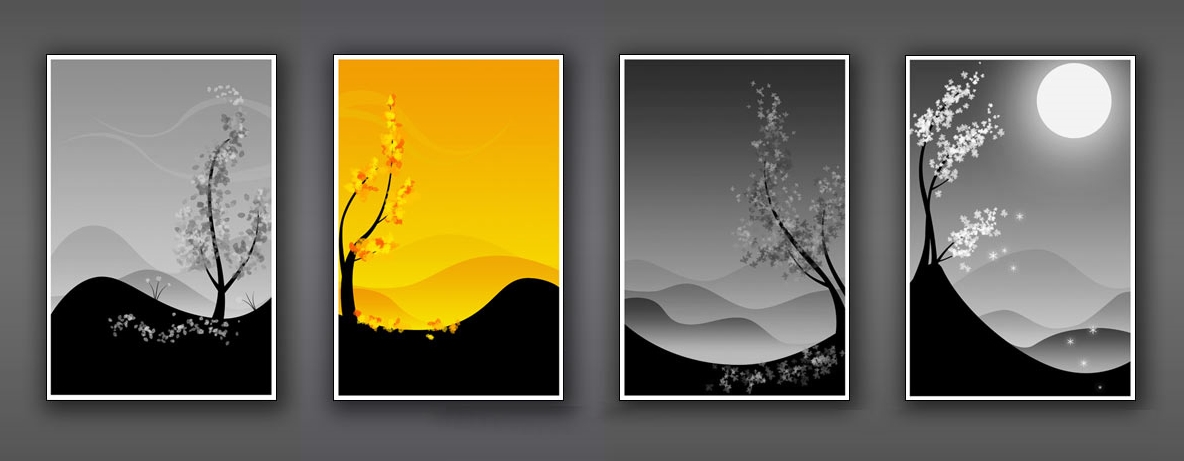
Welcome to part two of our series about The Quiet Year, a storytelling and map-drawing game from one-man outfit Buried Without Ceremony! After the upheaval and social tensions that marked the end of spring and caused our community to worry that perhaps our new home wasn’t quite the fresh start we were hoping for, the summer season has fallen across the landscape like a warm blanket, and our small family of nomads is looking forward to mending divisions, securing borders, and working towards a brighter future — or a quiet year, if you prefer.
If you haven’t already, it would be a good idea to read about what happened to our family back in spring before continuing on with this season, because there’s far too much to relate to spend time catching up.

 SPACE-BIFF!