Blog Archives
Alone with My Palm (Island)
I’m a sucker for portable card games and a double-sucker for those that can be played without a surface. Never mind that I’ll never find myself in a situation where I’ll actually want to play one. In the car? Motion sickness. On an airplane? Tray table. Eating a meal on the airplane? Then I’m eating, you goofball, not playing a card game. Standing in the Fantasy Flight line at Gen Con? Never again.
But I made a promise to my grandfather that I would find the perfect surfaceless card game, so I grabbed Palm Island and gave it a few plays, all within approximately two meters of a clean tabletop. Still, it felt good to do right by old gramps. He died never having owned a table. The real tragedy was not knowing where to set all the food everybody sent over.
Oh, right, Palm Island. Let’s talk about that instead.
The Future of Pax, the Future of Us
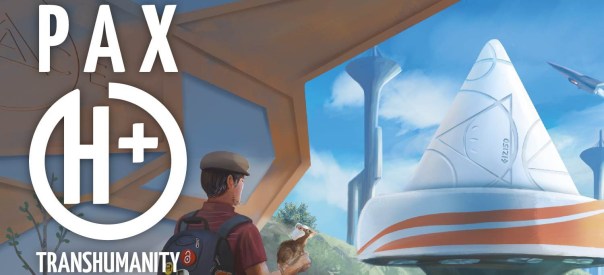
The Pax Series has always been a treasure trove for those who could spend their entire night clicking on blue words in Wikipedia. It might be the impact of Mormon timber on Mexican politics, Bukharan Jews upsetting the commercial balance of Afghanistan, Isabella of Castile’s nuptials unleashing her noted repressiveness, or how Immanuel Kant’s lofty ideals don’t ship much beef when it comes to the practical business of manumitting slaves. These are more than names on cards. They’re gameplay effects, watersheds, even inside jokes. History’s peculiarities as a box of toys, as a magnifying glass, as a polemic, as a gentle ribbing.
With Matt Eklund’s Pax Transhumanity trading the historical for the speculative, it seemed natural to ask whether it could retain its sense of wonder, reverence, and playfulness for the triumphs and foibles of the past. Turns out, there was no cause for doubt. The strengths of the series are not only present, but emphasized, resulting in one of the most important science-fiction board games ever crafted. And it has everything to do with how it uses those cards to tell unexpected — and even profound — stories about where our species might go from here.
Talking About Games: Positivity, Negativity

Where the first four parts of Talking About Games focused on the words employed by board game reviewers and players, we now zoom into the stratosphere with the haste of an eagle diving at a plump squirrel. That’s right, I’m talking big picture. For the next few months, we’ll be talking about criticism more broadly — what it is, what it’s good for, and the biggie, why it is. Important, I mean. Critical, if wordplay is your jam.
Today, our topic is positivity and negativity. And it came about because of two happenings that made me ask why I bother writing about board games in the first place.
Rise of Ecosgustus

Because it is the ken of board game critics to reduce every design to “It’s just this one game plus this other thing,” it would be easy to dismiss John Clair’s Ecos: First Continent as just Paolo Mori’s Rise of Augustus plus a map. That would be doing it a disservice. For one thing, although Augustus and Ecos share a heritage that stretches all the way back to Adam and Bingo, in practice there’s enough consanguinity between them to make their intermarriage technically legal in at least three states. You do you, you crazy lovebirds.
The real issue, however, is that Ecos is so damnably playable. If I were in a bad mood, I might almost call it cynical. Instead, let’s go with insidious.
Hot Alien-on-Alien Action
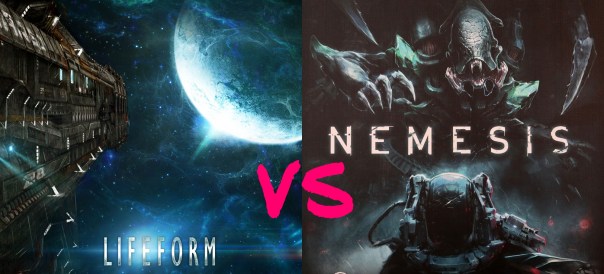
I didn’t actually watch Alien as a kid. Worse: my friends described it to me on the playground. It has been said that nothing is more terrifying than the unknown. That’s preposterous. It’s the half-known that’ll keep you up at night. To grub-form Dan, nothing was more terrifying than the prospect of Alien. Not even, when I finally got up the nerve to view it, the film itself.
Over the past month, I’ve played two separate releases that attempt to adapt the breathless horror that was initially brought to life by Ridley Scott and given an uncomfortable phallic pulse by H.R. Giger. And even though they’re remarkably similar in some ways, one of these games is among the year’s best while the other is merely fine.
Mega-City Two

In the distant future, people will look back and laugh at our urban planning. All these streets and parking lots, these single-story houses and abandoned warehouses. Such horizontal waste, they will say from the lofty towers of their arcologies, daintily sipping their own recycled piss.
Will they say similar things about how underutilized our stacking games were? In all likelihood, at least if Jordan Draper and Michael Fox’s MegaCity: Oceania is the best we’ve got.
Bloomin’ Onion
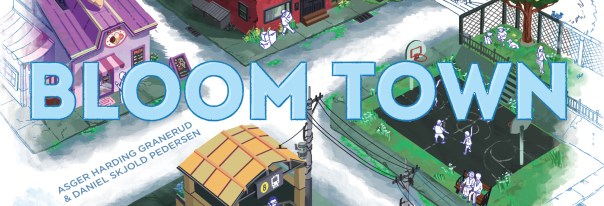
Bloom Town sat on my table for a month before I even glanced in its direction. On the one hand, that’s the peril of sending me an unsolicited review copy. On the other, it’s entirely my fault I hadn’t looked closer. If I’d realized it was designed by Asger Harding Granerud and Daniel Skjold Pedersen, the creative team behind 13 Days: The Cuban Missile Crisis, I wouldn’t have been nearly so truant.
Now that I’ve played it, the short version is that Bloom Town features no brinkmanship, military buildup, or threat of nuclear annihilation. The longer version is more complicated.
Trismegoogah

One of my main complaints with modern Eurogames is that they too often mistake complication for depth. This isn’t surprising. It’s an easy mistake to make. After all, many deep games come across as complicated, with strategies and levels of mastery that may seem counterintuitive and elusive.
But complication can also prove distracting, especially when it’s wrapped within a serpentine vocabulary, iconography, or scoring conditions. In those situations, victory is often less about effectively manipulating the board state, and more about who’s superior at deciphering the game’s foreign tongue. In other words, it’s play as transliteration rather than strategy.
Trismegistus: The Ultimate Formula is both an example of how to do a modern Eurogame right — and horribly, utterly wrong.
Arrakis. Dune. Desert Planet.
It’s hard to imagine what our geekish DNA would look like if Frank Herbert had never written Dune. It touches so much, and says so much, but never seems to follow any one thread to its conclusion. Maybe because it’s as varied as the thoughts rattling around Herbert’s head in the early ’60s. Poverty grasses and climate patterns. Resource monopolies and shortages. Religion as opiate; opiate as religion. Charismatic heroes unleashing murderous jihads. Carl Jung’s collective unconscious and cellular memory, spurring hosts to destruction and rebirth alike. Great houses entangled in destinies both inevitable and mutable, like plunging headfirst into a sandstorm with just enough will to select the ground where your flesh will be scoured from your bones.
And the beauty of Bill Eberle, Jack Kittredge, and Peter Olotka’s 1979 design of the board game version is that it got it right. As right as could be got, anyway.
Housing Crash: A Look at Magnate

It’s both accurate and misleading to say that James Naylor’s Magnate: The First City is a good version of Monopoly. Accurate because it’s a satirical take on unbridled capitalism that would do Lizzie Magie proud. Misleading because the two really don’t have much in common, aside from paper money, city development, plastic houses, and dice. Okay, saying that out loud makes them sound really quite similar. They’re not.
Seriously, they aren’t alike at all. You should keep reading. I promise.

 SPACE-BIFF!