Blog Archives
Fear Factory
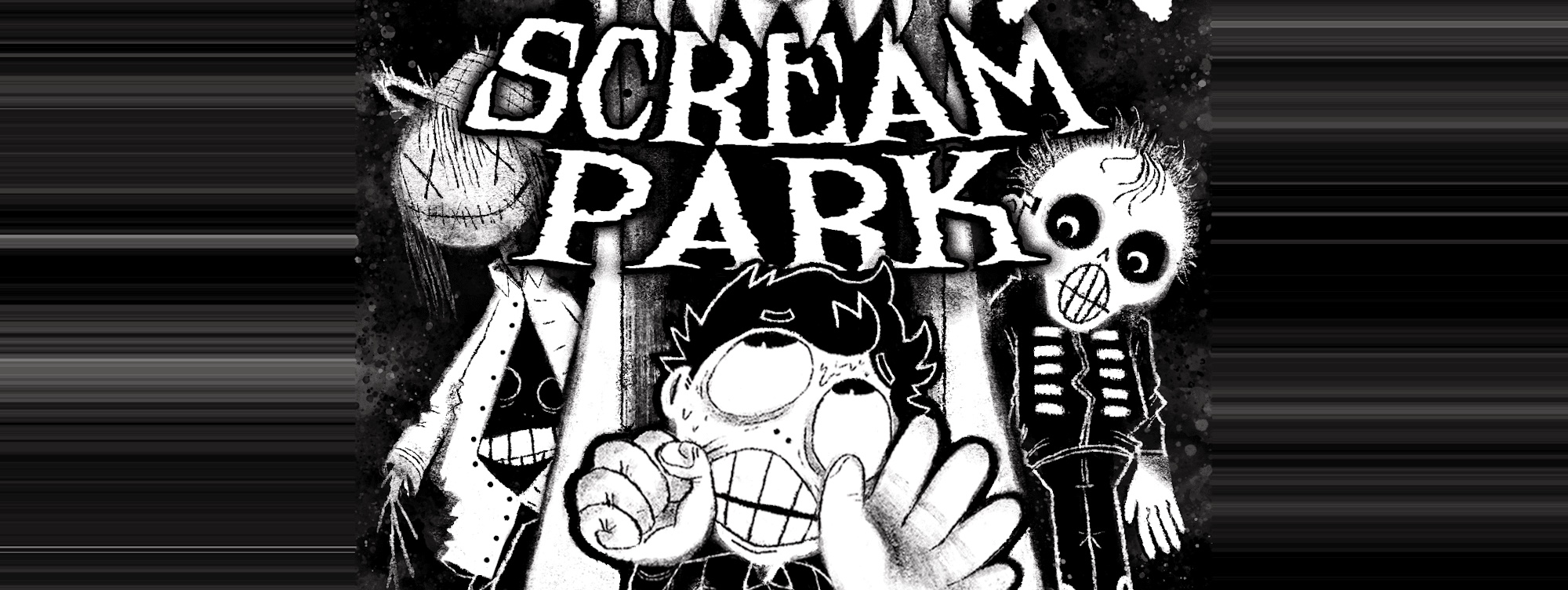
Haunted houses aren’t my thing. But games by design collective Jasper Beatrix are very much my thing. When it comes to Scream Park, a drafting game about assembling a seasonal haunted house, I’m glad I took the risk. Not only are there no jump scares for those of us operating above the table, but like the rest of JB’s oeuvre — Typeset, Signal, and Here Lies — Scream Park pulls more weight than first meets the eye.
Here Lies Every Other Detective Game

Dear reader, I think I’m falling in love… with the design collective Jasper Beatrix. Typeset offered our first furtive glance. Signal jumped us to second base. Yop. We move fast. Now that I’ve played Here Lies, we’re already booking venues for the wedding breakfast.
At a glance, Here Lies swims in the same waters as Signal. It’s also a deduction game, a one-plus-many cooperative affair where a lone player works as the “lead investigator,” more or less the silent alien from Signal, here to assist everybody else as they deduce the answers to a secret message. Despite its modal similarities, though, Here Lies carves out its own identity. More than that, it embraces an entirely fresh approach to deduction. There’s nothing quite like it.
Gingham Takes a Roadside Picnic
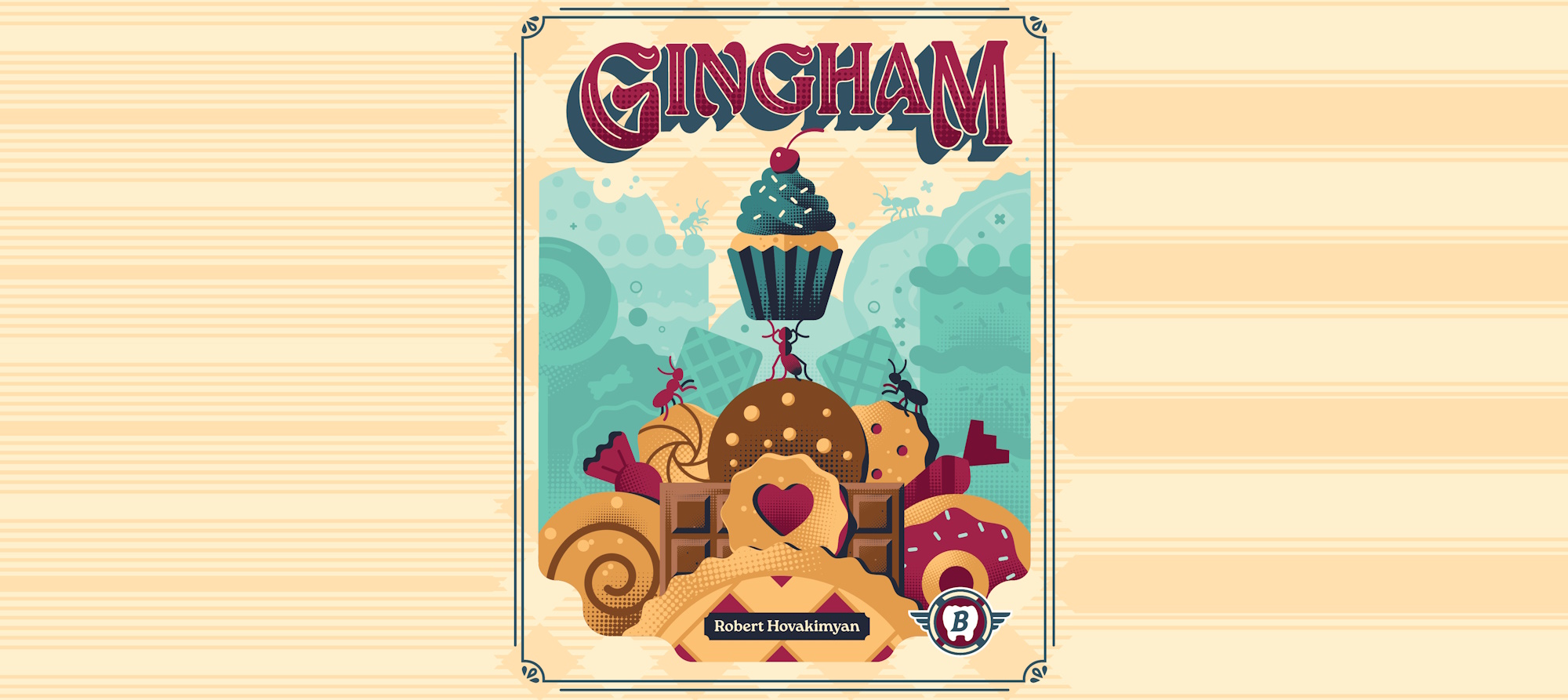
Yesterday I previewed Gazebo, a forthcoming remake of Reiner Knizia’s Qin. In the usual Bitewing tradition, Gazebo has been partnered with another game, one it broadly shares a setting and aesthetic with. That game is Gingham. Created by Robert Hovakimyan, whose titles Bebop and Shuffle and Swing I covered around this time last year, Gingham also takes us to the park. In a few ways, though, it’s less of a spiritual partner to Gazebo than its spiritual opposite.
Gazebo Takes It on the Qin

Right when I’d sworn off writing about any more Bitewing Knizias, they went and got the rights to Qin.
Long out of print, Qin — pronounced “chin,” for those among us who keep stumbling over that Q — is another Reiner Knizia tile-layer, one that effortlessly showcases the Good Doctor’s ability to generate hard stares over a handful of non-matching colors. Now redubbed Gazebo, the original game was about unifying the warring polities of pre-imperial China. In my mind it’s still about that, because merging garden plots doesn’t quite communicate just how ruthless this thing can be.
Flying Too Close to the Ruff

Trick-taking alert! This week’s instance of the genre is Trickarus, which scores an extra point for its pun of a title. Designed by Bajir Cannon, this one takes cues from Greek myth. You are an adorable pajama-wearing child with a set of homemade wings, flapping through the sky while performing sick dives and kicks. Surely you will not soar too close to the sun and be dashed on the rocks below.
No, your goal is to inflict the dashing on somebody else.
Inhale & Exhale

My game group has an inside joke. Anytime Geoff comes over and sees hexes on the table, he’ll say, “Oh, we’re playing Archipelago?”
Rise & Fall is the first time I’ve been able to say, “No, but it was designed by the same guy.”
I’ll confess, though, that Christophe Boelinger’s latest effort has me befuddled. Part civilization game (but only a sliver), part area control game (a much bigger slice), there’s an undeniable elegance to the whole thing, almost a throwback quality in its absence of chance and willingness to turn players over to the mercy of its spikier edges. Which is maybe why I’m surprised to say that my favorite part of the endeavor is the setup.
Don’t Know If It’s Day or Night

A lot has changed with Bernard Grzybowski’s Purple Haze since I examined it three years ago. As wargames go, the final product is more assured and polished, as one would expect, but also less burdened by the prototype try-hard attitude. I might even go so far as to call it one of the finest narrative wargames ever produced.
To explain why, you need to meet my squad.
We’re the Messypotamians

I’m not sure I’ve ever played a game with so many tremendous ideas and so many disastrous executions as Sammu-ramat. Designed by Besime Uyanik and published through Ion Game Design, which Uyanik runs as CEO, it tells the tale of the titular Neo-Assyrian queen, Sammu-ramat, who succeeded her husband and seems to have co-ruled during the reign of her son, Adad-nirari III.
I say “seems” because the sources are thin on the ground — a few stelae here, some woman-queen legends there, all par for the course for an empire nearly three thousand years removed from our present circumstances — but historians largely agree that Sammu-ramat held an unusual position of prominence. This is a world I would love to see explored in detail, packed as it is with court intrigues, military campaigns, and early empire-making, not to mention the prospect of a queen bending that empire to her will. Unfortunately, this board game rendition of Sammu-ramat’s life leaves its most pressing questions unanswered.
A Mindful Rain

It’s been said many times before, but A Gentle Rain is not Kevin Wilson’s typical fare. Highly abstract, both in setting and objective, and showcasing a willingness to sidestep victory conditions altogether — a willingness that Wilson doesn’t wholly indulge in, although he gets close — this has all the makings of a pet project. For all that, it’s beautifully crafted and clearly wants to communicate something, even if that something is fuzzier around the edges than most board games manage.
I didn’t get it. The first time I played it, that is.
Resistance in France

“Timely” isn’t my favorite descriptor. It’s such a trite word, like we’re trying to persuade somebody to take our hobby seriously. I tend to feel that board games are timely because somebody bothered to create them right now, in this time and place, and the sooner we assume that contemporary objects have contemporary meanings, the better and more durable they become.
Unfortunately for all of us, concentration camps are back in fashion and due process has been downgraded to an inconvenience. These are the years that make art like In the Shadows not only timely but necessary, if only as a reminder that people have, elsewhere and in other times, resisted movements every bit as stupid and cruel as those rolling off their overfed haunches today. Dan Bullock and Joe Schmidt have an eye for such examinations, and In the Shadows is no exception. As models go, the history they display here is both a reminder and a corrective. If only we didn’t need them so badly.


