Yippee-Ki-Nope
There’s a well-known quandary in wargames where designers grapple with the accuracy of their own simulations. How closely should a game hew to its historical outcome? Should both sides be equally able to win a conflict, or should the same historical inevitability that ruled yesteryear also rule the game sitting before you on the table? Which better captures the spirit of an event, its true outcome or the uncertainty that rattled within the heads of its actors?
Unless your name is Jake Peralta, Die Hard isn’t history. Still, its cardboard adaptation, Die Hard: The Nakatomi Heist: Board Game, raises similar questions.
Two Minds About Super Punch Fighter

Did you know that Brock Poulsen and Dan Thurot originally bonded over their shared love of Plaid Hat Games’ Summoner Wars? It’s true. Which is why this month’s Two Minds About… is such a meeting of the minds. Welcome to Super Punch Fighter, one of the latest titles from Plaid Hat.
Brock: Tabletop gamers are an opinionated bunch. Ask a group of us our favorite things about the hobby, and you’re likely to hear a lot of tactile answers: The riffle of a deck of cards. A well-written rulebook. The fresh cardboard smell of a new game.
Occasionally, though, this celebration gets weaponized as proof that board games are better than video games. It’s a silly war for which the stakes could simply not be lower. Yet Super Punch Fighter, from Robert Klotz and Plaid Hat Games, tries to bring peace to those warring factions.
Dan: Because it’s a board game of a video game of a fighting game?
Brock: Right. So maybe they’re bringing pain, rather than peace? You’ve reviewed a few fighting games on Space-Biff, including BattleCON and my personal favorite, EXCEED. What do you think are key factors to make a brawler successful?
How to Pepper Spray a Mall Cop

I don’t often talk about how much a game costs. There’s a reason for that. Essentially, a game’s cost is so subjective — and variable — that nearly anything I could say wouldn’t actually be about the game, it would be about my economic circumstances. Which, sure, might tip you off to the fact that Kingdom Death: Monster is a scooch beyond my price range.
I picked up How to Rob a Bank at Target for ten dollars. It’s silly, quick, and colorful. For ten dollars. And you can bet your butt that’s going to impact how I think about it.
The Enburgling: A Look at Burgle Bros 2

I enjoyed Burgle Bros despite some caveats, even though my fondness dimmed somewhat with time and repetition. Still, there weren’t many moments as memorable as when Brock brought back Burgle Bros after keeping hold of it for a few months. Say that five times fast: Brock brought back Burgle Bros.
Well, this time he won’t need to. Last week, I sat down with Tim Fowers for a look at his and Jeff Krause’s sequel, Burgle Bros 2: The Casino Capers, on Kickstarter now. And while anything and everything is subject to change — the perils of a preview, unfortunately — here are the three things that rekindled my affection for this heist simulator.
Talking About Games: Making an Example

Continuing our Patreon-funded discussion on the vocabulary of board games criticism, today we’re talking about one of my favorite positive examples.
Welcome back! Once again we’re talking about the need to form a new vocabulary for board games criticism! In part one, we talked about the theme/mechanics divide, which is both as prevalent as a head cold and approximately as useful. In part two, we introduced five categories: setting and theme, components and mechanics, and feedback — an “ephemeral glue,” in Evan Clark’s words — which is where we can begin talking about the coherency or elegance of a game, especially once it enters that interactive space on the table.
Buckle up, because today we’ll be applying those categories to a game you’ve probably played. Its identity will shock you.
Is that click-baity enough?
Killer Shark Do Do Do-Do-Do-Do
I tend to be exacting when it comes to licensing properties for board games. If you’re going to be granted a license, use it. Don’t just slap a deck-builder over the top and call it good.
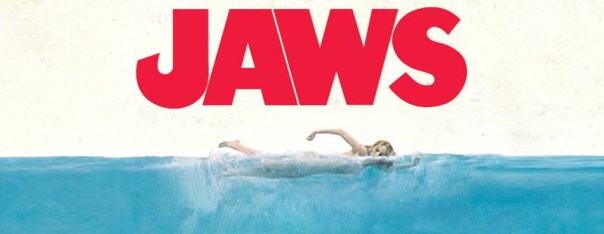
In that regard, Jaws doesn’t smell of fresh spackle and cheap paint. That’s brine with undertones of chum. Jaws takes the essence of the film’s two halves — the grumbling tension of the beaches, the snarling tension of the open ocean — and writes them in ink and cardboard. It’s suspense incarnate, lurking under the surface with three tons of muscle and a razor-filled mouth as wide as a sharking boat.
In other words, the board game adaptation of Jaws does right by its source material. There isn’t much more to say than that.
That Game Came From the Moon

I picked up Moon Base on the aesthetic alone. It was the rings that persuaded me. Three colors and two sizes, countless at a glance. Were they metal? Plastic? No, wood, with that smokey scent once reserved for laser-cut games in cheap pizza boxes. An odor that will likely never grace the moon, and already it’s what I associate with lunar colonization.
But here’s the big surprise: Moon Base is far more than a pretty face.
Inising Along

One of the things I always look for with an expansion is whether it feels like an expansion. No, that isn’t meant to be a tautological nightmare. Rather, my hope is always that an expansion will integrate into the base game in such a way that it feels seamless, without snags or snake’s hands. Since Inis has been one of my favorite dudes-on-a-map games for the past three years, I was eager to see whether the five modules of its expansion were up to the task. And hey, if they turned out to be duds, at least I got to play more Inis. Did I mention that I’m a big fan of Inis?
Here’s the good news: Seasons of Inis scores a venerable four out of five. And although one of its modules doesn’t fit quite as fluidly as the rest, it isn’t any slouch, either.
Borantha
Remember Cthulhu Wars? Sure you do. There’s no forgetting that mountain of plastic, as eye-catching as it was bombastic. The horrors of H.P. Lovecraft molded in day-glo, waging war for command of Earth, regardless of whether that placed more emphasis on our little ball of dirt than cosmic horror really calls for.
Now Sandy Petersen is at it again, this time laboring upon another molded mountain. At the very least, Glorantha: The Gods War makes stronger internal sense, pitting rival pantheons against each other in a contest for total supremacy. But it holds so much in common with Cthulhu Wars, from the way factions develop over time to the outcomes of its battle dice, that it’s impossible not to compare the two.
Abstracts Get Political: Paco Šako
Here on Abstracts Get Political, our primary interest is abstract games that make an ideological point despite being, well, abstract games. But we’ve always (both times) looked at games about injury and strife. Suffragetto loosed jiu-jitsu-ing suffragettes upon the police, while Guerrilla Checkers was about — you guessed it — the horrors of modern asymmetrical warfare. Where are the games that give peace a chance?
Look no further than Paco Šako. Even its name carries a message of harmony. After all, it’s Esperanto for “peace chess.” You don’t get much more peaceable than that.
Or do you?

 SPACE-BIFF!