Blog Archives
An Empty Omen

Look, you already know that John Clowdus’s Omen: A Reign of War is one of my favorite games ever designed. I’d still be lying if I called it a perfect game. It’s very phasey, full of insistent procedures and favored approaches, not to mention being reliant on learning that pool of cards and winning in the pregame draft. If Clowdus announced he was going to redesign Omen from scratch, I’d be over the moon.
To some extent, that’s exactly what An Empty Throne purports to be. Like Omen, this is a Battle Line-alike game about fielding units, comboing powers, and trickling more points into your pool than your opponent. That’s where the similarities end. Foremost because, at fifty-five cards, this thing is lean.
Oh, and there are no phases. An Empty Throne is nothing but action.
Siege of Manatee

Sometimes I wonder why I play games. Not in a terminal sense. I’m not about to kick the habit. Rather, in the sense that certain games, in particular those about warfare or politics or society, are more than mere playthings. They’re possibilities for illumination. I play for enjoyment as much as the next person. But I also play to explore ideas and history.
Amabel Holland’s catalog is rife with such explorations. It’s also full of trifles. That isn’t meant as dismissive. Sometimes, though, the line is blurry, scattering my expectations into disarray. So it is with Siege of Mantua, Holland’s first block wargame, which zooms in on a crucial slice of Napoleon Bonaparte’s campaign to break the first coalition’s efforts against the fledgling French Republic.
Foucault in the Woodland, Part Five: Parasites in the Panopticon
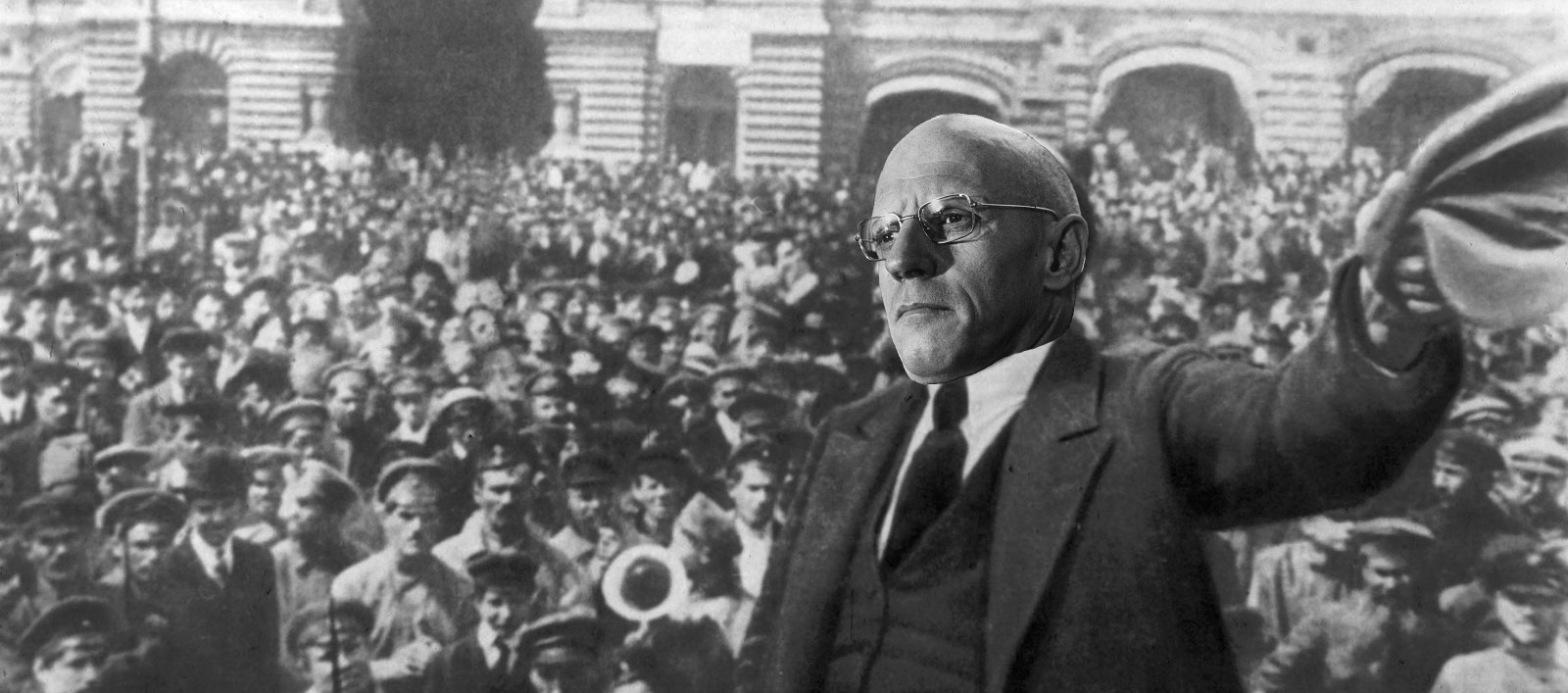
Recap: Across the past four installments, we’ve been talking about power. Specifically, how Cole Wehrle’s Root demonstrates an understanding of power in line with the writings of Michel Foucault.
Except I’ve been making a significant omission. Because Foucault didn’t write only about power. That would have been too clear-cut. He always rendered it as “power-knowledge.” Two intertwined concepts that, once assembled, approximate what he meant when he talked about power. Pardon me, power-knowledge.
Today, we’re delving into why that distinction matters.
This One’s a Bear
I like it when a publisher has an ethos. I’ve never really thought of BoardGameTables — which I can’t quite bring myself to write under its full name BoardGameTables.com, because blech — as anything other than a table company that happens to publish a few games on the side. Not unlike Ultra PRO and card sleeves, come to think of it.
Peculiar branding aside, writing about a portion of their catalog this past week has given me a more concrete sense for their internal logic. The defining trait is focus. Whether it’s Bites, On Tour, Q.E., Kabuto Sumo — yes, even Loot of Lima — these games pick one thing and try to stick the landing. More often than not, that one thing is offbeat. Outside the norm. Neither a mishmash nor a retread. They hone a single concept to a cutting edge. Even when the result is mixed, it’s hard to argue that this isn’t a carefully curated selection.
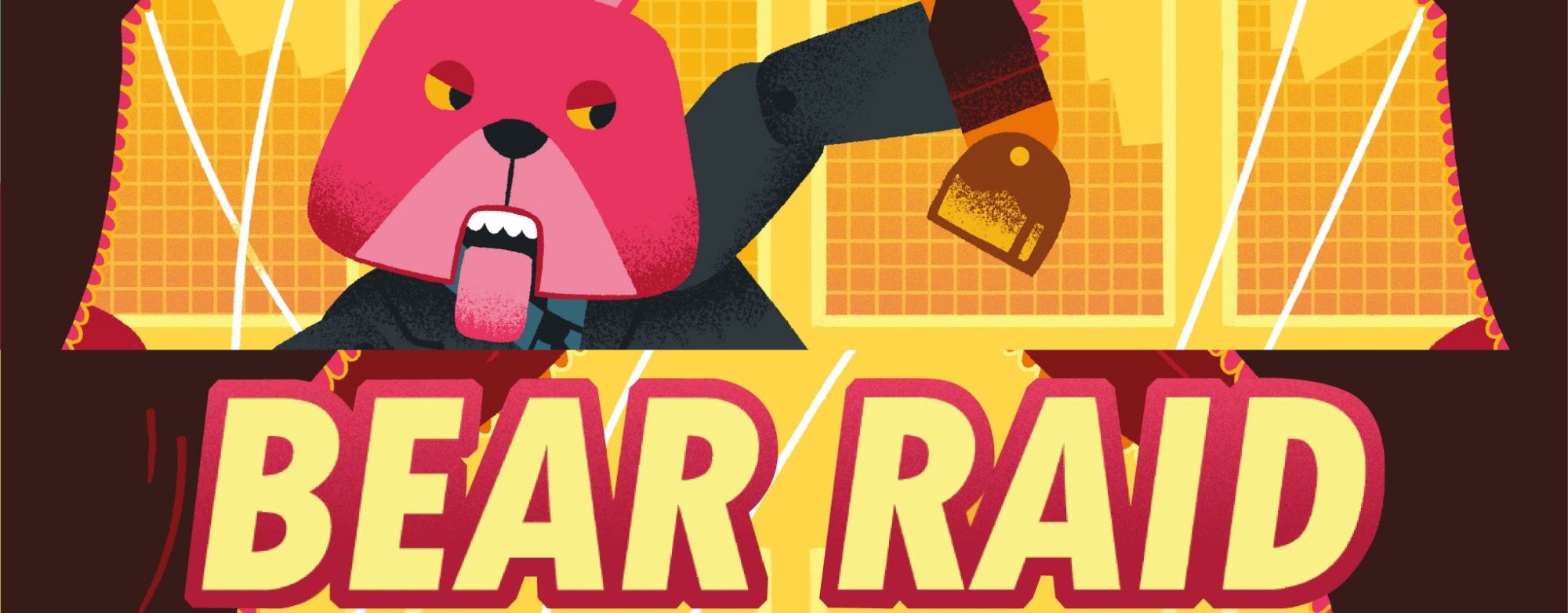
And then there’s Bear Raid. Bear Raid may be offbeat, but it lacks the tidiness of those other titles. It even lacks the tidiness of designer Ryan Courtney’s upcoming game Trailblazers, which I wrote about last week. In that respect, it’s closer to Pipeline or Curious Cargo. This here is a big old mess. And I think that’s why I have so much affection for what it’s trying to do.
Bite Me

During yesterday’s entry in our splurge of titles from BoardGameTables, the simplicity and repetition of On Tour caused me to call it “a kid game masquerading as a game for grown-ups.” Today, we’re looking at a game that goes out of its way to look like a kid game, from its cutesy subject matter to some adorable double-layered cardboard tokens that look like food items with nibbles taken out of them. I’m pretty sure I even released an “Aww!” when we punched them out.
Never mind that. The title in question is Bites by Brigitte and Wolfgang Ditt. Childish exclamations of delight aside, it is decidedly a game for grown-ups.
Almost Famous

After yesterday’s alleyway mugging by Loot of Lima, almost anything would be an improvement. Good news! Our next BoardGameTables entry, On Tour by Chad DeShon, is exactly the broad-appeal title I was looking for. It’s both a roll-and-write and a flip-and-write. That’s a twofer.
Lima Beans, Maybe

I’ve been on a BoardGameTables kick. Not because I need a board game table. I’ve got one of those. It’s two card tables with a slab of felted plywood laid over the top. Upscale, I know. Instead of a table, BoardGameTables sent over four games in one big package. The current plan is to write about them in ascending order of quality.
Which probably clues you into what I think about Loot of Lima.
Space-Cast! #21. Turncoats on Turncoats
Today on the Space-Cast!, we’re joined by Matilda Simonsson of Milda Matilda Games, designer (and crafter) of Turncoats. Listen in as we discuss the inspirations, production, and implications of a game that seems ten times its size.
Listen over here or download here. Timestamps can be found after the jump.
Happy Trails to You

Ryan Courtney tends to design games that I want to like more than I actually do. Pipeline was good for a few sessions before it began to feel solved. Curious Cargo was curiously burdened by confounding scoring. In both cases, these were games about arranging curlicue routes from a pile of mismatched tiles, except the routes themselves played second fiddle to underwhelming bookends.
But then there’s Trailblazers, Courtney’s upcoming title that should hit Kickstarter next month. I have a bit of a thing for Trailblazers. Probably because the routes are finally front and center where they belong.
Terraforming Earth

Ark Nova, designed by Matthias Wigge and so widely acclaimed that it’s been distributed by literally one dozen publishers, is easiest to describe via amalgamation. There’s the sprawling market of Vlaada Chvátil’s Through the Ages, the escalator of five action cards from James Kniffen’s Civilization: A New Dawn, and the vaguely aggravating card draws of Jacob Fryxelius’s Terraforming Mars.
It’s wildly popular. I think I know why.

 SPACE-BIFF!