Blog Archives
Hex-and-Counter Meets Its Little Boney
Hex-and-counter has always been that inscrutable corner of the wargaming hobby for me. Whenever I venture over, it’s like getting a faceful of cobwebs. And don’t even get me started on clipping counters. I barely even clip my toenails.
But there are exceptions. This year, Paolo Mori — yes, that Paolo Mori, the one with some of modern boardgaming’s best regarded titles in his portfolio — founded Ingenioso Hidalgo, a label specifically for publishing projects that might not fit anywhere else. Thanks to a collaboration with Alessandro Zucchini — yes, that Alessandro Zucchini, the inventor of the oblong green vegetable we know as the cucumber (and more seriously, Mori’s co-creator on Toy Battle) — we now have the imprint’s first release. It’s a hex-and-counter wargame called Battlefields of the Napoleonic Wars.
True to the company’s name, it’s downright ingenious.
Real Moytura, Guys
I’ll confess it was a little surprising to unfurl Moytura’s board and see such a literal depiction of Ireland. After the suffocating hoplite melee of Iliad, the checkerboard Mount Olympus of Ichor, and the abstract leylines of Azure, here the membrane between the real and the mythological seems especially thin. Designed by one of the busiest partnerships in the industry, David Thompson and Trevor Benjamin, and fiercely illustrated by A. Giroux and Harry Conway, Moytura loosely retells the Maighe Tuireadh’s ancient clash between men and monsters to decide the fate of pre-Christian Ireland. As an installment in this particular series, it’s something of an odd duck. I’d even go as far as to play loose with some definitions and label it a light wargame.
A light wargame with heaps of monsters, that is. Right from the get-go, Moytura portrays its conflict as a desperate struggle for survival. And let me tell you, the main attraction is all those baddies.
I’m Not Azure About This One

Hot on the heels of Reiner Knizia’s Iliad and Ichor, Bitewing is crowdfunding another pair of titles for their Mythos Collection. As seems to be the pattern with these things, one of them stands head and shoulders above the other — although whether that’s the things’ fault or because we’re doomed to hold everything in comparison to every other thing is harder to tell.
Azure is the one I’m shakier on. Designed by Trevor Benjamin and Brett J. Gilbert, this is an abstract game about controlling four intersecting leylines and the auspicious beasts who inhabit them.
Fetch-Building

To quote the Holy Bible, John D. Clair keeps trying to make fetch happen. That isn’t an insult. If anything, I admire the guy’s persistence. Unstoppable is his latest attempt to master the “deck-building but also you’re building the cards by sticking other cards into increasingly overstuffed sleeves” system that he kinda-sorted invented (provided we ignore Keith Baker’s Gloom), following up on Mystic Vale, Edge of Darkness, and Dead Reckoning. This one is a solitaire outing, and it’s the most expansive expression of Clair’s approach to card-layering yet.
Which isn’t to say it doesn’t have some pretty big hangups, unfortunately.
All Workworkwork and No Play

By the time my brain was being compressed like fine pasta out through my ears, my self-confidence had taken more than one impact and, although this may reveal too much about the ailing functions of my inner ear, I had suffered a few vertiginous moments that bordered on nausea.
This is Workworkwork, the latest effort from Blaž Gracar, the madman who gave us LOK and Abdec and All Is Bomb. Like the first pair of those titles, Workworkwork is a puzzle book, comb-bound and packaged with a transparent plastic sheet for doodling on with a dry-erase marker. Unlike your average sudoku or crossword, this is a necessity. There is no solving these puzzles on your first go. Instead, it takes practice, experimentation, and failure. So much failure.
Chariots of Frickin’ Fire

It is wild to me, utterly wild, that in 2025 CMYK has released not one but two racing games. Even wilder that the second, slipstreaming in the wake of Jon Perry’s Hot Streak, should be a remake of Takashi Ishida’s Magical Athlete, tuned up by Richard Garfield of all folks, and that it’s as close to perfection as any board game has ever managed.
Sporks

Critter Kitchen is what you get when you take Matty Matheson from The Bear, Jon Favreau from Chef, and Daniel Brühl from Burnt, and then change almost nothing, because those are the actors who most closely resemble anthropomorphic animals in the first place. Designed by Alex Cutler and Peter C. Hayward, this is a feel-good board game about earning as many not-quite Michelin Stars for your restaurant as possible, marred only by a bit of clutter and the sneaking suspicion that the meat tokens must have been sourced from factory-farmed humans.
The Little Crunch
Ah, the “small civgame,” the brass ring of tabletop design. If Age of Galaxy sounds familiar, that’s because this is the second edition of the tinier-than-you’d expect title from a couple years back. Now, in a somewhat ironic turn, it’s been blown outward.
Some dead space in the box notwithstanding, it’s a suitable alteration. The cards are full-sized! The map and action board feel less like gimmicks! The discs can actually stack on top of each other! This is the very same Age of Galaxy I reviewed positively two years ago, transformed so that it’s much easier to read across the table, with all the upsides and downsides vacuum-sealed for a fresh audience.
How to Train Your Fledgling
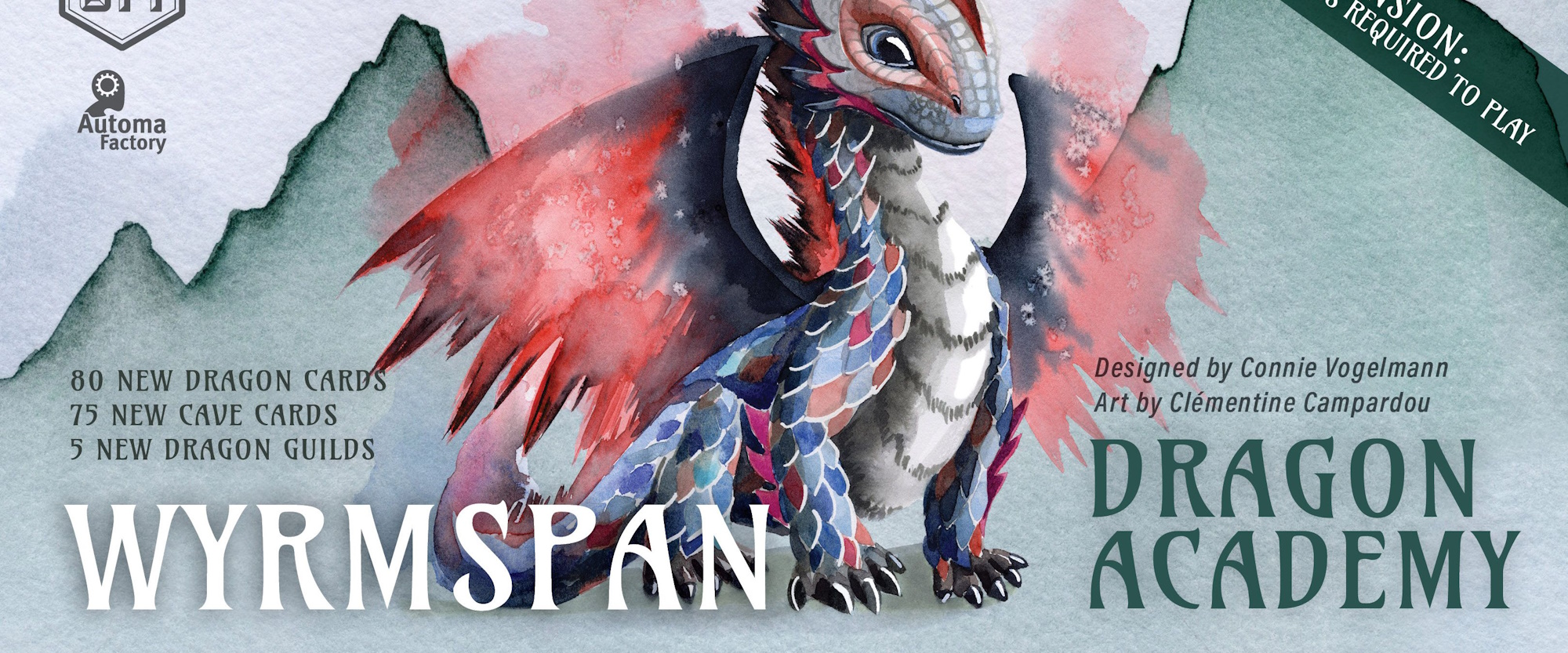
I don’t know why dragons are so popular all of a sudden, but as a parent I’m genetically predisposed to be invested in the same things as my eleven-year-old… so bring on the dragons. Dragon Academy is the first expansion to Connie Vogelmann’s Wyrmspan, the heftier and more draconic alternative to Wingspan and Finspan, and it understands the fad even more intimately than the base game.
When the Bell Breaks

It wouldn’t be fair to call the Munich Crisis “small.” Certainly it wasn’t small to the almost fifteen million inhabitants of Czechoslovakia. But time and history, especially the history of World War II, have a way of making the betrayal of an entire nation seem tiny. In 1938, Czechoslovakia was twenty years young, guaranteed safety and autonomy by France, and remained the sole functioning democracy in Central Europe. Within a few short months, it became the latest target of Germany’s rolling territorial acquisitions and, after the Sudetenland was traded away to appease Hitler, was carved up between neighbors. The peace purchased with the First Czechoslovak Republic’s dissolution held less than a year.
This is the topic of Petr Mojžíš’s The Bell of Treason, an improbable but evocative title, not to mention a despondent one in an era of renewed imperial aggression against states that have been promised security by feckless global powers. Riffing on Mark Herman’s system from Fort Sumter and Frédéric Serval’s developments from Red Flag Over Paris, it’s also comparatively diminutive for a wargame, with short rules, a compact profile, and a sharp eye for the crisis’s framing. All the better to make its players feel like minnows among sharks.


