Making a Monstrous Mess

I’ve got a hypothetikos situation for you. You’re a Greek god, okay? You live on Olympus, flatulate lightning and belch storm clouds, all that. But the residents of Greece just aren’t giving you any respect. They leave goat offal for votive offerings, dampen the back of your shrines whenever nature’s urge strikes them, and deploy your exalted name as a mere punchline. “Where do you keep all your Pegasuses?” they ask. “In Zeus!”
Deep breath. What do you do?
If your answer is to create a bunch of monsters and chuck them at the cities of Greece in what amounts to an Olympian temper tantrum, you’ll get along just fine with Monstrous.
Ire Is Bad

Perhaps the most sobering tragedy of the Hungarian Revolution of 1956 is that its most significant global impact was to cause a few Communist philosophers in France to reevaluate their stance on the benevolence of the Soviets. Without support from President Eisenhower, the revolution’s early success may have temporarily placed their occupiers on the back foot, but there was nothing they could do in the face of an all-out mechanized assault. Tens of thousands were killed, injured, executed, or deported. That year, Time magazine named “The Hungarian freedom fighter” their man of the year. Come 1957, it was Nikita Khrushchev.
Days of Ire: Budapest 1956 is all about capturing that first triumphal week of the revolution, when brave men and women rose up throughout Budapest to express their displeasure at the Secret Police, State Protection Authority, and other emblems of Soviet control that had taken hold of their country. It sounds like exactly the sort of game that ought to tickle my fancy. So why hasn’t it?
Thump!

The best thing about Clank! is that it’s a deck-building game, which is one of those phrases I didn’t see myself using, right alongside “I wish I could take the bus more often” and “Cabbage tastes better when burnt.” And yet it’s the gospel truth. Clank! is a good game, maybe even a great game, and largely because it’s a deck-builder.
Then again, the worst thing about Clank! is also that it’s a deck-building game, so there’s that.
Life on the Green, Green Seas

The joy of playing independent games is that you never know what you’ll find. Maybe it will be a stinker, as was Charles Ward’s last effort, Blood & Fortune. Then again, maybe it will be his current experiment, Haze Islands. Hopefully the latter, because Haze Islands is rad.
Two Minds about Teenage Mutant Ninja Turtles: Shadows of the Past
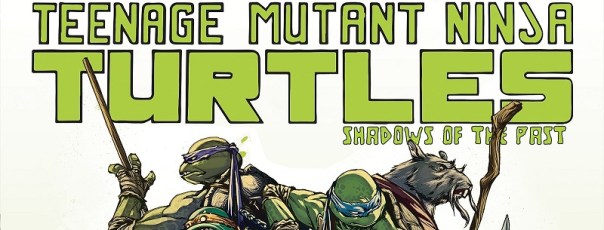
Dan is the only human being of his generation to never watch a single episode, read a single comic, or do a single anything else Teenage Mutant Ninja Turtles related. Not even one thing. Let that sink in. Not one. Which is why we’ve brought in our resident TMNT expert — yes, we have one of those, our staff is huge — to go head to head with Dan. Give a warm welcome to Brock Poulsen as he debates the merits of Teenage Mutant Ninja Turtles: Shadows of the Past.
Fly Me to the Moon

I’m not a math guy. This isn’t to say I can’t do math, just that I probably won’t, not voluntarily. If I’m waiting in a long line I might calculate my sales tax in advance, but that’s just because I’d rather not continue standing in a long line. Other than that, I’ll cheerfully cop to being terrible at knowing the odds.
Leaving Earth bills itself as “a tabletop game of the conquest of space,” but that’s a little bit like calling Columbus washing up in the Caribbean “the conquest of the New World.” This isn’t a game of conquest. It’s a game about the first tentative steps of discovery. Probes, surveys, launching a man into orbit, bringing him home. Most of all, though, it’s a game about the grace and sophistication of solving complicated math problems.
Daimyo Dash

One of the great difficulties in creating any work of game-as-history is the sheer potential bulk of the thing, where the subtle complexities of real-world conflicts must be modeled as rules, endowed with appropriate exceptions, and tested for some semblance of balance. Take the Battle of Sekigahara, for instance. Set in the autumn of 1600, this was the final step in a years-long campaign by Tokugawa Ieyasu to bring the warring daimyos of Japan under his thumb. During the course of this seven-week campaign, clans and generals swapped sides, cobbled highways and back-country fortresses alike played important strategic roles, firearms and cavalry disrupted the usual order of battle, and some dude held a fortress against all odds through the sheer weight of his respectability.
The beauty of Sekigahara: The Unification of Japan — and I don’t use that word lightly — is that it’s perhaps one of the least demanding games I’ve ever played from GMT, somehow managing to capture the drumming tension of its subject matter without ever once sacrificing depth for simplicity or simplicity for depth.
Aeon’s Beginning

If I were forced to list three things that I have a history of disliking about board games, I would arbitrarily choose the following: Firstly, “pure” deck-building games, because the era of the hybrid is upon us. Secondly, cooperative games. And thirdly, fixed market pools in deck-building games, as opposed to the “river”-style markets of games like Ascension. Give me some variety! Some uncertainty! Some drama!
Aeon’s End, designed by Kevin Riley and published by Action Phase and Indie Boards & Cards, is a cooperative deck-building game with a fixed market pool. If I were a keeping-track man, that would make three strikes, and if I understand baseball correctly that means it’s time to pick up another chili dog and head to the car before the second inning starts. Fortunately, I’ve never counted past two in my life, because Aeon’s End has quickly become my latest obsession.
Ants in the Pants

Sometimes, usually while showering, I think about how the eusociality of the insect order Hymenoptera — ants, wasps, bees, and so forth — is very possibly the pinnacle of feminism.
But enough about that. Let’s talk about March of the Ants. Who doesn’t love ants?
Red Delights of the Arena
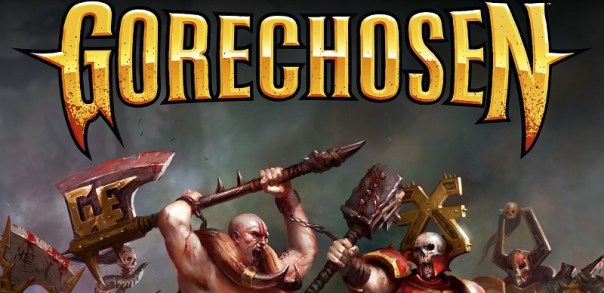
I can’t help but crack a smile whenever I hear somebody complain about how luck hindered one of their plans, as though plans were the most sacred thing in the world. Well, yeah. That’s what luck does.
Take Gorechosen as one of the brashest examples of the delightfully fickle nature of chance. Just a few days ago, while commanding Redarg Bloodfane — a horned warrior who sports a codpiece that bears an uncanny resemblance to one of the Polokus masks from Rayman 2: The Great Escape — I had carefully positioned myself behind Heldrax Goretouched by weaving around pits of searing magma and opposing fighters. With a sinister grin, I got lucky on my initiative draw, then continued getting lucky by having the right card in my hand. I tossed it onto the table the way people do in movies about poker games. BACKSTAB, it read. I took up my hand of dice, everyone’s breath trapped in their lungs, and sent them spinning across the table. Misses, all.
Luck. It treats plans with about as much respect as you showed that last Kleenex.

 SPACE-BIFF!