Passenger 56

Ever wanted to run your own airline? An airline in a universe where scheduling computers and aviation engineers don’t exist, so you’re in charge of designing planes and booking flights mid-route? On a fifteen-second timer?
Yeah, me neither. But at least Now Boarding makes it better than it sounds.
COIN Dice
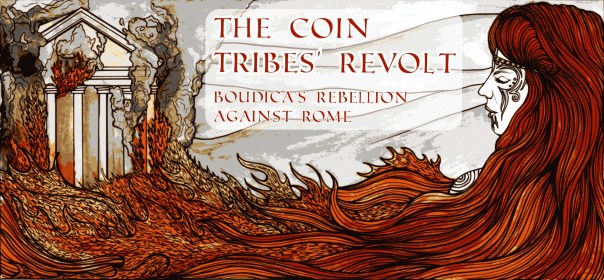
Some experiences are hard to imagine as microgames. The COIN Series, for instance. The most recent volume, Pendragon, can run for up to five hours, and that’s provided everybody understands the rules. Distilling the essence of something so dense into nine cards and a few dice has all the madness of compressing an entire brewery into a single squirt of breath spray.
Yet that’s precisely what Laurie Phillips did for his entry into the 2018 9-Card Nanogame Print and Play Design Contest. And all because of a killer history pun.
COIN Volume VIII: Pendragon

I’ve heard some people mention COIN Fatigue. Not me. For a long time, my attitude was that if the powers-that-be at GMT Games desired to produce a hundred of these things, I’d be there. Each new volume is like a component-dense map pack for some popular train game, sans the trains and plus some deeply clever card play and action manipulation and politicking.
Okay, nothing like a train game.
Then I played the latest volume in the series, Marc Gouyon-Rety’s Pendragon: The Fall of Roman Britain. And despite everything it gets right — and it’s a lot — it dawned on me that I was beginning to feel tired. Though it’s possible that my fatigue may have been philosophical. So let’s engage in some therapy!
Vaster, More Mysterious, More Manor

Vast: The Crystal Caverns always possessed one glaring fault, which was only compounded by its expansion, The Fearsome Foes. What to do when you want to play this beautiful sprawling asymmetrical thing, but don’t want to teach four, five, six, seven separate roles? Much of the time, the simplest answer was also the easiest: don’t. It was the sort of game that quickly established itself as the bane of groups with rotating players, especially since it only truly came to life once the roles were learnt and the interactions between its characters and haunts became second nature.
Vast: The Mysterious Manor doesn’t solve that problem, not fully. Any game with multiple roles is going to require its players to learn those roles, and the Vast series — I think we can safely call it that now — has always thrived on the broad differences between its sides. But The Mysterious Manor is at least going to make the task of teaching its rules faster, easier, and more rewarding than before. And the result just might strike the balance between the sweet, sweet asymmetry that gave Vast its appeal in the first place and the approachability to make sure its players stick around long enough to learn its rhythms.
The Knizian Society

Want to know the best thing about all these Reiner Knizia reprints? It’s that somebody else is doing the hard work of curating the good doctor’s 500+ games. Rather than picking through every last trifle, experiment, and flub, they’re all being sorted for the brightest, smartest, and most fulfilling of Knizia’s catalog.
The latest in this spree of curated Knizias — remade with gorgeous art by Osprey Games — is High Society. And much like its namesake, it’s elite, holier-than-thou, and oh so catty.
Yesteryear: Enemy Activity Detected
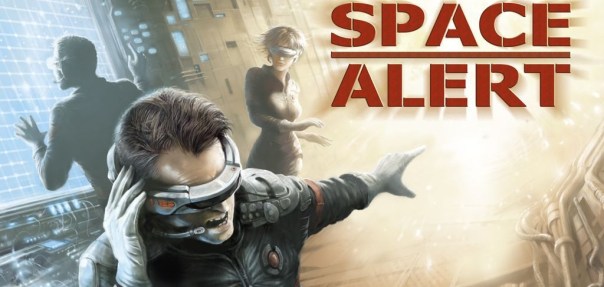
Today on my monthly-ish feature about the games that still have a spot on my shelf despite the passage of years, we’re talking about Space Alert, the most stressful game that I’ll argue against playing before somehow acquiescing and playing anyway, blood pressure be damned. This is Yesteryear.
To this day, Vlaada Chvátil’s Space Alert remains the only game I’ve ever created an accessory for. I’m not talking a Plano box for keeping pieces sorted or an extra pack of dice so you don’t have to share the same set. Instead, I’m talking about a custom T-shirt, designed to look like a captain’s uniform complete with Space Alert logo and everything.
See, my family growing up was never much into games—
ALERT. ENEMY ACTIVITY DETECTED. PLEASE BEGIN FIRST PHASE.
Just Yell It: Zogen!
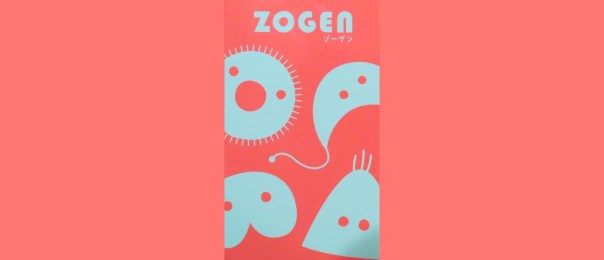
Zogen, from the oft-hilarious Oink Games, is a reflex game. Not your usual reflex game, which is about slapping hands with your high school crush on the back bench of the band bus, then spending the rest of the trip icing your bruised fingers. But rather, the sort of reflex game that hurts your brain. Like, hurts it. And it’s only about reading four little symbols.
Mind Games

The Mind is the sort of game that cults form around. Little more than a deck of cards numbered one to one hundred, The Mind boasts that you’ll be able to gradually tap into your fellow players’ mental energies. It’s a bold claim, especially since your entire goal is to play your cards in ascending order. In fact, I’d even go so far as to call it fraudulent, since the concept is so simple that a child could—
Dammit! Who played that 65?! Was it you, Geoff? It was! Don’t deny it! Now let’s go again!
History of the World, Part IV

Way back before the dawn of time — that’s 1991, four years prior to the release of Settlers of Catan — the design team known as the Ragnar Brothers, composed of Steve and Phil Kendall and Gary Dicken, designed a game meant to chart the rise, fall, rise, fall, rise, fall, and many more rises and falls of the kingdoms, empires, dynasties, and nation-states that shaped our history. Some of its central concepts were eventually riffed upon by Vinci in 1999, which was reshaped to became Small World in 2009. Facts! Huh!
Anyway, if you’ve played any of those games, you already know the central conceit behind History of the World. As an empire, your moment in the sun is fleeting. Then it’s decline, barbarian invasions, and eventual obscurity for you. At least your points carry over.
Solar Flair
A dying star. A utopian civilization becoming less utopian as it grows more desperate. A cohesive union splintering into factions. A bitter race to escape the coming supernova. The lingering suspicion that all of this was your fault.
It’s rare that I’ll read the fluff for a board game — if there’s one thing designing a board game doesn’t qualify you for, it’s writing compelling fiction — but Sol: Last Days of a Star almost convinced me to go all the way. Almost. The included mythos book, with its short stories about characters the game never reveals and motivations that are distant from what you’ll actually be doing, was a step too far. All it earned was a quick skim. What does Sol think it is? The Canterbury Tales?
Not quite, but it is something rare: an actual honest-to-goodness science fiction game. With something to say. And systems that actually support its message.

 SPACE-BIFF!