Category Archives: Board Game
Best Week 2020! Better, Faster, Stronger!

There’s a reason Best Week arrives when it does. Popular belief would say it lands at the end of the year, but that isn’t it. Best Week happens when it’s needed most. When the world is cold and dark, Best Week is here to draw our attention to the games that mattered.
And there’s no better way to flip the bird to a dismal year like 2020 than by celebrating the games that stood up to the giant, pounded their shield-arms, and said, “You know what, jackass? Even though everyone has fallen into the habit of taking afternoon naps, even though it’s almost next year and I still find myself thinking it’s October, I’m going to be my best self.” Call them redesigns, call them spins on familiar formulas. Either way, these are the games their designers decided to revisit in order to craft something new.
The Vote Isn’t Interested in Compromises

It isn’t possible to discuss Tom Russell’s The Vote without invoking her earlier design This Guilty Land. In part because they both make use of the same game system, a masterclass of functionality that demands periodic trips back to the rulebook, though in fairness this year’s outing putters along more smoothly, less opaquely, and buoyed by a tighter narrative arc.
If only the similarities stopped there. Instead, the lion’s share are more thematic, and by extension more somber. This Guilty Land was designed to evoke frustration. With its systems, yes, but also with the injustices permitted by those systems — and worse, enabled by them. Features rather than bugs. In Russell’s hands, the gridlock that prevented emancipation is the same gridlock that prevented women’s suffrage. Which is a long way of saying that The Vote is a streamlined and more playable version of its former self. But as a metatextual continuation of This Guilty Land, it’s far more than that.
Like Sands Through the Hourglass
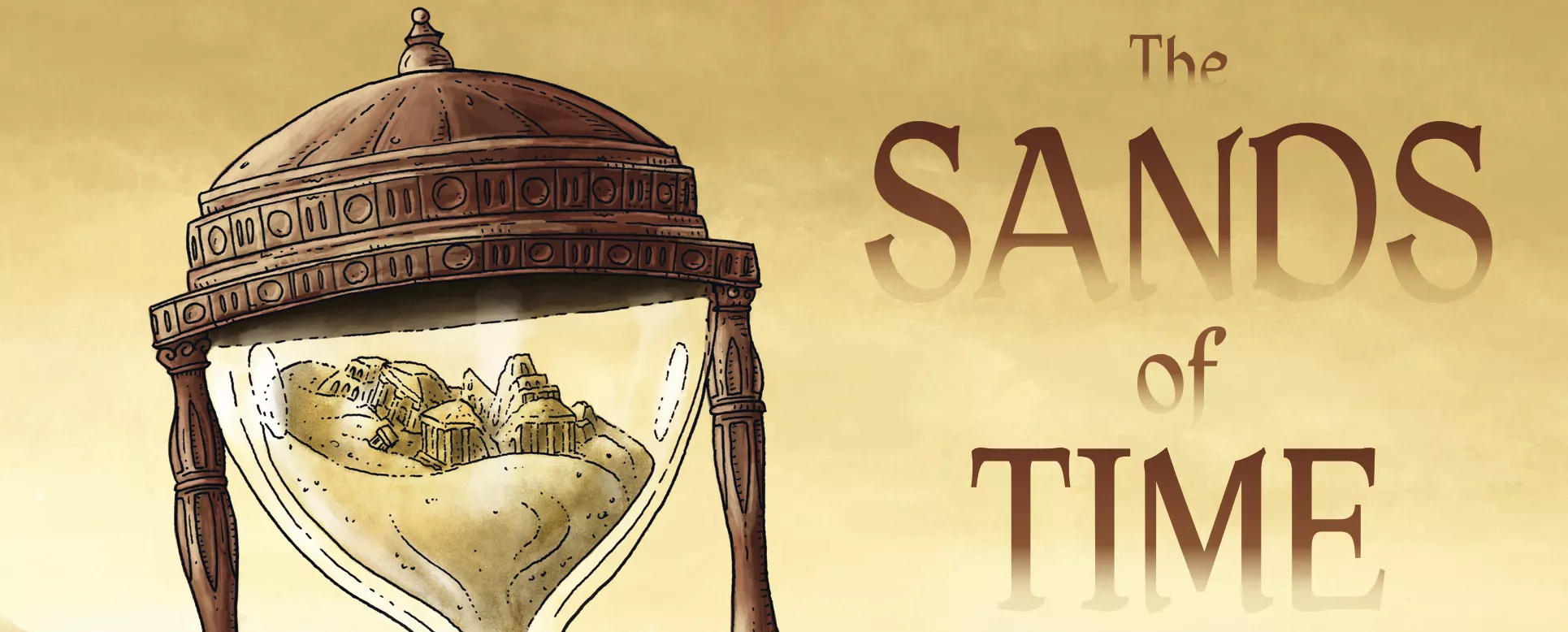
Longtime readers will probably be aware of my search for non-traditional civilization games. That’s why I was so eager to take a look at Jeff Warrender’s The Sands of Time, which flew under my radar a couple years back. Its approach could almost be described as abstract, crowded with cubes and cylinders alongside the more immediately evocative building tokens. Perhaps most notably, it manages to come across as the story of civilization as told over a long period. A millennium, maybe two.
And if nothing else, it definitely manages to be “non-traditional.”

Looney Pyramids, Part One: Nomids

My curiosity for Andrew Looney’s pyramid system began with the discovery of Pyramid Arcade on the shelf of a local game store. Twenty-two individual titles, all crammed together like the stacked pyramids that have been the system’s hallmark for a quarter century. The set was so overpriced that it sat there for three years, unpurchased by me or anyone else. According to the owner, somebody eventually stole it. I’ve pined over might-have-beens ever since.
But time heals all wounds. To make the system easier to break into, Looney recently issued four sets of his famed pyramids, ranked in order of ascending complexity. Today we’re looking at the introductory box. And let’s just say, as far as relationships go, this one’s off to a rocky start.
Beyond the Technology Tree
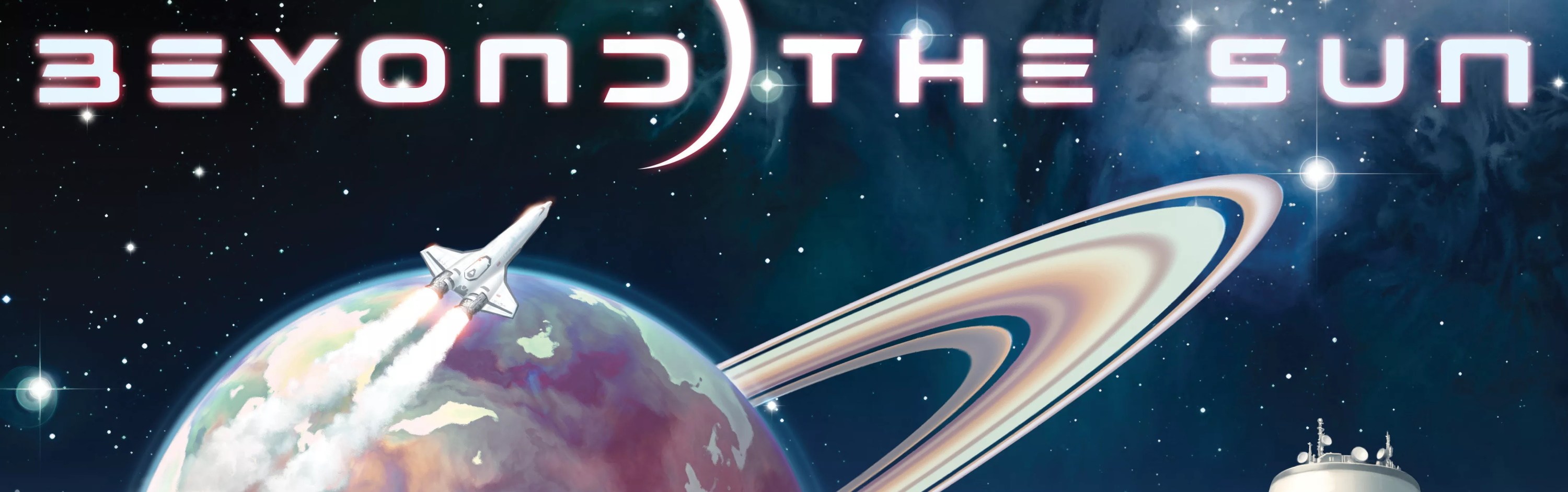
For decades games have noodled over how to represent technological progress. Tracks? Random cards? Kitsch that doesn’t bear any connection to its stated purpose? Sorry, that last one was a dig at Tapestry. I’ll never pick on it again. Promise.
For Beyond the Sun, Dennis Chan goes with the technology tree. A sturdy favorite. Reliable. Dull, even. Except in this case, Chan has done the unexpected by introducing something new to the idea: a pulse.
Who Killed Detective?

It’s no secret that I was mixed on Detective: A Modern Crime Board Game. Here’s my alibi. Sure, you could pin some slight motive for revenge on me. It was wordy in a way I found personally offensive. The interconnected cases were thick like a ball of old cheese. And sure, not every function of its app was what you’d call obvious. But kill? Who, me? C’mon, officer. It was a fling. I haven’t even thought about Detective in two years. I’m back together with the wife and everything.
You wanna know who I think killed Detective? I’ll tell you.
The Vindication of Chicken Little

By this point, Tomas Uhlir’s Under Falling Skies has some minor history to it. Originally the winner of the 9-Card Nanogame Print & Play Design Contest, it was later developed and released by Czech Games Edition during the early weeks of social distancing. At the time I was taking advantage of my newfound loneliness to wrap up a few other solo titles. Put simply, I missed out. Now that CGE has given it a full release, I’m rectifying my omission by shouting the truth from the rooftops:
This is one of the finest solitaire games I have ever played.
Depends on the God, I Suppose
![Gods Love [Insert Hot Setting]](https://spacebiff.com/wp-content/uploads/2020/11/1.-gods-love-headers.jpg "Gods Love [Insert Hot Setting]")
If God really loved dinosaurs so much, the big guy wouldn’t have treated them to an asteroid sandwich. In that regard, Kasper Lapp’s Gods Love Dinosaurs is a piece of revisionist theology. The divine course of history thrown into schism, the natural order turned on its head, all to placate the feelings of dinophiles.
As a plaything, though, it’s reasonably charming.
More than Surviving

It’s possible to play Thrive faster than it will take you to read this review.
Yes, that might be a statement of how quickly I have lost. What of it?

 SPACE-BIFF!