Category Archives: Board Game
Nine Months, Three Weeks, Six Days

All I play anymore is trick-taking games.
None of them are as sobering as Verdun, though.
Designed by Ren Multamäki, Verdun is indeed a trick-taker about the almost ten-month battle that took place between February and December of 1916. Far from being lurid, it approaches the topic seriously, attempting to capture some fraction of the battle’s tragedy.
Legends of a Dog System

Remember Xia: Legends of a Drift System, that sandboxy romp through outer space that didn’t really cotton to skilled play, but felt great anyway? Dog Star Shippers, the diminutive title by Sam Pugh, operates like a downscaled version of that game. It’s chancy, silly, and offers a pleasant way to pass an hour.
Smuggin’
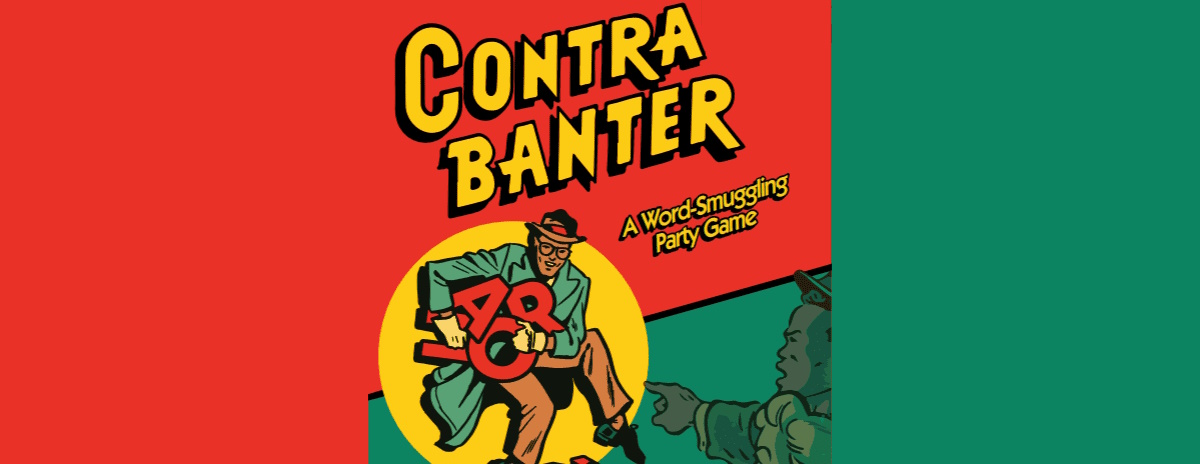
Word games. Specifically, that subset of word games that we call conversation games. They’re tougher to create than they might appear from the outside. And I can’t think of a better example than Phil Gross’s ContraBanter, a title that’s loaded up with great ideas yet still doesn’t quite work as intended.
Cute as a Button

In video games there’s the concept of the “demake,” in which a particular title is reimagined according to the limitations of earlier hardware. If there’s an equivalent in analog games, it might be the impulse to miniaturize. If so, there may not have ever been as extreme an example as Gloomhaven: Buttons & Bugs.
The original Gloomhaven, designed by Isaac Childres, is famously enormous. I would list a sampling of the contents (seventeen heroes, ninety-plus scenarios, etc.), but even that’s an exhausting endeavor. By contrast, Buttons & Bugs fits in the palm of one’s hand. Not comfortably, mind you. It’s a rather big miniature box. You could probably deal some damage to an intruder if you pitched it with enough force. But compared to Gloomhaven, the shrink ray has done its job.
Here’s the thing. Just as a demake can prove clarifying of the core elements of a video game, so too does this miniaturization. By stripping out the many many many things contained in that big box, it zeroes in on what makes Gloomhaven so interesting — and to some degree, so limiting.
Shadow of the Proboscis
Justin Kemppainen’s Leviathan Wilds wears its influences on its sleeve. One influence in particular: Shadow of the Colossus, the 2005 PlayStation 2 title that influenced a generation of up-and-coming designers. Like that game, Leviathan Wilds is about scaling behemothic creatures in order to punch them in their color-coded weak spots.
But Leviathan Wilds is a kinder giant-puncher. Gone are the melancholic grays, swapped out for a fuller palette and a conservationist ethic. These leviathans have been corrupted by nasty crystals, you see. Cured of the brobdingnagian gout, they will return to their gentle ways. Time to climb.
Four Hands and a Spare Finger
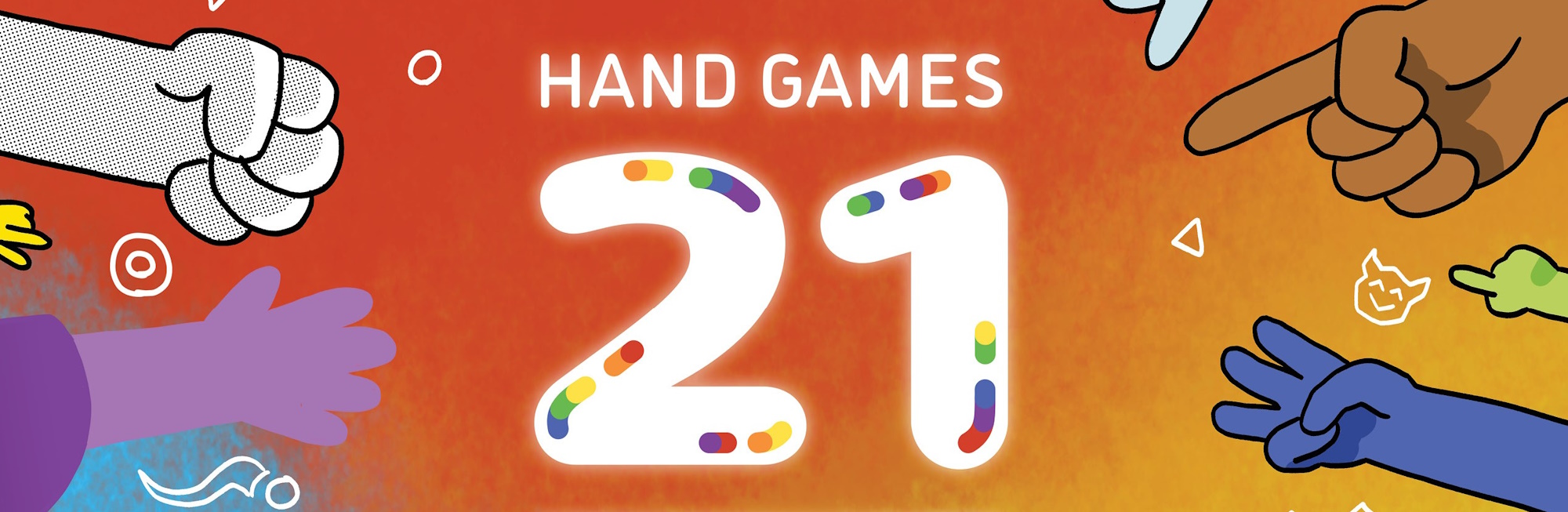
We play a lot of board games as a family. Short games, long games, campaign games. Everything. Over the past couple of months, however, we’ve fallen into the event horizon of a single book. It’s a slim thing, just the right size to sit against the window by the dinner table. Every evening, we’ve barely started eating before my daughters ask the question. “Daddy? Can we play a hand game?”
Internet, if you turn this cherished memory into something weird, it’s straight to jail for you.
Space-Cast! #37. Pax Relationships
In her second-ever appearance on the Space-Cast!, today we’re joined by Matilda Simonsson, designer of hand-crafted games Turncoats and Pax Penning! As we discuss her second hit, we also delve into why she decided to create an entry in the Pax Series, the difficulty of writing history, and how every single historical board game except hers is wrong to use coins as their primary form of currency.
Listen here or download here. Timestamps can be found after the jump.
Arbor Daze

After a disaster left much of the land uninhabitable, eco-pilgrims journey to faraway territories to restore both their village’s habitats and the creatures that once dwelled there. Dani Garcia’s Arborea joins the recent run of ecologically conscious board games; this time, its fantasy setting provides a colorful, almost trippy backdrop to the action. It’s conservation on acid, the Half-Earth Project on mushrooms.
If only it had embraced the trip.
Smothering Gods

There’s nothing out there quite like Ryan Laukat’s Sleeping Gods. Even after a mediocre sidequel, the repackaged freebie Primeval Peril, this is one of the few fantasy universes I’m eager to dive into, a testament to Laukat’s writing, illustrations, and imagination. Where most board games of its ilk would make me groan at the prospect of another flipped page, another half-baked snippet of dialogue, another skill check (brrrr), Laukat produces worlds that drive me compulsively forward.
Which is why I’m so very happy to report that Distant Skies, the first full-length followup to the 2021 original, is everything the first game was and more.
Galactic Relapse
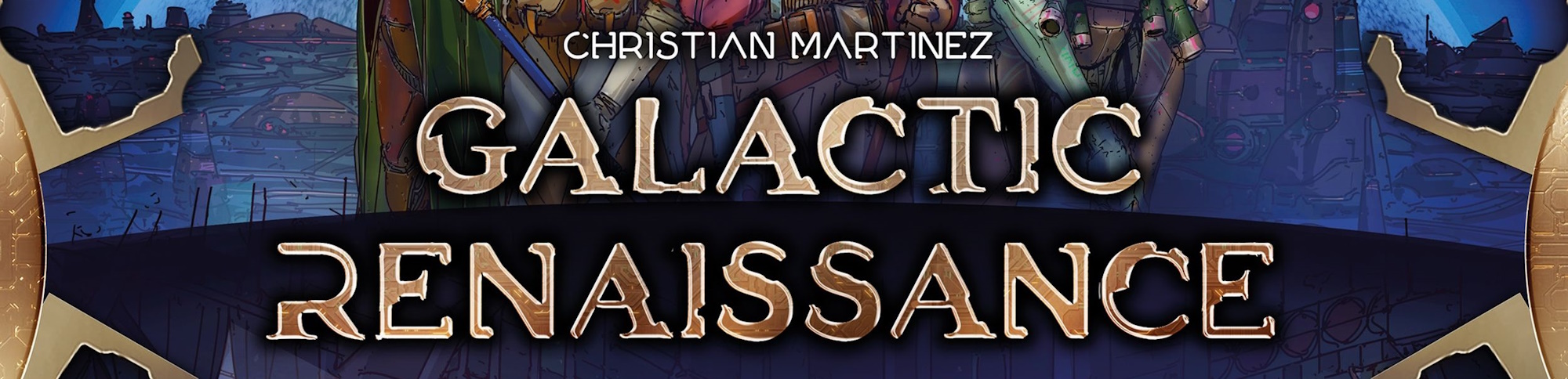
When it comes to board games, it isn’t always easy to tell the difference between a development and a regression. Take Galactic Renaissance, Christian Martinez’s followup to his supernal war-and-politics game Inis. On the surface, it covers much the same ground as that previous title, full of aggressive peacetimes, ill-advised conflicts that leave one poorer even in victory, and intersecting interests that are too testy to call alliances. Even the game’s geography, those far-flung planets only connected via warpgates, the way their abilities are contested and claimed, calls to mind the island terrain of its predecessor.
But this is no Inis. Despite riffing on many of the same ideas, Galactic Renaissance is a pockmarked experience, uneven in its best moments and frustrating and over-long the rest of the time. At its worst, it feels like a half-completed prototype for its predecessor.

 SPACE-BIFF!