Author Archives: Dan Thurot
Spacium: The Enspacening

Gary Dworetsky’s Imperium: The Contention just might be one of the most unfortunate titles ever to appear on my table. By which I mean its title is atrocious. First of all, there is now a moratorium on using “imperium” in any more game titles. Sorry. I declared it. No more imperia. Second, there has never in the history of contentions been a contention that deserved the definite article. And don’t tell me I need to read the fluff at the beginning of the rulebook to understand the meaning behind The Contention. It’s a space game. Space empires, space bugs, space mafia, space humans. Can we fast-forward through the exposition already?
Color me surprised, because Imperium: The Contention is entirely happy to fast-forward through not only the exposition, but also through the extra hours that distend most games about space empires. Pare away the fat, leave nothing but muscle and spiked appendages and laser cannons. If that were the only thing going for it, it might be enough. Instead, Imperium has become one of my favorite rapid-fire space games in a very short amount of time.
Triggered Effects

I suffer from panic attacks and poor health.
How’s that for an opener? I’m normally reserved about sharing personal details like that. But there it is: I’ve suffered from health complications my entire life, a handful of which have necessitated serious corrective surgeries and lengthy periods of recovery. Heading Forward, the solitaire game designed by John du Bois, makes sharing those details easier, or at least less frightening. Maybe those are the same thing. Empathy isn’t the first emotion I would expect to feel when playing a board game, but this demonstrates exactly how to express something deeply personal via a handful of cards and some punchboard spoons.
The Guild of Guilt-Free Explorers

Despite containing no pencils, dry-erase pens, pads of paper or laminated cards, Matthew Dunstan and Brett Gilbert’s The Guild of Merchant Explorers is as much a flip-and-write game as any other. It’s the feel that counts. A single card is flipped. Everybody uses that card to fill in spaces on their personal map. Everybody suffers or profits together. At least initially. After a few cards, whether any given flip helps or hinders your expansion is a function of planning and foresight rather than mere chance.
What sets this title apart from its peers, though, is the way it resets between eras.
Move Along Home: The Board Game

I think it’s fair to say that Star Trek never really understood games or why people play them. Watching Starfleet officers spit nonsense rhymes while playing hopscotch wasn’t exactly the high point of Deep Space Nine. Another time, The Next Generation introduced a free-to-play app game to the crew of the Enterprise. After the adults displayed all the willpower of a kid with a Fortnite addiction and unfettered access to his mom’s credit card, Wesley Crusher saved the day. Probably because he was the only youngster. Desensitized little goblin.
Fortunately, Geoff Engelstein didn’t adapt either of those episodes for his third outing of Super-Skill Pinball.
Arcs Avec Arc

Where last week’s examination of Arcs, the upcoming title from Cole Wehrle and Leder Games, focused on Arcs as an experience meant to be completed within a single session, today we’re delving into the “arcs” of Arcs. That’s right: I’ve completed two full campaigns. That’s six plays, a few branching narratives, and two galaxies brought under the reign of a single power.
I have some thoughts.
They See Me Rollin’
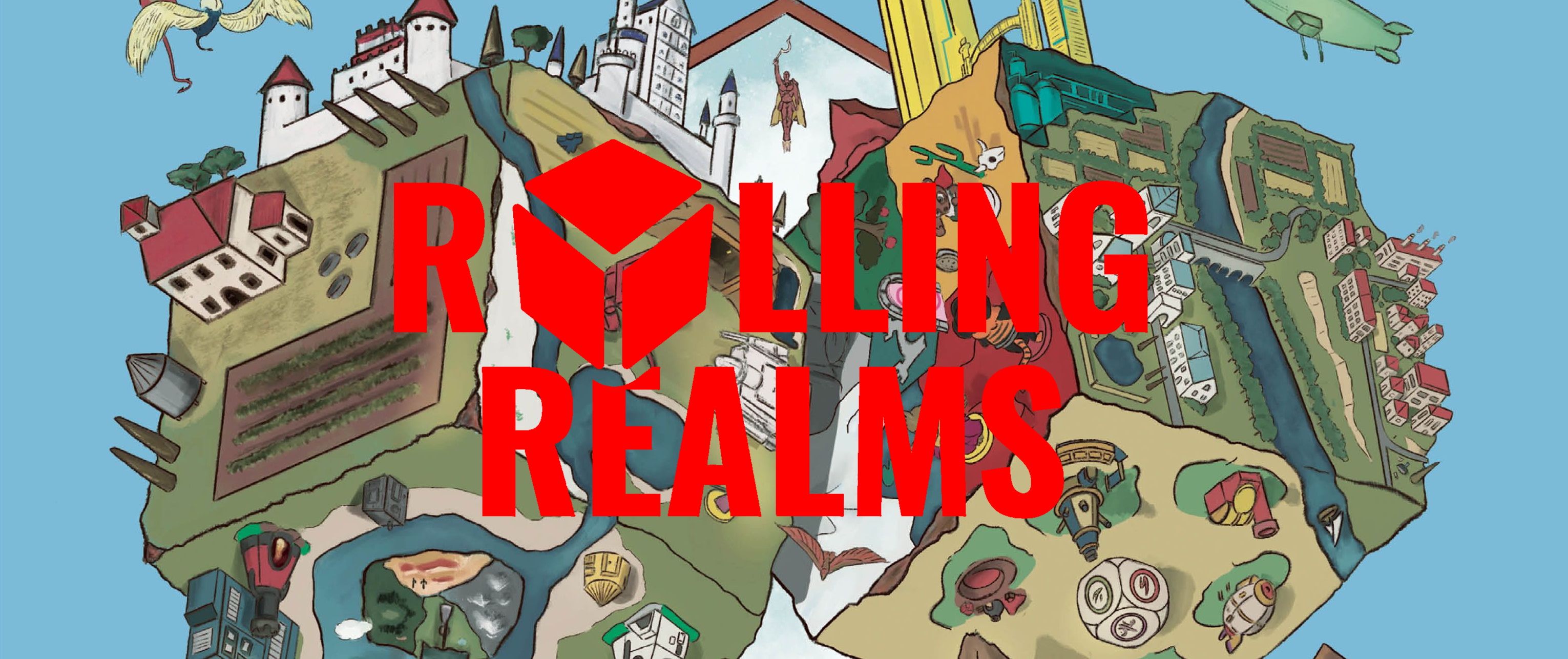
When I’m bored, I add more hours to Spelunky. When Jamey Stegmaier is bored, he designs roll-and-write games. That’s the origin story for Rolling Realms, born of COVID downtime and one of the genre’s greatest strengths: the ability to be played by large groups, even when they don’t occupy the same room.
To my surprise, it’s rather charming.
Arcs Sans Arc
Whenever I mention Arcs, the upcoming four-letter title from Cole Wehrle and Leder Games, everybody wants to know about the campaign, the three-session “arc” that will chart the ascent of four players amid the decline of a stellar empire. It’s a fascinating premise, and not only because it formalizes the playful and open-ended concept of a non-legacy board game that rolls over from one session to the next that Wehrle introduced in Oath.
This preview is not about that. At some point in development, Arcs was split in two. To mitigate costs and the danger of tossing a gaming group out the airlock before they’ve had a chance to suit up, the campaign is now a day-one expansion. Arcs, the core game anyway, is now a single-session board game. Which up until very recently was just called “a board game.”
How is Arcs sans arc? Let’s take a look.
One Through Nine

Every so often a publisher will send me a game out of the blue. I try to take a look at every title I’m sent, but when I’m working through a backlog twenty boxes deep, I’ll confess it isn’t beyond me to judge a game by its lid. Eternal shame, I know. But look at this thing. TEN? That’s the name of your game? TEN? With that epileptic seizure of colors passing for box art? I only knew Shawn Stankewich, Robert Melvin, and Molly Johnson from Point Salad, but, uh, I’m not especially fond of Point Salad. Onto the pile of giveaways it went.
And then something funny happened. TEN got nominated for a Golden Geek. My curiosity was piqued. It was sitting right there, after all. How much opportunity cost could it represent? At worst, it would take fifteen minutes to learn and play. Fifteen lousy minutes. It’s a rare game night if we don’t chat about Geoff’s fashion sense for at least twenty. Might as well give it a try.
Since then, we’ve hardly hosted a game night without playing a round or two of TEN. It’s phenomenal.
Cryptidcurrency
Hal Duncan and Ruth Veevers’ Cryptid had a lovely idea at its core. What if the world’s undusted corners are the habitat of the Loch Nessies and Bigfeet and every other unseen (but much reported) creature? While the game itself didn’t do much to sell the idea that you were documenting actual cryptids, it had cleverness in spades.
Cryptid: Urban Legends doubles down on the idea that you’re chasing a yet-to-be-catalogued creature. Unfortunately, that’s about all it does.
But Who’s Fate?

You may have heard the story about the fertility doctor who donated his own, ah, material to his patients, thereby fathering a host of children. A surprising amount of ancient mythology falls back on pretty much the same concept. So does Veiled Fate, the game of questionable divine parentage by Austin Harrison, Max Anderson, and Zac Dixon. Everybody at the table is a god. The nine heroes roaming the board are their demigod offspring. Nobody’s sure who belongs to whom. When will we get the daytime talk show version?

 SPACE-BIFF!