Blog Archives
Two Minds about Teenage Mutant Ninja Turtles: Shadows of the Past
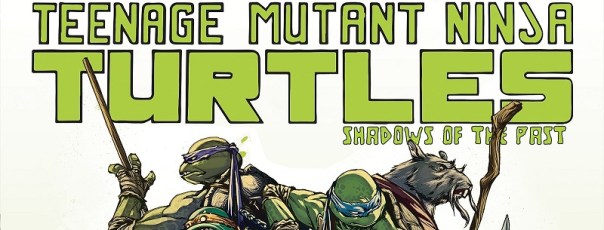
Dan is the only human being of his generation to never watch a single episode, read a single comic, or do a single anything else Teenage Mutant Ninja Turtles related. Not even one thing. Let that sink in. Not one. Which is why we’ve brought in our resident TMNT expert — yes, we have one of those, our staff is huge — to go head to head with Dan. Give a warm welcome to Brock Poulsen as he debates the merits of Teenage Mutant Ninja Turtles: Shadows of the Past.
Aeon’s Beginning

If I were forced to list three things that I have a history of disliking about board games, I would arbitrarily choose the following: Firstly, “pure” deck-building games, because the era of the hybrid is upon us. Secondly, cooperative games. And thirdly, fixed market pools in deck-building games, as opposed to the “river”-style markets of games like Ascension. Give me some variety! Some uncertainty! Some drama!
Aeon’s End, designed by Kevin Riley and published by Action Phase and Indie Boards & Cards, is a cooperative deck-building game with a fixed market pool. If I were a keeping-track man, that would make three strikes, and if I understand baseball correctly that means it’s time to pick up another chili dog and head to the car before the second inning starts. Fortunately, I’ve never counted past two in my life, because Aeon’s End has quickly become my latest obsession.
Ants in the Pants

Sometimes, usually while showering, I think about how the eusociality of the insect order Hymenoptera — ants, wasps, bees, and so forth — is very possibly the pinnacle of feminism.
But enough about that. Let’s talk about March of the Ants. Who doesn’t love ants?
Tiny Aegean

For a few years now, Omen: A Reign of War from Small Box Games has been one of my favorite card games. With all the subtlety of a Spartan dory to the gut, its primary strength rested in its outright meanness, allowing a skilled player to leverage his cards into terrifying combos that won battles and robbed an opponent of options.
Thus, the announcement of Omen: Edge of the Aegean, no mere expansion but a follow-up, a sort of parallel development of the Omen system, got me nearly as misty-eyed as Odysseus. And for anyone who doesn’t quite understand that reference, the hero of the Iliad and the Odyssey is a huge crybaby. Like, huge. The guy can’t stop himself. When he hears a bard sing a jingle about his tricksy victory over Troy, he weeps. When Calypso, hottest nymph in the isles, decides to invite him over for a feisty sex-party, it’s waterworks time.
I, on the other hand, was merely on the verge of weeping, for I am a manly man compared to whiny Odysseus.
Scrolls Have Never Looked More Obsolete
Whether it was the first-century legend of Si-Osire saving Egypt from an Ethiopian magician or Ajani Goldmane whomping on Jace Beleren (confession: I had to look up those last two names), wizards with twenty hit points have been throwing down since hit points were wearing cloth diapers. And so it shall be again and forever, all this has happened before and will happen again, the wheel has turned once more, et cetera.
In some ways, Codex is no different. Sure, victory means razing the enemy base rather than pummeling a wizard, but one only has to spend about five minutes in its presence before realizing that this is yet another take on those irascible Dueling Wizards. That’s five minutes if you’re a bit slow. Everyone else will note the similarities in under forty seconds.
And yet, Codex is one of the most wonderfully slick games I’ve played all year. Nothing about it is strictly new, but every last brass button has been polished to perfection. And in this case, it’s all about tempo. Tempo, tempo, tempo. Say it until it means nothing. Only then will it mean anything again. Tempo.
Wet Ocean, Dry Erase
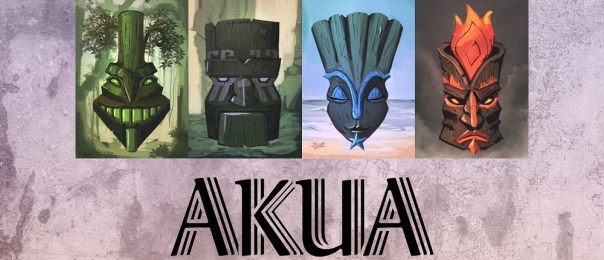
What happens when Small Box Games ditches the small boxes entirely? Probably something like Akua, John Clowdus’s first foray into the silicone polymer-reeking world of dry erase games. It comes on only two sheets, one for the board and another to explain the game, and even trusts that you’ll have a few different colors of dry erase markers sitting in a drawer somewhere.
And yet, for all its sparsity of components, Akua is anything but straightforward.
Two Minds about Warfighter

Every so often — very rarely — Dan is wrong about a game. I know, it came as a surprise to him too. Which is why today we’re featuring a conversation between Dan and guest contributor Brock Poulsen. The topic: Warfighter by Dan Verssen Games. One for, one against. There can only be one with the correct opinion. Two men enter, one man is wrong.
You get the idea.
Exceedingly Excellent

BattleCON is one of my favorite game systems. Ever. If I were to compile a Top Ten list — which I haven’t and probably won’t, so don’t ask — then Devastation of Indines would almost undoubtedly be right near the top. It’s incredible.
Perhaps for that reason, Exceed almost goes out of its way to look like a pretender to the throne. Or is that an usurper of the throne? Either way, D. Brad Talton Jr.’s other fighting-game simulator seems intended to sit quietly alongside its predecessor despite looking so similar that the cards might have been swapped at birth. Exceed bills itself as a lighter alternative to the cerebral brain-crunching and jaw-busting fun of BattleCON, right down to the fact that it ships in smaller, more affordable boxes. Whether it’s better, on the other hand, is the tougher call. So tough that I’ve had my hands on a review copy for about nine months and haven’t yet come out and said it.
Well, I’m saying it now: Exceed is better than BattleCON. And yet it isn’t something I feel I can wholeheartedly recommend. How’s that for a quandary?
The Ariadne Punctuation

If you were to tell me that you’d designed a cooperative stealth game about breaking out of some impenetrable locale, saturated with guards who moved according to programmed logic that I had to evaluate and preempt, and that much of the gameplay revolved around gradually uncovering the layout of the map and assembling codes to break through certain critical areas, my first reaction would be to ask why I’m not just playing more Burgle Bros. Because Burgle Bros. is a lot of fun and — bonus! — it already exists.
The Daedalus Sentence now also exists. And in some ways, that’s all I want to say about it.
Strawberry Pluckin’

Everybody knows the Great Wall was built to prevent the barbarian hordes from plundering the imperial garden’s strawberries, and thank goodness Imperial Harvest isn’t too caught up in politically-motivated historical propaganda to deny the obvious. One side wants royal strawberries, the other side wants royal strawberries; there ain’t enough royal strawberries for the both of ’em.
Cue one of the weirdest gaming experiences I’ve had this year. And I’ve played Zimby Mojo.

 SPACE-BIFF!