Blog Archives
More Than 878 Vikings

There’s something insecure about the title of 878: Vikings — Invasions of England, as though the creators weren’t sure they’d sufficiently clarified their intent. It’s set in the year 878, check. Also there are Vikings, sure. And they’re invading England, right. The only missing elements are motive, opportunity, and outcome.
Clunky title aside, 878: Vikings is a successor to Academy Games’ Birth of America series, which featured the rather-good 1775: Rebellion. And for the most part, it’s as fun as being on the pitching side of a monastery raid.
The Eleventh Cardboard
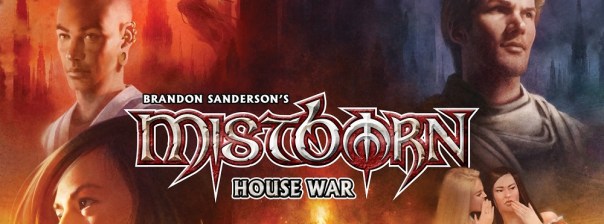
Mistborn: House War is a bit of an odd duck. Based on Brandon Sanderson’s much-loved series, it sees you taking command of Vin, Kelsier, and the rest of those scrappy rebels as they seek to topple the rapacious Final Empire.
Except, oops, it isn’t about that at all. Instead, House War’s protagonists are the first book’s sub-baddies, the Great Houses who squabble, gossip, and often lend that “rapacious” an uncomfortable edge. And they’d very much like to kill off the heroes of the books.
Hotline Jacksonville
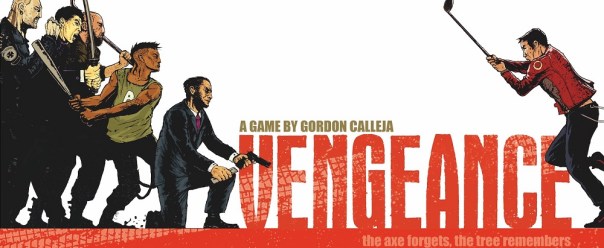
Every so often, along comes a game sporting a sense of style and rocking a ‘tude, making itself known with a crash and a holler. Much like a toddler who’s climbed onto the counter and tossed a dish onto the floor.
Vengeance forces you to sit up and take note, is what I’m saying. Emulating the likes of Payback, Kill Bill, and the snazzy digital Hotline Miami, it’s the sort of game that sends you bum-rushing into a room packed full of no-gooders, swinging and shooting until they’re dead and you’re barely limping, then hitting repeat until some nebulous concept of revenge has been fulfilled.
It also happens to resemble one of those corpses your protagonist will undoubtedly leave sprawled behind them. But we’ll get to that.
An Offer You Can Refuse
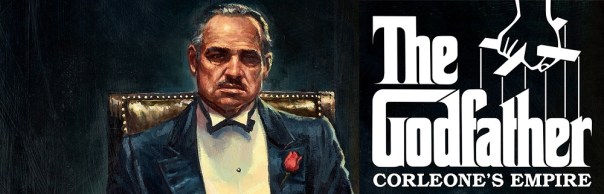
It’s unquestionably difficult to consider Eric Lang’s latest, The Godfather: Corleone’s Empire, without referring back to its source material. Nearly impossible, in fact. Here’s a game, lavishly produced, provided access to one of the most widely-discussed artifacts of culture, a film that boasts nearly one hundred percent cultural penetration. It’s a serviceable game, riffing on the worker placement and area control that have become standards of the hobby. Yet when it comes to its source material, it’s almost afraid to engage. It skirts the edges, providing Don Corleone and severed horse-head miniatures and naming rounds after the “acts” of The Godfather. Here’s Connie’s wedding. Now poor Sonny has been gunned down at that iconic tollbooth. Watch out, Michael is out for revenge. What do these have to do with the pawns placed across New York, the bad booze and dirty dollars exchanged to complete jobs, or the Altoids-tin suitcases of banked cash?
Not a thing.
Alone Beneath the Sea

It’s rare enough that a game gets a second chance, let alone when it’s a niche solo title. Based on Jules Verne’s Twenty Thousand Leagues Under the Sea, Nemo’s War held a formidable reputation for its brutal difficulty, constant barrage of dice rolls, and tangible sense of setting. It’s Nemo and his Nautilus against an entire world of colonial powers. And, tipping my hand right now, its polished second edition is easily one of the slickest solo games ever crafted.
The Anti-Catan
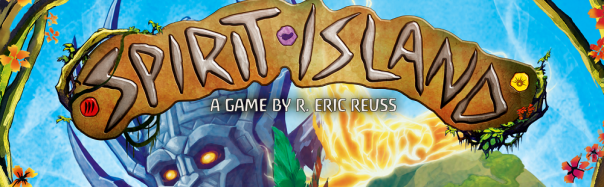
At first blush, Spirit Island looks achingly familiar. A tropical island lush with multiple colorful regions, ranging across jungles and mountains and wetlands and deserts. Why, that’s nearly as many as in The Settlers of Catan! What’s more, here are some lily-white explorers, a few towns, even the occasional city. Every so often a crude grass hut interrupts the landscape. The only things missing are some roads and sheep cards. Throw in an economic engine and some bleating about chivalry and, baby, you’ve got a Euro going.
That’s where Spirit Island turns a hard left. Turns out you aren’t the settlers at all. Rather, you’re the indigenous spirits trying to shake off their white-man burden before you can say “smallpox.” Whether that means scaring them silly or burning all those cities to the ground, whatever gets the job done.
But that’s the window dressing. Spirit Island is more than some mildly socially-aware theming. It’s also el banana grande.
Fully Epic, Too Tiny
Wow. Can we just take a moment to marvel at the fact that Tiny Epic Quest is the fifth entry in this series of small-yet-usually-pretty-good games? From warring kingdoms to defending kingdoms, from outer space to the Wild West. All in a little more than three years. Scott Almes is nothing if not prolific.
Behold.
Anyway, this is probably the best the Tiny Epic series has ever been. Though that might be because it’s just so dang photogenic.
Lazer Pooperz

Now that Stranger Things and Ready Player One are all the rage, it seems the ’80s are finally having their heyday. Take Lazer Ryderz, for example. Here’s a game that’s basically the light cycles from Tron.
That’s it. Were you expecting me to say more about it?
Words With Frenemies

I was born and bred for word games. Which has led me to regard them fondly, but also sometimes with a simmering resentment you could whip up a stir fry in. What if I don’t want to spell QANATS for the thousandth time?
But Jeff Beck’s Word Domination is a clever one. And it largely has to do with the fact that it doesn’t focus too much on prioritizing the tougher letters.
Wheels Within Wheels Within Wheels

After the iterative cleverness of Cry Havoc, which entrusted its players with the command of four highly distinctive factions, I’d gladly play almost anything designed by Grant Rodiek. Hence the initial allure of Solstice. Unlike Cry Havoc, however, Solstice would be a small production. No significant asymmetry, no mini sculpts, no fist-pumping Trogs. Just a fast-playing, hard-hitting, no-prisoners card game.
And hoo boy, is it devious.

 SPACE-BIFF!