Blog Archives
Errand Plan

There’s no mistaking what Escape Plan wants you thinking about when you crack open its box. It quotes its influences right there in the rulebook. Heist, Ocean’s Eleven, The Italian Job, Reservoir Dogs, the old Italian Job, the even older Ocean’s 11. This is a heist gone wrong, it tells you. This is a nobody can trust nobody else type of situation. The police are on your tail and they have an order to shoot on sight.
Then, without irony, it hands you a list of errands. “Swing by the Stop-N-Go for baby Tylenol. Make sure you grab a card and some colorful balloons for Fat Moe’s birthday. Then return this book on money laundering to the library for me. But be at the party by five or it’s lights out for you. Oh, and make sure you don’t turn left too often; the car’s tie rod is out of alignment.”
Welcome to Vital Lacerda’s Escape Plan.
What the Hellas?

I still remember the birthday in high school when my dad gave me a translation of Thucydides’ History of the Peloponnesian War. Don’t let that fool you into thinking I’m a purist. Adding mecha-gorgons and cyber-hoplites to the mix? That sound you just heard was me at fourteen years old, my squeal of delight echoing through time itself.
So why does Lords of Hellas leave me cold?
Box of Little Ninjas
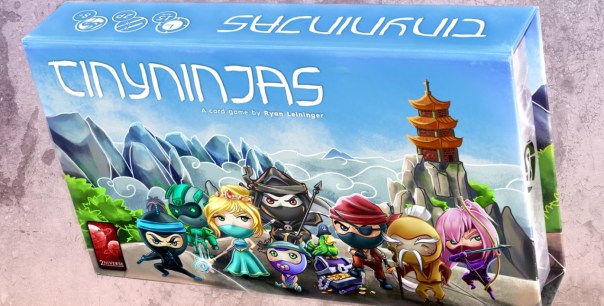
Look, I know how it sounds when I say “the box is the best thing” about a game. I know. It sounds dismissive. Like I’m saying the game should be jettisoned into space, where it would finally be put to good use as a hostel for tardigrades. Like I’m saying you should buy the game, toss the components and burn the rules, and then display the hollowed-out box on the mantelpiece as a warning to all who enter that they should not buy this game unless they’re connoisseurs of fantastic boxes.
That’s how it sounds. Too bad. The best thing about Tiny Ninjas is its box.
More Like Rental Magician

Sorcerer has a great hook. Never mind that it’s also Smash Up’s hook. You take three decks — your identity, magical lineage, and domain — and shuffle them together to form one big wad of acolytes, demons, and spells. One moment you’ll be playing as a necromantic count from deep in a haunted forest. Half an hour later you’ll be mister flameface the shapeshifter of the lunatic asylum. In theory, no two decks will feel quite the same.
Too bad they nearly always blend together like a bowl of soggy oatmeal.
The Ancienter World

It’s been a long time since I played the first edition of Ryan Laukat’s The Ancient World. Long enough that the second edition was totally new, like something I’d played in a dream, a game against the gods dissipated into fog upon awakening.
Or maybe it’s just that this second edition is such a vast improvement over the original that it feels entirely new, despite importing wholesale the bones and framework of its former self.
The Greatest Graveyard of Empires
Pax Pamir is one of those historical games that doesn’t demand you perfectly understand its context before you play. The broad strokes will do. Here’s Afghanistan, its dynasty peeling at the edges. There’s Britain, looking to unite local warlords into a buffer state against its rivals. Speaking of which, here comes Russia: expanding rapidly, voraciously hungry, hoping to consolidate their frontier. Three sides, three agendas, one tract of land standing at their intersection.
The twist is that none of those competing agendas are your own. Instead, you’re a tribal chieftain, the local hotshot these empires must rely upon to achieve their aims. Scouting, navigation of local customs and courtly procedure, information and advice — the lay of the land, both literally and figuratively. But you have aspirations of your own. Perhaps even aspirations that might be realized by aiding the right empire at the right moment.
The Great Game, in other words, except played by its middlemen rather than its kings and queens. And although I’ve written about Pax Pamir three times before, Cole Wehrle’s official second edition is different enough that it warrants an entirely new treatment.
I Whip My Hara Back and Forth
Ask me what my favorite thing is about Champions of Hara, and you aren’t going to like the answer. It’s far too twee. Too sickly sweet. Too basic.
Why don’t I tell you my second and third favorite things instead?
False Messiah
In one sense, True Messiah is the poster boy for why Kickstarter exists. It was funded independently of any major publisher, it’s a little oddball, it stands well beyond the usual circles, and happens to be designed by a newcomer with some digital game design experience but no name in tabletop. A passion project, in other words, and one that likely wouldn’t have been birthed without crowdfunding. This is the very reason Kickstarter was lauded as a platform in the first place.
In another sense, however, it’s also a poster boy for why crowdfunded passion projects that stand well beyond the usual circles aren’t always everything they’re cracked up to be.
I Drive

Getaway Driver would benefit from a soundtrack of frenetic jazz. Asymmetry is all the rage this year, but few games embrace it quite as wholeheartedly as Jeff Beck’s game of cat and mouse and cat and cat and cat — which seems dire until you realize that this particular mouse is riding five hundred horsepower and knows this city by heart. In other words, it’s free-form, kinetic, and apart from a few minor stutters, a real treat of asymmetric design.
An Unmitigated Disastle
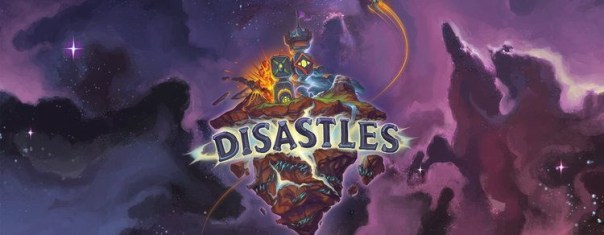
Some folks arrange castle chambers for fun, others arrange castle chambers because they’re about to be smashed to bits by random catastrophes. The people of Disastles — disaster castles, don’t you know — fall into the latter category.
What a peculiar game. Let’s talk about why.

 SPACE-BIFF!