Blog Archives
Horatio Hotwindblower

There was a time when news of another entry in the Pax Series was cause for celebration. Ah, to once again be a callow youth! Nowadays I identify as a callow adult. Pax Hispanica is the eighth installment — or is it the tenth? — and as a solo Phil Eklund outing, it has that “opinionated uncle at Thanksgiving” energy going for it.
But this time, Pax Hispanica sprinkles something extra atop its what-if history, double-take footnotes, and overstuffed glossary. In a first for the series, this one is also a big old bore.
We’re the Messypotamians

I’m not sure I’ve ever played a game with so many tremendous ideas and so many disastrous executions as Sammu-ramat. Designed by Besime Uyanik and published through Ion Game Design, which Uyanik runs as CEO, it tells the tale of the titular Neo-Assyrian queen, Sammu-ramat, who succeeded her husband and seems to have co-ruled during the reign of her son, Adad-nirari III.
I say “seems” because the sources are thin on the ground — a few stelae here, some woman-queen legends there, all par for the course for an empire nearly three thousand years removed from our present circumstances — but historians largely agree that Sammu-ramat held an unusual position of prominence. This is a world I would love to see explored in detail, packed as it is with court intrigues, military campaigns, and early empire-making, not to mention the prospect of a queen bending that empire to her will. Unfortunately, this board game rendition of Sammu-ramat’s life leaves its most pressing questions unanswered.
Space-Cast! #44. Enlightened

The Illuminati! Aside from being a cabal of lizard-people who rule the world through the United Nations, they are now also the topic of a board game, Pax Illuminaten. On today’s Space-Cast!, we’re joined by designer Oliver Kiley to discuss three very different histories of this secret society.
Listen here or download here. Timestamps can be found after the jump.
Majestic Fifty-Seven

The Pax Series has long been free of Phil Eklund’s original authorship, but Pax Illuminaten, designed by Oliver Kiley, feels like the final broken link in a long chain — or perhaps the final thumb in the old man’s nose. This is simultaneously the most Pax of all Paxes, directly engaging with the Enlightenment thinkers Eklund has always been (selectively) enamored with, and the least Pax, directly descended from P.D. Magnus’s Decktet and eschewing the customary market manipulations for a session of musical chairs in the Bavarian court. It is uneven, sometimes baffling, and, contrary to all expectations, wholly engaged with what made the series so venerable in the first place.
One Minute to Stationfall

I don’t remember how it came up. Andy Mesa, the principal developer on Matt Eklund’s Stationfall, mentioned that this was the logical endpoint of all those fancy patented techs in Pax Transhumanity. I can see it. All these advances, yet we still cut corners on the station’s construction codes. This is a place where heavily armed security bots brush elbows with sentient chimps and telepathic rats, where botanists and schizophrenic doctors chase patents of their own via research most unethical, where a billionaire has taken up residence across the corridor from the maintenance clones. And it’s falling out of the sky.
That billionaire, by the way, is the source of Stationfall’s least-subtle but best joke. But to understand it, you first need to onboard some basics. And what better way to do that than by hearing the tale of the time my best buddy was kidnapped?
I’m an Asclepiad, Jim, Not an Ocularius

Medical history is one of my favorite topics. As an undergrad I was fortunate to work with a second edition of Andreas Vesalius’s De Humani Corporis Fabrica Libri Septem, that revolutionary tome that contested and updated Galen’s anatomical observations from over a millennium earlier.
This shouldn’t be taken as a criticism of Galen. Unlike his far-removed successor, the Roman prohibition on human dissection forced guesswork on his part. If anything, the anatomists led remarkably parallel careers. Both challenged received wisdom, ran afoul of their period’s traditions, and eventually escaped into self-imposed exile. Where Vesalius drew fire by concluding that men didn’t have fewer ribs than women, a detail that clashed with the Catholic Church’s belief that Adam’s rib had formed Eve, Galen threaded an awkward middle ground between the dominant dogmatist and empiric schools of medicine, drawing ire and threats of poisoning when he spurned their guiding philosophies.
Galenus, designed by Harry-Pekka Kuusela, steps into the testy waters of Galen’s poison-laced Rome. It’s a fascinating setting. If only it provided more of a deep dive than a shallow wade.
Bios:Bugs

My daughter wants to be an entomologist. Normally we’d chalk it up to passing whimsy — she’s only eight, after all — but that’s been her consistent answer to “What do you want to be when you grow up?” for something like four years now. She loves the things. Potato bugs, caterpillars, earthworms, she’ll dig ’em out of the ground and care for them, but only for a while before insisting they need to be returned home lest they perish in a mason jar.
Bios: Mesofauna, designed by Phil Eklund (yes, that one), acts as a sister title to Bios: Megafauna, this time focusing on bugs rather than ten-meter sloths. It treats its insect playthings with significantly less gentleness than my kid.
I Can’t Help Stationfalling in Love With You
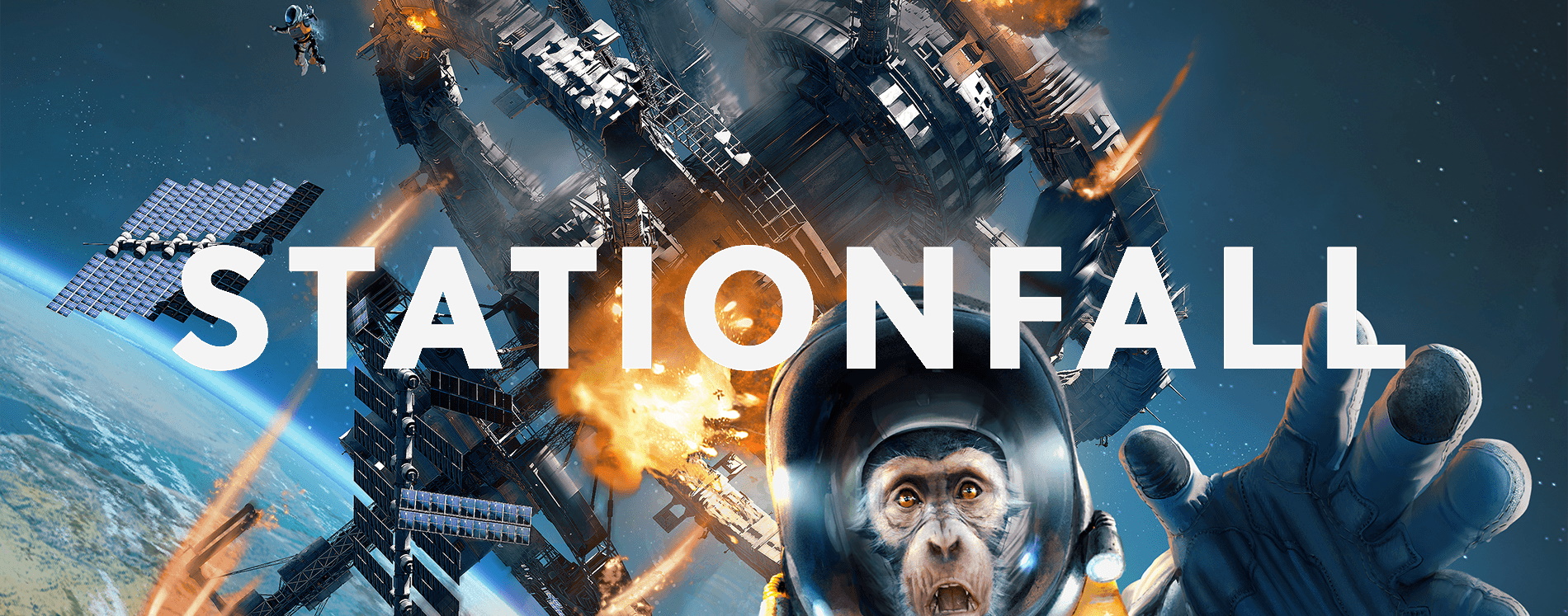
I have a pet theory that board games are great at enabling humorous moments but terrible at comedy. Humorous moments are singular: a joke, a misstep, a callback. Comedy is sustained. That makes it harder because even a single flub can ruin the whole thing. Ever played a party game that was funny for a few minutes but quickly grew dull? Or something like Munchkin, with the occasional cutesy card but agonizing gameplay? It’s one thing to provide prompts and let players riff. Another entirely to keep the humor coming. There’s a reason funny games are usually short. They exist to enable humorous moments, not real comedy.
Hence my personal metric: It isn’t enough to be funny. A great comedy board game has to be funny even when you’re losing. By that metric, Matt Eklund’s Stationfall is the latest addition to my personal pantheon of games that never fail to make me laugh.
Blood Rage

For a group that usually conjures images of blood-rimmed axes, freshly extracted skulls, and ransacked monasteries, Jon Manker’s Pax Viking certainly knows how to make its Vikings seem almost tolerable to spend an afternoon with.
Previewpalooza: Bullet, Intrepid, Pax Viking

Woe is me. I have let too many previews pile up, and now the reaper is coming to collect his due. What follows are three games that I’ve played only in limited fashion — digitally, in prototype, with unfinished components or rules — but certainly enough to get excited about. In other words, it’s fun to be enthusiastic, but be warned that the final game might be totally different from what I actually played.
Cool? Cool. Here we go.

 SPACE-BIFF!