Blog Archives
Oaf

Oath is Cole Wehrle’s most off-putting game yet. I mean that affectionately. I also don’t anticipate everybody will feel the same way. Riding high on the goodwill generated by Root and Pax Pamir — and dressed up in Kyle Ferrin’s affable illustrative style — this sure is a beaut for something Wehrle called a “hate letter” to the civilization genre. Would it be rude to accuse such an attractive package of false advertising? Because Oath is so determined to make its audience reconsider their assumptions that it sometimes feels like it’s asking too much.
Sometimes. The rest of the time, I’m glad it asks so much.
Evacuate, Wipe, Flush

I’ve been holding this in for too long and now I need to let it out in a rush.
Wakey Wakey, Gods and Bakey

Narrative board games — now there’s a phrase that’ll get me yammering. There’s no quicker way to make my eyelids droop than by forcing me to read a middling Young Adult novel in between rounds of combat. There are exceptions. Ryan Laukat’s Near and Far and Above and Below were both charming enough to stick around for a few plays, even if their marriage of choose-your-own-adventure snippets and Eurogame sensibilities wasn’t entirely harmonious. I enjoyed them in bursts before largely forgetting they existed.
But then there’s Laukat’s latest offering, Sleeping Gods. In sharp contrast with both of his earlier narrative games, this is a landmark title. Not only is this his strongest work by far, and not only is it an entirely smooth merger of narrative and cardboard, but it’s possibly the first time I’ve been persuaded that a narrative game can accomplish something remarkable.
Shazan!

It’s been a while since we took a look at Zain Memon’s Shasn, a political game with both comedic and nasty streaks. At the time I called it “one of the most unhinged, perceptive, outlandish, and timely games you might never play.” One crowdfunding campaign, some development, and two whole years later, Shasn is finally here. Let’s see how it holds up in 2021.
Umbra Via Ignitis
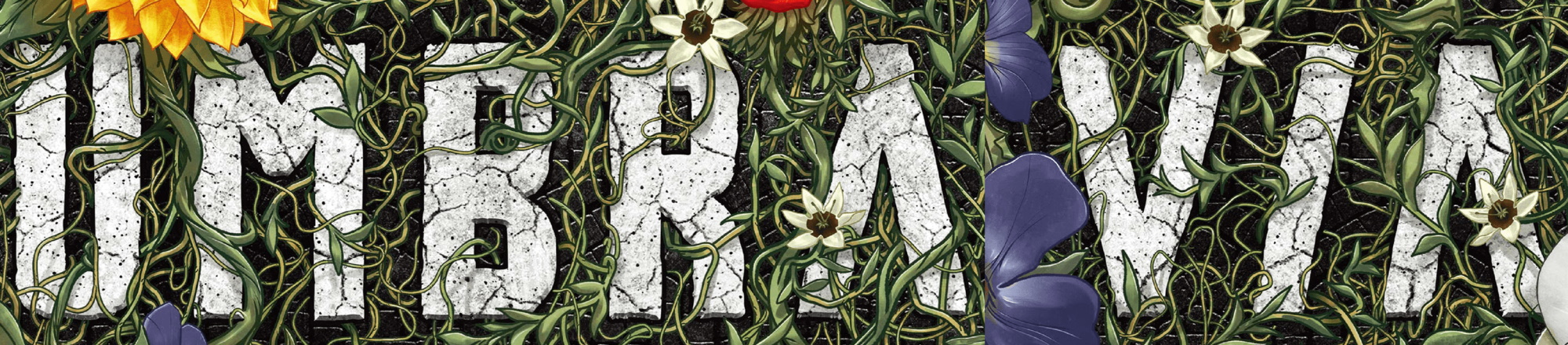
Connor Wake’s Umbra Via is a study in contradictions. It’s a game of steps, bids, tiebreakers, and infuriating balance. Whether that’s a good thing is also a contradiction.
I Can’t Help Stationfalling in Love With You
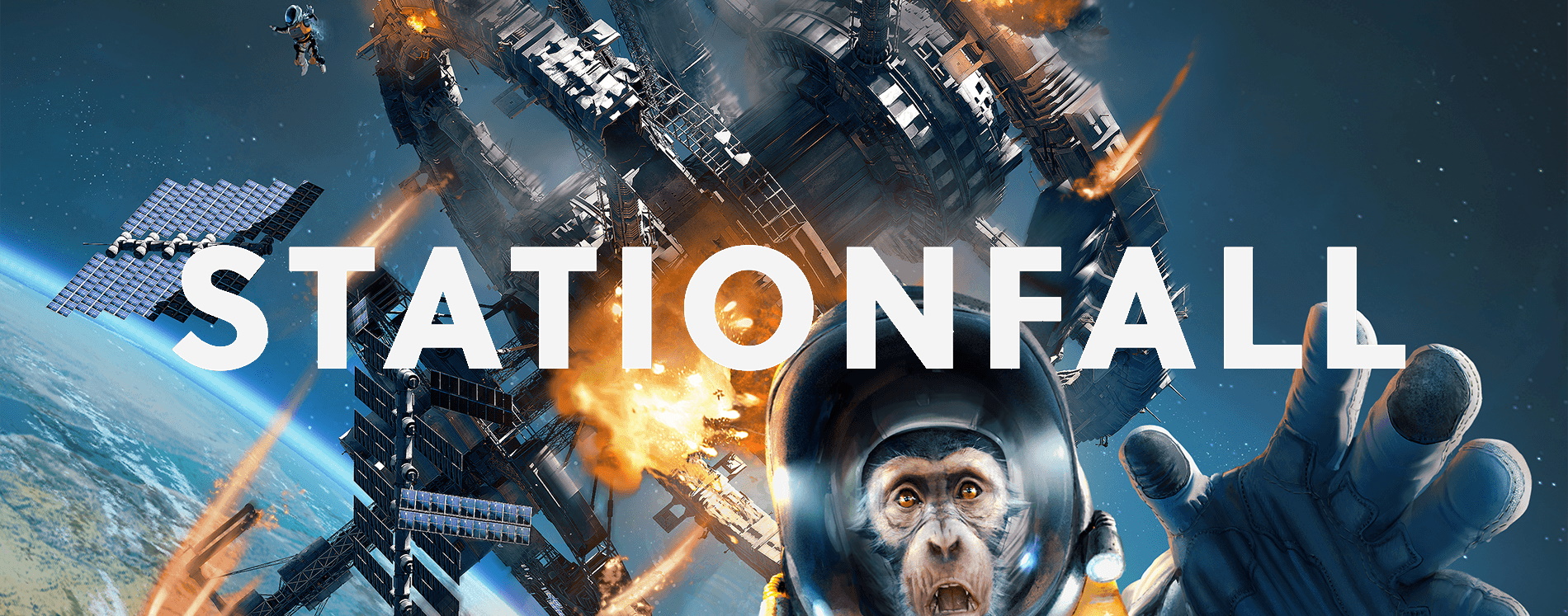
I have a pet theory that board games are great at enabling humorous moments but terrible at comedy. Humorous moments are singular: a joke, a misstep, a callback. Comedy is sustained. That makes it harder because even a single flub can ruin the whole thing. Ever played a party game that was funny for a few minutes but quickly grew dull? Or something like Munchkin, with the occasional cutesy card but agonizing gameplay? It’s one thing to provide prompts and let players riff. Another entirely to keep the humor coming. There’s a reason funny games are usually short. They exist to enable humorous moments, not real comedy.
Hence my personal metric: It isn’t enough to be funny. A great comedy board game has to be funny even when you’re losing. By that metric, Matt Eklund’s Stationfall is the latest addition to my personal pantheon of games that never fail to make me laugh.
No Dadbod Without Me

Dan Bullock’s No Motherland Without is unflinching. Casting its players as either the Kim dynasty of the inaptly-named Democratic People’s Republic of Korea or the amalgamous West, it directs your gaze into the cankered soul of evil and refuses to look away.
It’s also the reddest game ever. No, really. This thing is so red it scorches the eyes.
You’re Cold as Ice

Tom Jolly and Luke Laurie’s Cryo opens with a bang. En route to a habitable world, its colony ship is struck off course, possibly by sabotage, and finds itself scattered across the surface of a snowball planet. Divided into distrustful factions, the crew scrambles to hoard supplies and thaw out their companions before they’re lost to the flames. Nightfall swiftly approaches, driving the survivors underground.
If Cryo were your typical systems-heavy nu-Euro, its opening riff would serve as a prelude to resource swapping, puzzle-box optimization, and careful accounting. A veneer meant to decorate some math. To be sure, there are resources to swap, puzzles to optimize, and accounts to settle. But far from being your typical nu-Euro, Cryo approaches its setting with laser focus. Rather than coming across as ponderous or disconnected from its setup, Cryo’s story begins with a thunderclap and keeps drumming until it reaches its fateful conclusion.
Space-Cast! #12. Slavery and Emancipation

This month on the Space-Cast!, we’re investigating a difficult topic — the representation of slavery in board games. To help navigate these waters, we’re joined by Patrick Rael, Professor of History at Bowdoin College, to discuss how board games have depicted slavery in the past, what they’re doing right now, and how we can use them to learn about sensitive historical issues.
Listen over here or download here. Timestamps and further notes can be found after the jump.
Eighty-Caliber Smooches

More and more, I hear acquaintances saying things like, “Oh, I might have played that game back when I had reflexes.”
As someone whose video game reflexes existed for all of two months during the halcyon days of Unreal Tournament 2004, I’m happier with cardboard. Joshua Van Laningham’s Bullet♥︎ is an adaptation of the shoot-’em-up genre. Frankly, I like it better than any shmup I’ve fumbled through.

 SPACE-BIFF!