Blog Archives
The Problem with Oneiromancy

This is the sort of thing nobody ever believes, but I’ve got to tell someone: my weekly gaming group is haunted. The spirit’s name is Ghost Geoff, and through the creaking front door he arrives, always well in advance of Real Geoff.
As of yet we have no idea why this apparition visits our home. Was he murdered in our living room, a secret shamefully concealed by the previous owners? Was the foundation laid above an ancient burial ground? Is he just sort of pissed that Real Geoff is always like an hour and a half late?
At night, he fills my sleeping head with unclear visions, images of places far-off and impossible. I’ve attempted oneiromancy, the divination of dreams, but the visions he sends… well, they’re idiotic, is what they are. If Ghost Geoff wants me to figure out what he needs, he’s going to have to be a lot clearer.
My Number One Card Game: Uno
I know I sometimes come across as a bit of a tough guy, always talking trash about certain board and card games, but really I’m very warm and approachable. In fact, I’ve had enough of the lies. It’s time to come clean.
I love Uno. Love it like a spoonful of butter dusted with brown sugar. Below the jump, I’ll give three reasons why I think it’s one of the best card games ever designed.
The Existential Horror of Dixit

There’s something both magical and terrifying about Dixit. And I mean that in a far more literal sense than usual.
Communication is tough, as anyone who’s been in a regular human relationship can attest. Our attempts often fall short. Too much, too little, too vague — even too precise. With effort, you can get better at it. Refine it. Figure out when to use it and what type and how much, maybe even realize that sometimes you shouldn’t use it at all. But even then, you can’t ever quite get there. To the point that everyone will know exactly what you’re talking about, I mean. Sure, they’ll hear the words that are coming out of your mouth, assembled from a limited set of vowels and consonants, but how often will they understand, really understand, what you’re trying to say? Sometimes, maybe. But not as often as we’d like to think.
Well. That’s what Dixit is about.
Alliances Mega #2: Stinking Swamps
As the next phase in the Summoner Wars continues, with alliances being struck between the sixteen previously-disparate factions, what do you get when the undead Fallen Phoenix invade the lands of the Swamp Mercenaries?
Whatever else it may be, it’s going to be stinky.
App-Chemists

Alchemists, also known as The Other Board Game With A Smartphone App, is all about chemistry. Y’know, sort of. Strictly speaking, it’s about alchemy, and I’m sure any self-respecting chemist could speak some stern words about how they’re different, even if those words amounted to so much whiffle and puff to the rest of us.
However, Alchemists is about chemistry in the sense that you take some ingredients, set up an experiment to combine them, get your results, and then still not have much of an idea what’s going on. At least not yet. It’s a game where you’ll complete a long-awaited mixture — say, mandrake root and red scorpions combine to make paralysis potions — then quietly jot down a note and chew on the back of your pencil for a bit, wondering how the hell you’re going to publish a paper about that underwhelming factoid, let alone make a fortune or get famous from it.
Welcome to academia.
Argent: Big & Tall
Argent: The Consortium was my favorite game of 2014 — which, sure, was a bit of a cheat, considering it didn’t release until early 2015. But such is the perk of being a gentleman thief who only targets overseas board game warehouses.
The base game was packed with variety. There were tons of treasures, spells, and supporters, certainly more than you could see in a single game. Every single room and even the workers who carried out your bidding came with an alternate B-side. Between the myriad possible university combinations, powers, spells, and victory conditions, it was possible that every game would be different in some way.
To that end, if you had asked me if Argent needed an expansion, I would have laughed in your face, spittle soiling your eyebrows. Now, I can’t imagine playing without Argent’s first full expansion, Mancers of the University. So what’s the deal?
Alliances Mega #1: Hogar’s Run
Deals have been struck. Some benevolent, some… well. It was always inevitable that once the Summoner Wars began in earnest, the sixteen factions who found themselves in possession of summoning stones would seek alliances, no matter how desperate or ill-motivated. And when it’s between the Tundra Guild and the Cave Filth, that’s one fight you sit back and let run its course.

Groanland
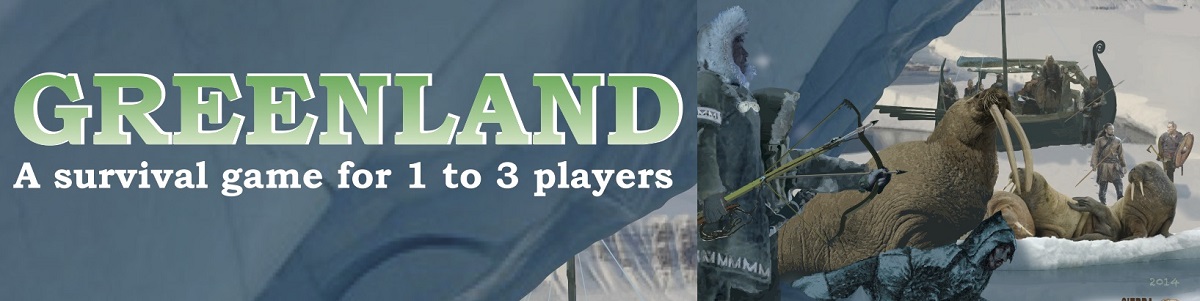
Like so many of Phil Eklund’s games, including the hit Pax Porfiriana, the cards transform after a couple games. At first, they’re cluttered with text and competing symbols, so many that they’re nearly impossible to parse. After sending your tribe to hunt polar bears, you’ll reach out to pick up your failed rolls for another try, only for another player to bark at you, “What are you doing? You can’t reroll those.”
“Yes I can!” you’ll insist. “It says so right here.”
“That’s a Sage,” they’ll point out. They might even reach across the table and tap your tribe elder card. “Your Sage lets you reroll fours, yeah, but only for metallurgy rolls. See? See the difference? You’d need a Tracker to reroll fours while hunting on land.”
After a while you’ll spot them, the tiny symbols that represent metallurgy and land hunting. You’ll nod slowly, staring at the cards spread across the table. Then your opponent will clear his throat. “Oh, and hey, threes mean the polar bears ate your guys. So you just lost two hunters.”
Do Deus
When it comes to board games, one of the few things I enjoy more than arranging tableaus is arranging tableaus that matter.
What on Earth do I mean by that, you ask? Basically, that you should play Deus.

 SPACE-BIFF!