Best Week 2017: The Elegant!

Fun fact: Nine out of ten oceangoing pirates read Space-Biff! Best Week! It’s true.
Perhaps it’s because pirates appreciate simple games that yield hidden depth. If so, today is the day for them, because we’re looking at the eight best elegant games of the year. These are the ones that are simple to learn yet hard to master, or simply ingenious, or just downright simple.
Best Week 2017: The Refined!
If there were a list of all the best Best Of 2017 lists, the Space-Biff! Best Week! would easily be number one. Just saying.
Today we’re celebrating the most refined games of the year. No, not the most hoity-toity games, but the most improved. Whether accomplished by an expansion, a new edition, or a new game entirely, these are the games that stood atop a predecessor’s shoulders and looked good doing it.
The Blind Waging War on the Blind
Between Space Cadets: Dice Duel, The Dragon & Flagon, and this year’s The Expanse — which even made the book series’ stupid James Holden a little more appealing — you’d think I would have learned to trust Geoff Engelstein. And yet The Fog of War sat on my shelf for months before I finally got around to figuring out how to play the dang thing.
Part of this is the game’s fault. To put matters bluntly, its rulebook is about as coherent as roadkill outside Las Vegas in late July. Worse, in between learning a handful of legitimately complex games this year, I bounced off The Fog of War’s puzzling array of new concepts, out-of-place rulings, and ponderous layout on more than one occasion.
Okay, enough harping about the manual, because here’s the thing. Now that I’ve learned The Fog of War, I’m smitten. This one of the smartest, most devious, and absolutely gut-wrenching game systems I’ve ever had the pleasure to interact with.
Catacomb Keeper

To this day, Catacombs remains my preferred way to flick wooden discs around a piece of cardboard. Where most dexterity games are blink-and-you’ll-miss-them affairs, Catacombs was smart enough to take its time, chewing its band of heroes down to the gristle over hours rather than minutes.
As you might expect, this was also the great weakness of Catacombs. For a flicking game, it tended to ramble. By the time it reached its final showdown, it had begun to resemble one of those twenty-part fantasy novel epics that are probably the linchpin strategy of a shadowy organization’s plot to discourage literacy.
Enter Catacombs & Castles. This time around, designer Aron West’s goal was to harness the mighty long-winded power of Catacombs, while compressing the experience into a single battle rather than an entire campaign.
Radbound

My first memory of Fallout was the guy cashiering the tech section of my local supermarket refusing to let me purchase Fallout 2 on the grounds that it was “for adults.” My moral fortitude lasted all of two weeks before I nabbed a copied disc from a buddy. The rest of my affection for the series — right down to my snobbish adherence to the Fallout 1, 2, and New Vegas canon — is history.

The Dawning of a Brand New (Short) Day

Some games need room to breathe. There, I’ve said it, and you can probably infer many of my feelings on Civilization: A New Dawn from that one statement alone. Not every game requires streamlining, especially when that game’s goal — or at least that game’s genre’s traditional goal — is to capture the sweep of something epic. Cutting Twilight Imperium from eight hours to five is one thing; pruning it down to sixty minutes would kill everything that makes it special.
Broadly speaking, the same goes for Civilization games. As one of the principal granddads of the 4X genre (explore, expand, exploit, exterminate), Sid Meier’s Civilization carries certain expectations. Foremost among them is the notion that it will capture a hearty slice of the breadth of human history, perhaps all the way from mud huts to rocket ships. Rome wasn’t built in a day and all that.
Civilization: A New Dawn certainly accomplishes this, more or less. Emphasis on the less, since A New Dawn is more interested in wrapping up as quickly as possible than providing a satisfying play arc. The result is two-thirds of an utterly excellent game.
Five Beginner’s Notes on Twilight Imperium

When it comes to Twilight Imperium — which has now been around in one form or another for twenty years — I’m an absolute newcomer. Whether it was the game’s intimidating play length, my soft fingers’ inability to punch out the third edition’s bazillion plastic sprues, or my nagging ailurophobia setting my hair on end whenever I glance at the cover, it wasn’t until the last couple weeks that the brand new fourth edition caught my fancy.
But hoo boy, has it. Caught my fancy, I mean. And while I’m certainly not qualified to deliver a review on this sprawling monstrosity, what follows are a few of the things I’m delighted to have learned after only a short time in Twilight Imperium’s presence.
Mall Crawl
If a dungeon crawl is somehow the direct descendant of a mall crawl, then Magic Maze is getting back to its roots. Bereft of their usual equipment, your party of adventurers — which boasts the Plain Jane combo of dwarf, barbarian, elf, and wizard — must enter a magic mall, engage in some decidedly unheroic petty larceny, and then run while the running’s good.
Okay, so it may be a B-side adventure, the sort of quest kept on standby for when the more interesting members of your RPG group are on vacation, but at least it has a couple clever tricks up its sleeve.
Going Full Medieval
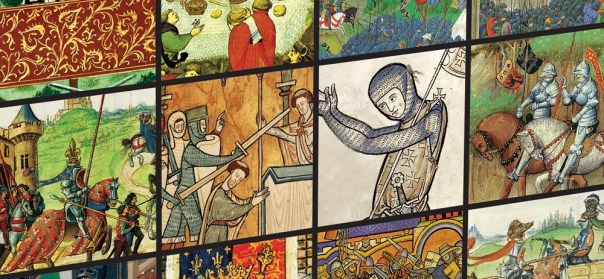
There are about a hundred reasons why Ortus Regni is such a fascinating artifact of board gaming. There’s the historical appeal, for one. Rather than merely establishing itself as a medieval card game, complete with all the modern idiosyncrasies and anachronisms anyone with a knowledge of the Middle Ages has come to expect, it’s a layered thing, descending through multiple eras like peeling back the layers of a dream. It’s today’s imagining of a Late Middle Ages game romanticizing the Anglo-Saxon Period. Twenty-first-century design sensibilities, fourteenth-century culture, ninth-century romance and nostalgia.
“Woah,” says Smart Neo.

 SPACE-BIFF!