Blog Archives
The Walking Dad: A New Day

A diorama of Atlanta.
Hi there, loyal Space-Biff! readers! Today we have something special planned—a guest review/impressions piece from a dude named Lee Everett. Lee is going to tell us all about the first episode of The Walking Dead, despite the obvious conflict of interest that arises from him being its protagonist. Oh well. There’s no such thing as an objective review, anyway! Find all about his adventures right after the jump!
Engage the Flick Drives!
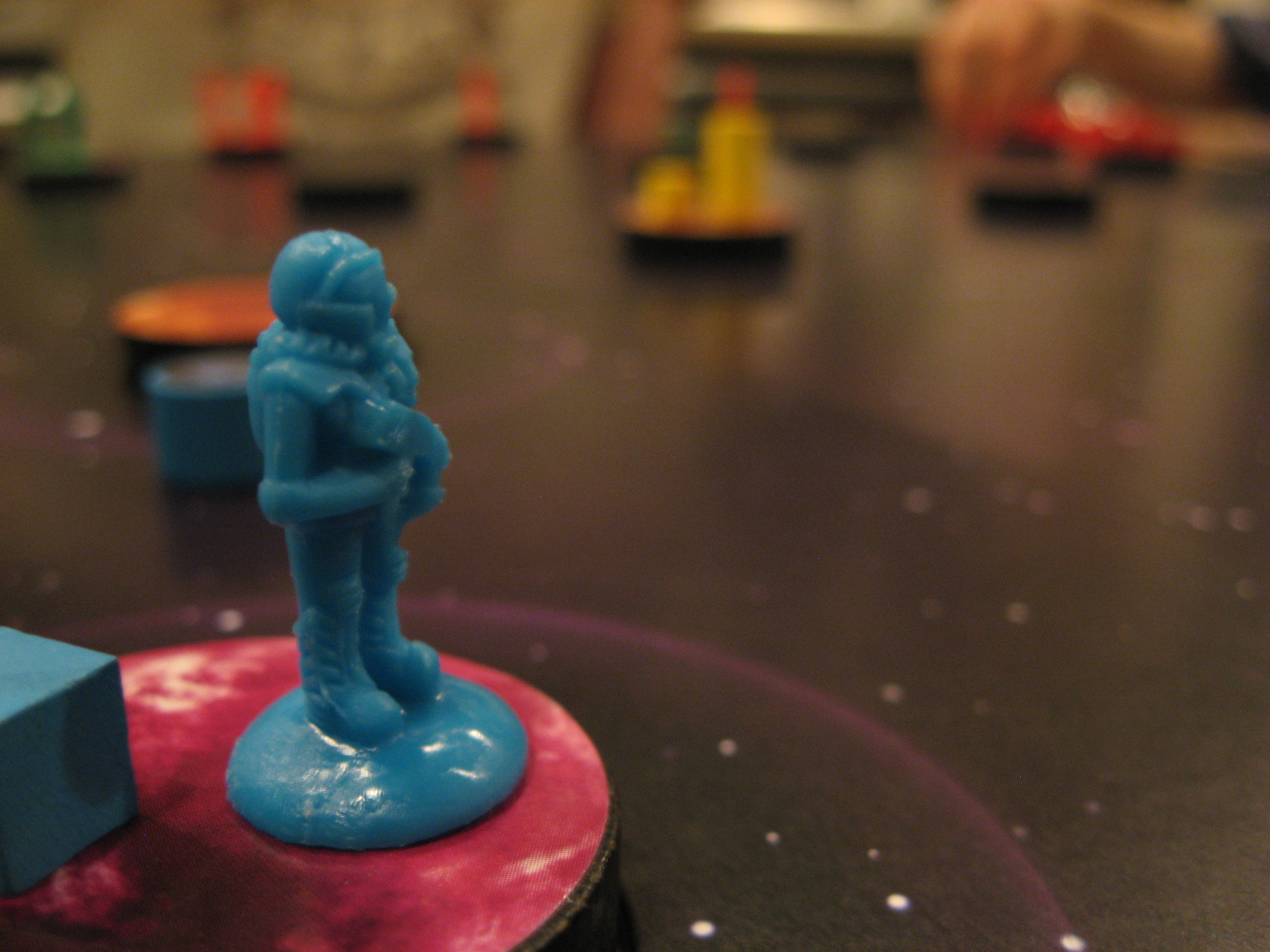
A spaceman ponders the mysteries of the wide universe.
There’s this game I’ve owned for a long time, Ascending Empires from Z-Man Games. It’s a great game, and I’ve known that since the day I bought it, but it only made it to the table twice. This summer we started having friends over for game nights a lot more often, and as a result, I’ve been playing it regularly—and it’s rocketed onto my Best Board Games Ever list. Why? Not only because it’s a good game (I already said it is), but because it makes me feel pathetically fantastically hilariously inept.
Ever-Changing: Proteus

My first view of the island. My island. Not yours. Mine.
I’ve been playing Proteus, a game about exploration and music by Ed Key and David Kanaga. I can tell you what it is—I already have, really—but I’m finding it difficult to shape words to fit. You see, time is not constant on one the game’s island, which is generated anew each time you play. Often the days are languorous, stretching and relaxing at their own pace. Just as often, days suddenly bleed into nights and weeks pass in mere seconds, as though you were the placid observer of a world riding on a hummingbird’s wings. It’s a game about change, and—to me—about perspective.
Take the above picture as an example. It’s pretty, but flat. As a still image, it looks like someone could draw it up in MS Paint in fairly short order. In motion, it’s something else entirely.
Long Walks on the Beach: Dear Esther
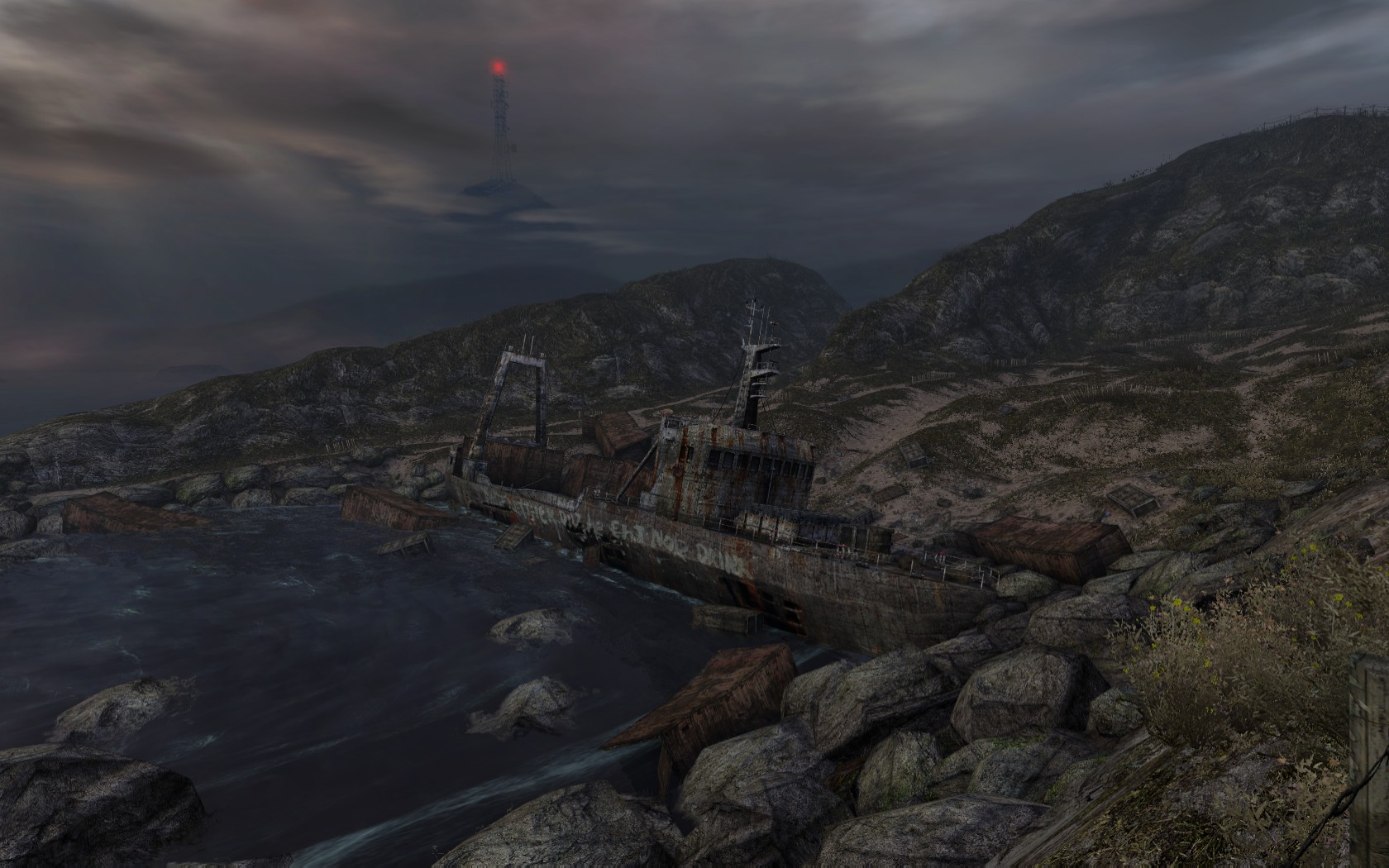
One of the many poignant images from Dear Esther.
I’m having a hard time pinning down Dear Esther. After reading a few other opinion pieces, reviews, and theories, I think the feeling is mutual. Which is fine, since I suspect that’s exactly what creator Dan Pinchbeck was going for.
So I’ll put it this way: what does a fatal car crash, a syphilitic goatherd, a blinking radio aerial, a navy of paper boats, and a stunning cave create when combined? Answer: I have no idea. But it’s interesting all the same.
And Then the Whimper: The Snowfield

The opening scene. You can probably already tell that this will be one of Space-Biff!'s jollier posts.
You’d think, to hear some people talk,
_That lads go West with sobs and curses,
And sullen faces white as chalk,
_Hankering for wreathes and tombs and hearses.
—Siegfried Sassoon, “How to Die”
Here’s one for that strange cross-section of human beings who feel that a videogame can be more than just entertainment: The Snowfield by the Singapore-MIT GAMBIT Game Lab (such a mouthful) does something that few games dare to attempt, and it pulls it off in fifteen minutes. It made me think. It made me sad. It made me shiver.
I’d recommend you play it before reading further. Once you have the Unity Web Player installed, you can play it right in your browser. Oh, and turn the volume up a bit.
Darkest of Reviews

The Romans brought shields as a distraction for the gravity gun. To their dismay, it was not a gravity gun at all.
I received an unexpected gift for Christmas, courtesy of my friend J.B. / digital_pariah, who you may remember as one of the players from our RPS Ascension game of Dominions 3 (which I am terribly behind in talking about here on Space-Biff!). It was the time-traveling romp Darkest of Days, a game about anachronisms that strikes me as an anachronism itself. It’s a much-ignored gem from 2009 that, for the most part, looks as though it has arrived on your PC after an arduous time-bending adventure, in which a serviceable gaming engine from 2008 stole the discarded textures of 2005, kidnapped Harry Turtledove’s doppelganger to pen the plot, and then decided on a pit stop in 1862 to get the Battle of Antietam just right.
Any game that channels that one good part from Timecop is a game in which I’m interested, and it’s fair to say I was looking forward to Darkest of Days in the same kind of way that I used to look forward to having my modern army men gun down my pirate Legos (read: very much). I didn’t expect it to spin me around and teach me a life lesson (or at least try really, really hard to). The review, in three parts, follows.
The Most Frightening Game of the Year

Tabajaras says goodbye to his grandparents for the last time. Is this the most frightening part of the year? Tragically, no.
Last night was Halloween. This would have been posted then, but I sat down with a group of friends to play Mansions of Madness instead. So here’s Space-Biff’s first ever (belated) Halloween special.
I’d like to talk a bit about the game that’s frightened me the most this year. You may have already guessed what it is from the image above. If you have, you’re probably wondering how anyone could consider this game frightening. If you haven’t, a hint: it isn’t called “Nuevos Aires, 1960.” It’s a game that at its most profound level is about the detachment and numbness that follows real violence, about confronting impossible atrocities, and about a nation’s disconnect between the suffering of its people and the isolation — and ambitions — of its leaders. It’s also a puzzle game. About zombies. And smashing them to their constituent atoms.

 SPACE-BIFF!