Blog Archives
Anti-Fun
There’s one word I try to never use when writing about board games. The F-word. No, not that one. “Fun.” There it is. My critical curse word.
Today I want to talk about why “fun” isn’t an especially useful word — and more than that, why it can be misleading or even counterproductive when discussing board games as cultural artifacts. Along the way, I want to propose some alternatives. Nay, some improvements.
Talking About Games: To Talk or Not
Three months ago, I encountered perhaps the worst board game I’ve ever played. This thing was truly non-functional, less coherent than almost any prototype that gets sent my way, a misbegotten experiment in game timers and open-ended negotiation. Worse, it was supposedly a game “about” something, the passage of time and the rise and fall of civilizations, the way societies are imprinted by their leaders. Surprise surprise, even those concepts were fumbled.
I’m never going to write about it.
Maybe that isn’t what you expected. Space-Biff! features a number of negative reviews. Some of them are scathing. Quite often, I’ve been told that it’s the inclusion of negative coverage that makes my site come across as trustworthy. So why wouldn’t I take this particular game down a peg?
In the interests of transparency, but also hopefully some good old-fashioned uncommon sense, today I’m going to talk about my thought process for what gets covered — and what doesn’t.
Talking About Games: One Billion Biases

Bias. It’s a scary word, huh? We all have biases, but never as many as other people. Or is that also a bias?
Surprising nobody, reviewing a hundred-something board games a year leads to regular accusations of bias. “Oh, you only liked this game because you’re so handsome,” they’ll say. “Oh, you only liked this game because all the ladies write romance novels in which you’re plainly the author-insert character’s love interest. But you’re so coy. You play with your food. Not because you’re emotionally neglectful, oh no. Because of your dark past. Because you were mistreated and thus mistreat others. She can fix you. She will fix you. Anticipation shudders down the novel’s spine.”
Yes, it’s a difficult life I lead. But I bear the burden gladly. So let’s talk frankly about bias. What it is, why it is, and how it impacts every review, mine included.
Talking About Games: Against Repeatability

There’s a recurring series I write on Space-Biff! called New Year, Old Year, which looks back on the games highlighted in Best Weeks past and evaluates them from a more updated vantage. When I began writing it back in 2017, there were two purposes behind the series. The immediate function was prophylactic. I’m often asked whether this or that game has held up since its release. New Year, Old Year could function as a repository for keeping my readers updated. Also, sure, so I had something to link to instead of answering those questions over and over again.
On a more personal level, New Year, Old Year also functioned as a form of accountability. A gut-check on my own tastes and attitudes. It was valuable to look back on the lists I’d written years before. With the benefit of hindsight, it was easier to see where I’d steered wrong, the gaps in my recommendations, or where my initial enthusiasm had been misplaced. The series was a corrective. It helped me not only reevaluate previous titles, but approach the games I was playing and reviewing right now with some additional perspective.
But something happened last year. When the appointed time came around to write about Best Week 2021, I couldn’t bring myself to do it. Something I’d left sitting on the windowsill for far too long had finally curdled.
What’s All This About a Chair, Anyway?

You might have heard that a fairly large board game publisher recently crowdfunded an entry in a well-loved series using AI-generative illustrations. Now, here at Space-Biff!, it’s my policy to pass on any titles that use generative AI in place of human craftsmanship. There’s some nuance there; I’m talking about image and text generation, not assistive tools, although plenty of people talk about those two things like they’re identical.
But I get that many people may not understand such a stance. So let’s talk. What follows is an explanation of why I’m not interested in covering games that use generated images and text.
Talking About Games: Excavating Memory

There’s a phrase we use in English, one meant to strike upon its hearer the importance of a topic or the need to keep an atrocity close at heart for fear of its repetition. You’ve heard it before, cast in somber and memorializing tones: “Lest we forget.” The irony, of course, is that we’re a fastidiously forgetful species. We forget things all the time. As a defense mechanism, forgetfulness is unrivaled. In the rare occasion that we don’t forget, we do our damnedest to afflict ourselves with collective amnesia. Lest we recall.
John Clowdus’s history trilogy plays like variations on a theme. Its three titles, Neolithic, Bronze Age, and The Middle Ages, are mechanically similar. They’re all about excavating cards from a deck and then using those cards to build toward a brighter future.
They also express something deeper: cultural memory, in all its complexity and simplicity.
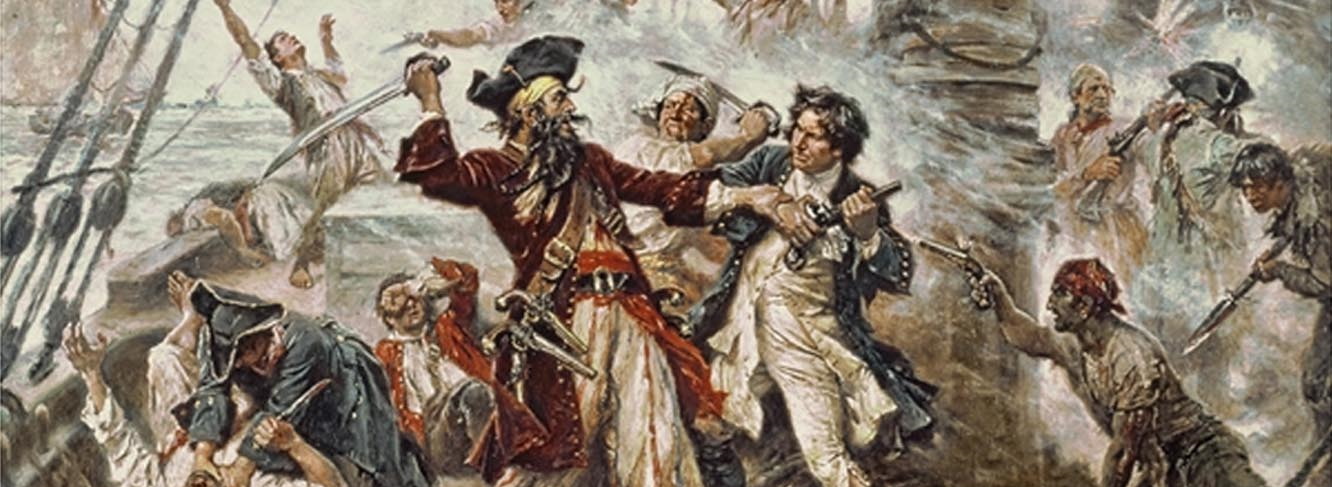
Colonizers vs. Pirates vs. Egyptians!
In the month since I published Greenwashing History, my examination of how Martin Wallace’s A Study in Emerald and AuZtralia portray certain historical figures as aliens in order to justify their extermination, one question has bobbed to the surface more than any other:
Do I care as much about the ancient Egyptians?
Oh, it could be anyone. Egyptians. Pirates. Ancient Roman slaves. Atlanteans. It isn’t exactly a new question. It’s come up under varying degrees of good faith over the years. One suspects its regularity betrays an agenda. That maybe someone would prefer I shut up about some topic. But since I don’t like to presume, today I’d like to offer, sans the usual degree of snark I’d normally reserve for such a question, the three informal criteria that I use to determine whether I’ll write about a particular historical topic in board games.
Greenwashing History

[Content Warning: Aboriginal and Torres Strait Islander readers are advised that the following article contains images of people who have died.]
Back in June, the Utah Board of Education delivered five pages spelling out exactly what educators could (and could not) teach on the issues of race and racism. The inciting topic in the Utah Senate was — surprise, surprise — Critical Race Theory. The debate had been perfunctory. One side was staffed by professional historians and veteran educators. The other consisted of angry parents who insisted they’d heard firsthand accounts of teachers berating white children.
After producing neither any berated children nor a definition of Critical Race Theory — “It’s like a gas,” one sponsor noted — the Senate determined that the theory was probably anti-American. “We need fact, not theory,” insisted one signatory.
An admirable sentiment! Apart from the pesky detail that those supporting the resolution not only lacked a definition for the theory they were determined to blacklist, but also didn’t have a definition of history. Because while history collects many facts, history has never itself been a fact. History also brims with theories, but is not quite a theory.
History is a war.
Talking About Games: Narrative & Exposition
One of my favorite questions to ask fellow historians is “When did the Roman Empire fall?” Not because I have a firm answer — it’s a harder question than you might think — but because our answers say a lot about how we conceptualize historical narratives. It’s easiest to respond with a year. Say, 410 or 476. If we remember Constantinople, maybe 1453. A conclusive final chapter. The end of an era. The opposing answer is that Rome didn’t fall so much as transition; that the Merovingian and Carolingian kings who fancied themselves emperors had no less of a claim than the string of weaklings who had ruled the Empire for centuries. This narrative is more meandering, but still, in its own way, unsatisfying.
And then there’s the answer that one aging professor offered in a course many years ago: “Why are you asking when something imaginary ended?”
I spent a good two years trying to figure out what that meant.
Talking About Games: The Price Is Wrong

Is a game worth its asking price? The question comes up so often that I’d be surprised to hear that this isn’t also true for other reviewers and critics. Most recently, two reviews in particular drew a lot of attention: Radlands from Roxley Games and The Shores of Tripoli from Fort Circle Games. Both are beautiful titles with noteworthy production values. Both are also shorter games, which understandably raises questions about their longevity. And of course, both are priced toward the high end. Hence the questions.
I get it. When I’m curious about a new game, what do I do? I check to see if anybody’s reviewed it. That’s why I spent years happily fielding these types of questions. Isn’t that what a review is for?
More recently, my policy has shifted. Now I refuse to answer questions about price. For today’s Talking About Games, I want to discuss why that is — and why other reviewers and critics might consider the same.

 SPACE-BIFF!