Blog Archives
Monkey See, Monkey Doze
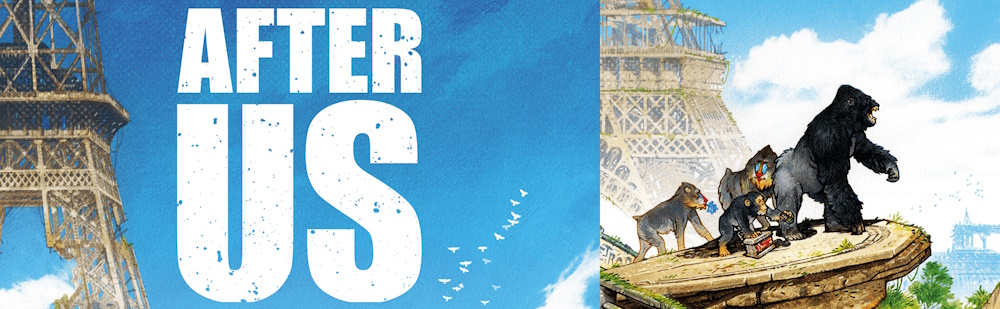
After Us is a tranquilizer. And not the gentle soporific kind that lets you slip little by little into drowsiness. It’s a knockout drug in a pressurized dart that’s been fired straight into your artery and dragged you kicking into a coma. I suspect that wasn’t what Florian Sirieix was designing for, but here we are.
All That Glitters Is Not Aurum

All I play anymore is trick-taking games.
I’m not being all the way serious. But it is a rare game night that doesn’t see at least a few tricks being taken. As I wrote in the first part of my open letter to my younger self about the value of trick-takers, these things are just so dang easy to learn that they offer the perfect digestif to a full-course gaming session. Only yesterday, Shreesh Bhat’s Aurum provided a literal digestif, enabling a pleasant half-hour after dinner with the in-laws. It helps that Aurum is mostly a team game. That way, my mother-and-law and I can tear up the table.
Carcassonne-by-the-Sea

It would be easy to label Beacon Patrol, the tile-layer designed and illustrated by Torben Ratzlaff, as a toothless Carcassonne-by-the-Sea. Like Klaus-Jürgen Wrede’s masterpiece, it’s preoccupied with the matching of corners and edges, the apprehension of gaps yet to be filled, and landmasses that come together at jutting intersections. Despite those similarities, Beacon Patrol is unhurried, a wholly cooperative or solitaire game that proceeds at leisurely pace and doesn’t conclude so much as it goes to sleep.
That’s exactly what it’s meant to do. It may lack bite, but the better descriptor would be to say it never breaks skin.
Mountain Copper

In Plato’s description of Atlantis, Critias mentions orichalcum — literally “mountain copper” — a metal second in preciousness only to gold but no longer known except by name. To this day its identification offers a minor mystery to historians. Was orichalcum some bright alloy of gold? Platinum? Remnants of an alien civilization that taught humans how to embed circuitry into the Acropolis? Probably not. A few years back almost forty ingots were recovered from a shipwreck off the coast of Sicily. A gold-hued alloy of copper and zinc, some experts believe these may be our last remnants of the lost metal. They’re on display at the archaeological museum of Gela.
Orichalcum is also a board game by Bruno Cathala and Johannes Goupy. It’s considerably less mysterious than its namesake.
Aroo!

Ashwin Kamath and Clarence Simpson’s The Wolves comes with a soundtrack. Not on CD or MP3, and certainly nothing officially composed. It’s the compulsive “aroo!” that players belt whenever their pack of noble wolves takes the howl action. I have yet to play a game without somebody launching into that enthusiastic howl.
What about the game? Yeah, that’s pretty good too.
That Time I Spoiled That Time You Killed Me
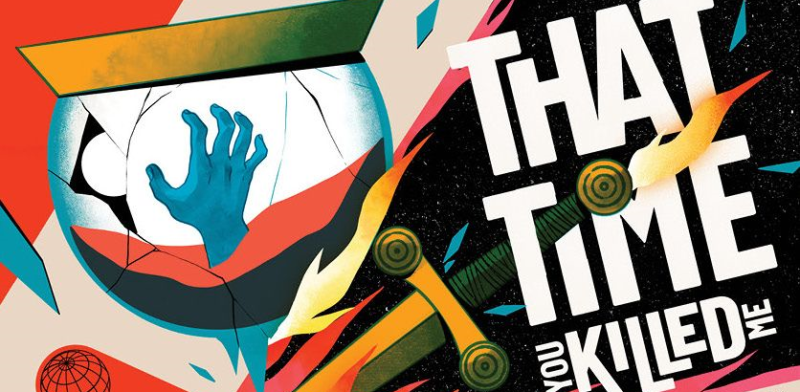
Time travel is like paprika. There’s a huge difference between a little and a lot. And I say that as a time travel apologist.
Peter C. Hayward’s That Time You Killed Me is all about time travel. If we stretch our metaphor to the breaking point, it’s an entire mountain range of paprika. Fortunately, Hayward has the good sense to dole it out in pinches and scoops rather than shovelfuls. And there’s really no way to talk about it without some minor spoilers.
Strange Brew

Not every game reinvents the wheel. Some games instead go to pains to sand down their felloes, shore up their spokes, and slap on a rubber tire in place of a steel band.
Those are all the wheel terms I know, and they all have to do with wagon wheels. But the metaphor is sound. Brew, designed by Stevo Torres, isn’t here to do something new. It’s here to do something old with the assurance of careful iteration.
Umbra Via Ignitis
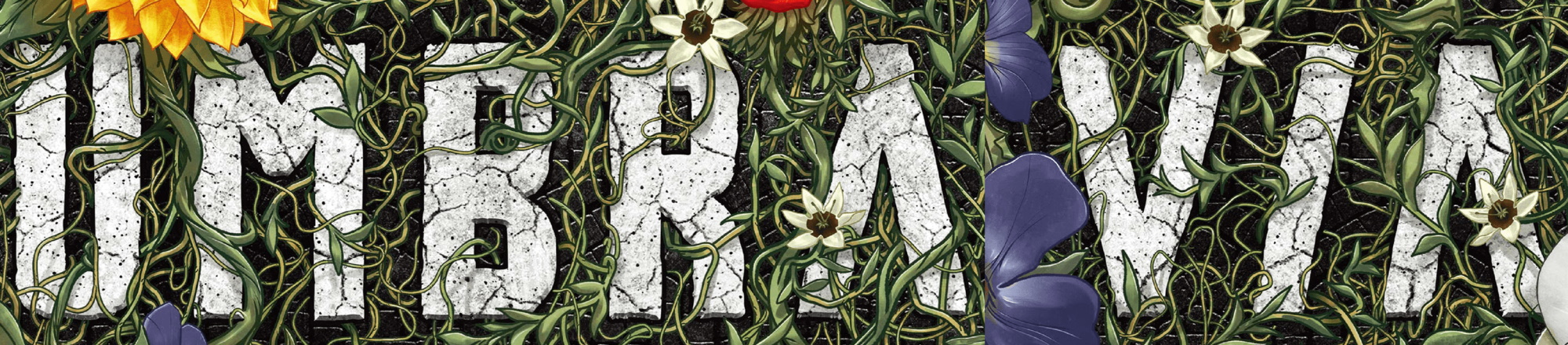
Connor Wake’s Umbra Via is a study in contradictions. It’s a game of steps, bids, tiebreakers, and infuriating balance. Whether that’s a good thing is also a contradiction.
Depends on the God, I Suppose
![Gods Love [Insert Hot Setting]](https://spacebiff.com/wp-content/uploads/2020/11/1.-gods-love-headers.jpg "Gods Love [Insert Hot Setting]")
If God really loved dinosaurs so much, the big guy wouldn’t have treated them to an asteroid sandwich. In that regard, Kasper Lapp’s Gods Love Dinosaurs is a piece of revisionist theology. The divine course of history thrown into schism, the natural order turned on its head, all to placate the feelings of dinophiles.
As a plaything, though, it’s reasonably charming.
The Other Game

I’ve played the game all of once. Sorry, The Game. Steffen Benndorf’s The Game. No, not Wolfgang Warsch’s The Mind. The Game.
Except now we’re talking about Ohanami, Benndorf’s attempt to make The Game into a competitive game rather than a cooperative game. Is it an improvement? Well, its title is more searchable, I’ll tell you that much.


